
What needs PAT testing in the UK?
PAT testing, also known as portable appliance testing, is not legally required for every electrical item, but it plays an important role in keeping workplaces safe. In the UK, business owners, landlords and property managers must make sure electrical equipment remains safe. This guide outlines which items are usually tested, explains your legal duties and offers a straightforward way to stay PAT compliant and meet your electrical equipment testing duties.
Here's What We Have Covered In This Article
What UK law actually says about PAT testing
UK rules such as the Electricity at Work Regulations 1989 place a legal duty on employers and landlords to keep electrical equipment in safe condition. The law does not mention PAT testing directly, but it does require reasonable steps to reduce risk.
The Health and Safety Executive (HSE) lists PAT testing as one method to meet those duties. If you manage property or run a business, it is your job to keep appliances safe over time. Using guidance from the IET Code of Practice and HSG107 makes it easier to plan your testing routine. Understanding PAT legal requirements helps businesses meet their UK safety law obligations.
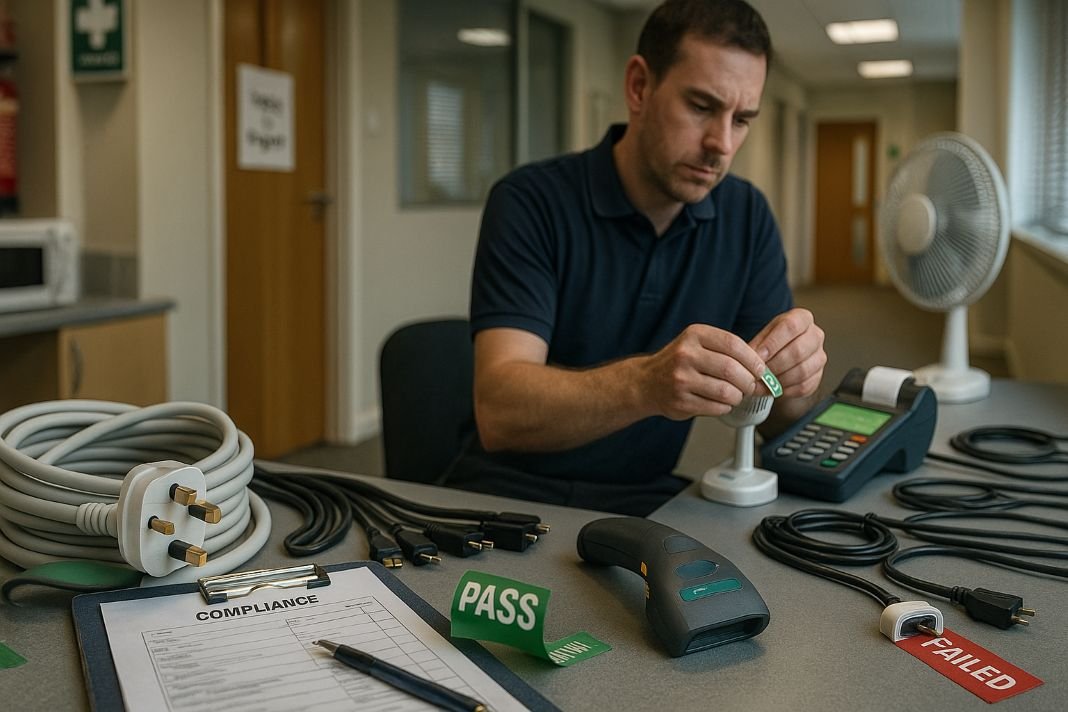
An ai photo of pat testing taking place in an office
Pro Tip: A brand new item still needs a visual check before first use.
Which equipment typically needs PAT testing?
Appliances that plug into mains sockets and are moved during use are most likely to need testing. These are usually Class I appliances that rely on an earth connection. Common examples include:
Visual Checklist by Environment
Office Equipment
- Computers and monitors
- Printers and shredders
- Desk lamps
- Extension sockets
Kitchen Areas
- Kettles
- Microwaves
- Toasters
- Refrigerators
Workshops
- Power tools such as drills, grinders and sanders
- Chargers
- Compressors
Retail and Customer Areas
- Tills and card readers
- Display lighting
Rental Properties
- Vacuum cleaners
- Fan heaters
- Communal kitchen appliances
Use this visual PAT test checklist to spot high risk items in any workplace. Class II appliances have double insulation and no earth connection. Whether they need testing depends on how often they are used and where they are located.
What items often do not require PAT testing but still need checking?
Some electrical items do not usually need PAT testing, but they still require attention:
-
Devices powered by batteries
-
Brand new appliances under warranty
-
Equipment that is fixed wired
-
Double insulated Class II appliances in low risk areas
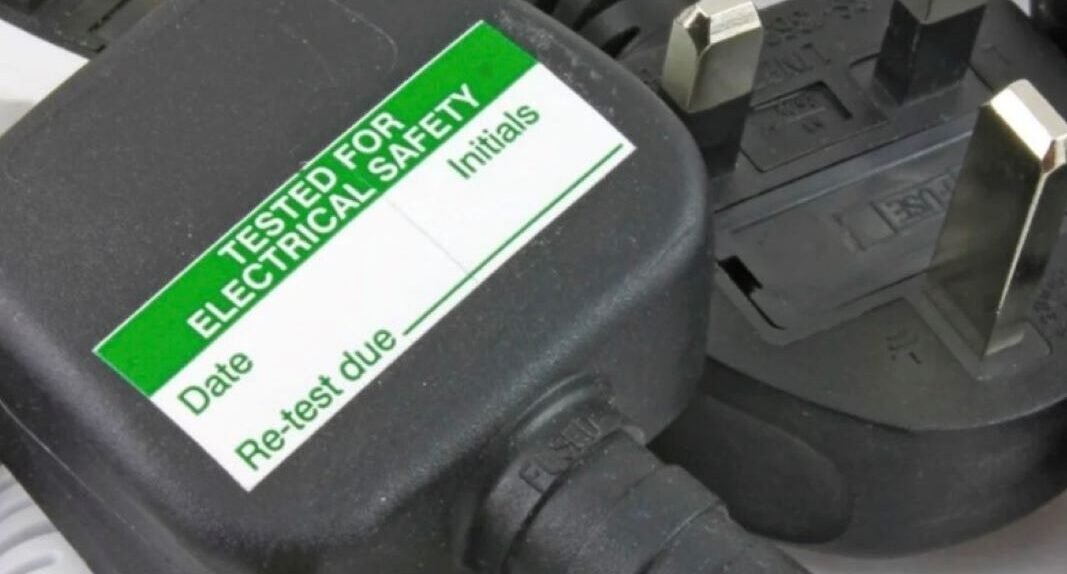
You should still inspect these items to spot damage or wear. Check for things like split cables or broken plugs. It helps to add a label to show an item has been checked.
How can you decide what needs PAT testing?
The HSE recommends looking at risk, not using a fixed list. Think about the following:
-
Where the appliance is used such as indoors, outdoors, office or kitchen
-
Whether the item is often moved or unplugged
-
How frequently it is used
-
If it has ever failed or needed repair
Use a checklist or flowchart to make decisions easier and focus your efforts on higher risk equipment.
How often should PAT testing be done?
Testing frequency depends on the situation. There are no fixed rules, but here are general examples:
-
Desktop computers: every two to four years
-
Hotel hairdryers or kettles: once a year
-
Construction site power tools: every three months
The IET and HSG107 both give suggested timeframes. Most workplaces also do regular visual checks between formal tests. Recommended PAT intervals vary based on setting and equipment type.
Pro Tip: Not every item needs testing every year, a risk assessment saves money and time.
Unsure What Needs Testing?
Speak to our experts and get a tailored checklist for your site.
Who is allowed to carry out PAT testing and who holds responsibility?
PAT testing must be done by someone who knows how to use the tester and understands what the results mean. This could be a trained member of your team or an external service provider.
Competent Person Checklist
Someone qualified to carry out PAT testing should:
- Understand how electricity works
- Know how to use the PAT tester correctly
- Be able to spot damaged cables, plugs and signs of overheating
- Record and label everything accurately
In house PAT testing is suitable for low risk items if staff have the right PAT tester qualifications. The person in charge of the premises is legally responsible for safety. That could be the employer, landlord or site manager. Their job is to make sure testers are trained and records are up to date.
What is involved in a PAT test?
A PAT test includes two steps:
- A visual inspection to look for damage, wear or tampering
- Electrical checks with a PAT tester for things like insulation, earth continuity and polarity
PAT Test vs Visual Inspection
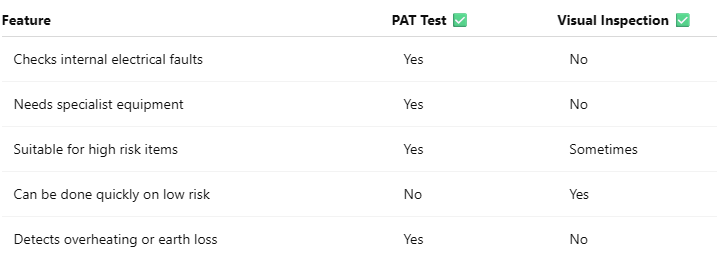
If an item fails, it must be removed from use straight away. Items that pass are labelled with a sticker, and the results are added to your log.
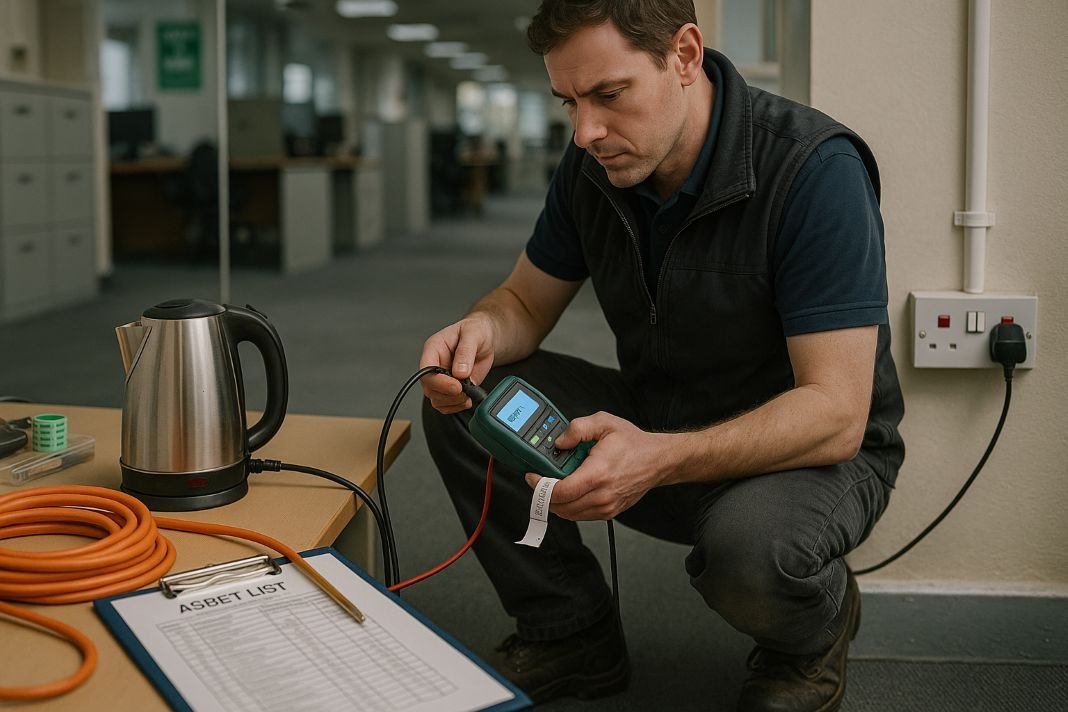
An ai photo of a pat tester testing electrical items in an office
Book Your PAT Testing Today
Keep your business compliant and safe with fast, certified testing.
What records, labels and certificates should you keep?
Keeping a record of what you have tested shows you are staying compliant. Your records should include:
-
A label on each appliance with test result and date
-
A full list of all equipment tested
-
Certificates from testing staff or companies
-
Archived logs stored in case of audits or insurance reviews
Well kept appliance testing logs form part of your PAT compliance documents. Using software can make tracking tests and reminders much easier.
What does PAT testing look like for different types of businesses?
Different workplaces have different needs. Examples include:
-
Offices: monitors, extension leads, shredders
-
Kitchens: kettles, microwaves, fridges
-
Industrial sites: power tools, chargers, high use devices
-
Rental properties: vacuum cleaners, heaters, communal items
-
Retail: tills, display lights, portable electronics
Look around your setting and build a testing list based on how items are used and who uses them.
What are the most common PAT testing myths and FAQs?
Some ideas about PAT testing are not true. Here are a few:
-
Everything needs testing once a year
-
Only an electrician can carry out tests
-
All electrical devices including battery powered ones need PAT testing
-
New items must be tested before they can be used
Let us address some common PAT testing misconceptions that lead to confusion. The truth is, testing should match the level of risk. Trained team members can test many items, and a visual check is fine for low risk equipment. What is important is having a system and keeping records.
How much does PAT testing cost and what affects pricing?
The cost depends on the size of the site and how much needs testing. Things that affect price include:
- Total number of items
- Whether you are charged per item or by the hour
- Where your business is based
- What the price includes such as labels, reports and retests
Most providers charge between one and three pounds per item. You might get a discount if you are testing large numbers at once. Training staff and doing it yourself also saves money in the long run.
How to Save Money on PAT Testing
- Test one area at a time to save on callout fees
- Avoid testing items that do not need it
- Train your team to check low risk appliances
- Use software to track when items are due
Always compare PAT service quotes to ensure value and clarity. Get a written quote before agreeing to any testing so you know exactly what is covered. Searches for PAT testing cost UK also give helpful benchmarks.
What are the first steps to begin PAT testing?
Follow these steps to start:
- Make a full list of portable electrical appliances
- Check how much risk each one carries
- Decide who will do the testing, staff or contractor
- Book the first round of checks
- Record the results and fix any failed items
- Set regular dates for visual inspections and retests
This gives you a reliable routine and helps meet your legal duties.
How PAT testing affects your insurance
Your insurer expects proof that appliances are safe. If an electrical fault causes damage or harm and you do not have PAT records, your claim could be rejected.
Maintaining risk management records including PAT testing logs supports liability cover during claims. Keeping your test records in order helps prove that you acted responsibly. Without them, you may be seen as negligent, which could increase your insurance costs or affect future cover.
Top 5 Mistakes in PAT Compliance
- Testing everything once a year without thinking about risk
- Not keeping proper records of tests
- Assuming new equipment does not need checking at all
- Letting untrained staff test high risk appliances
- Ignoring or delaying action after a failed test
Final checklist and how to get PAT testing support
Ask yourself the following:
- Have you identified all portable appliances?
- Have you chosen someone competent to test them?
- Is your testing based on risk, not habit?
- Are your test records organised?
- Do you know what to do if something fails?
If you are unsure, speak to a PAT testing provider. They can help you build a routine that suits your business and keeps people safe.