Why are EICRs important for letting agents and property managers in London?
Electrical Installation Condition Reports (EICRs) are a legal requirement for most commercial lettings in London. They protect letting agents and property managers from fines, safeguard tenants, and ensure insurance remains valid. Given the city’s ageing buildings and varied borough rules, not having a current or compliant EICR can expose agents and landlords to serious compliance risks.
Here's What We Have Covered In This Article
Why EICRs Are Essential for London Letting Agents & Property Managers
Electrical safety compliance is necessary to protect tenants and the businesses that manage property portfolios. An Electrical Installation Condition Report (EICR) confirms that all fixed installations meet BS 7671 standards. This helps reduce the likelihood of fire risks, system faults, and tenant complaints.
If a valid EICR is not in place:
-
Letting agents can be held accountable under the Electricity at Work Regulations 1989 (EAWR)
-
Insurance coverage might become void if compliance is not demonstrated
-
Safety breaches may result in prosecution, fines, and reputational damage
For London agents handling properties across boroughs with older infrastructure, risks increase. Keeping an up-to-date EICR shows duty of care, supports insurance audits, and ensures electrical safety regulations are followed. Landlord Building Certificate is one provider that can help conduct inspections efficiently and consistently.
Common Misconceptions
Some agents believe an EICR is only required after a problem occurs. UK GOV guidance mandates routine testing, typically every five years or at tenancy change, making it a regular compliance task.
Pro Tip: Create a shared EICR tracker so your team can monitor upcoming deadlines in real time.
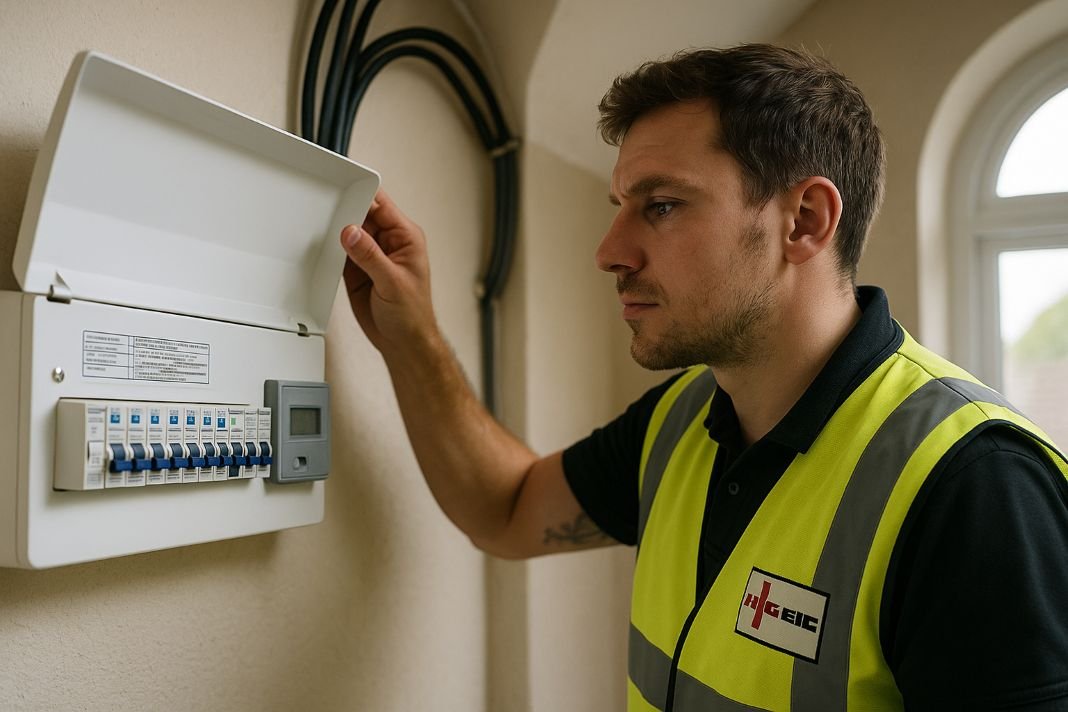
An ai photo of a electrician doing an EICR report
Who’s Responsible? Clarifying EICR Duties in Commercial Leases
In commercial leases, responsibility for an EICR depends on the lease terms. Misreading these clauses can lead to agents taking on unintended legal exposure.
Lease Clauses to Watch
-
Full Repairing and Insuring (FRI) leases often assign responsibility to tenants
-
Service charge schedules may distribute costs for communal areas
What role does the letting agent play in EICR compliance?
Managing agents may be identified as duty holders under EAWR. If named in the lease or management contract, they must ensure inspections are arranged and faults addressed. Even without legal responsibility, agents are expected to coordinate and monitor EICR compliance.
Map the Electrical System: What Needs Testing in Commercial Properties
Understanding the building’s electrical setup helps avoid missed systems during testing. All fixed components should be checked to ensure full compliance.
What installations are covered by an EICR?
-
Distribution boards and consumer units
-
Socket outlets and fixed cabling
-
Lighting systems (interior and exterior)
-
Communal wiring and shared metering
-
EV charging units and signage connections
In London, older properties and conversions often include sub-circuits or undocumented wiring. Reviewing schematics or maintenance logs helps technicians identify all areas to be inspected. Include electrical systems in your general risk assessments to ensure full safety coverage.
Tip: Create an “EICR Map”
Mark all key electrical locations before the visit. This includes boards, meters, and communal points. Clear mapping helps inspections run smoothly and efficiently.
Pro Tip: Always schedule EICRs before lease renewals or tenant changes to avoid last-minute issues.
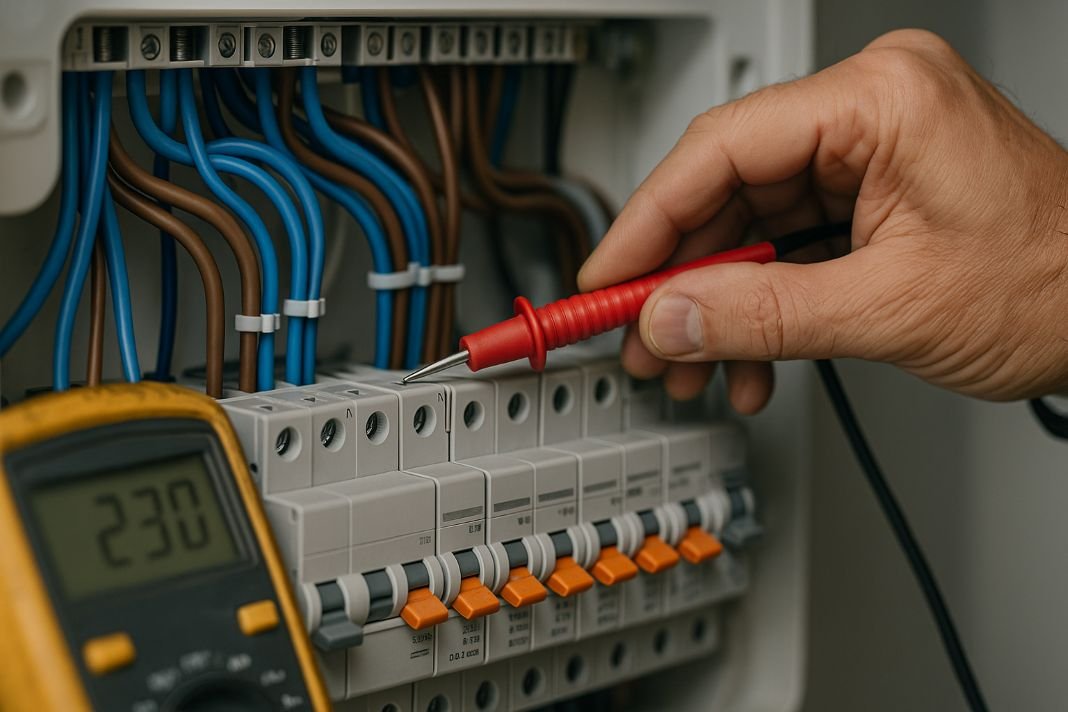
An ai photo of a electrician doing an EICR report
Pre-Inspection Prep: Documents, Access, and Tenant Notifications
Getting everything ready beforehand reduces disruption, delays, and complaints.
How should letting agents prepare for an EICR?
-
Agree access times with tenants
-
Locate earlier certificates and reports
-
Arrange keys and access support onsite
-
Share plans or electrical layouts with the contractor
Platforms like Fixflo and Arthur support agents with notifications, record-keeping, and task tracking.
What Happens During an EICR? A Room-by-Room Inspection Guide
Electricians test all accessible fixed installations to determine whether systems meet the current safety standards (BS 7671).
What do electricians test during an EICR?
-
Reception Areas: lighting, socket integrity, signage
-
Offices: fixed cabling, load balance, circuit identification
-
Communal Areas: distribution boards, stair lighting, shared circuits
-
Storage: insulation readings, RCD performance, circuit overloading
How long does an EICR take?
Duration depends on property size. Small offices may take under two hours. Larger buildings could require a full day. Agents should notify tenants about potential short-term power shutdowns during testing.
Book Your EICR
Get a certified NICEIC contractor on-site quickly to ensure you stay compliant and avoid disruption.
Understanding the EICR Report: Codes, Risks, and Required Actions
EICRs use classification codes to flag faults and guide actions. Agents must read these correctly and follow up without delay.
What do the EICR classification codes mean?
-
C1 – Immediate danger: fix immediately
-
C2 – Potentially dangerous: remedial work required soon
-
C3 – Improvement advised: not urgent but recommended
-
FI – Further investigation: system issue needs more checks
Unsatisfactory reports include at least one C1, C2, or FI. Agents must arrange repairs promptly, using a log to track completion and compliance.
An ai photo of a electrician doing an EICR report
Managing EICRs After the Test: Remedials, Records, and Reporting
Acting quickly after inspection maintains compliance and prevents issues.
What should letting agents do after receiving an EICR?
-
Hire qualified electricians for any repairs
-
File the updated report in the central system
-
Share documents with landlords, insurers, and tenants as needed
-
Book retesting for unresolved or safety-critical issues
Standardise document names, for example EICR_UnitName_Date.pdf, to make record-keeping easier. Maintaining a clear audit trail is essential when demonstrating compliance to landlords, insurers, or regulatory bodies. Landlord Building Certificate helps agents store, track, and schedule tests across portfolios.
London Challenges: Older Wiring, Shared Blocks & Borough Variations
London properties pose additional compliance hurdles for agents.
What makes EICRs more complex in London?
-
Wiring Age: older systems may lack labelling or modern safety features
-
Multi-Occupier Blocks: require access coordination for shared areas
-
Local Policy: boroughs such as Camden or Southwark may set extra rules or checks
Agents can save time by researching local variations and preparing for delayed access or council-specific requirements.
Stay Compliant: How to Schedule, Monitor, and Track EICRs
Good systems reduce the chance of overdue tests or missing paperwork.
What tools help letting agents manage EICR renewals?
-
Use calendar alerts to track expiry dates
-
Assign compliance tasks by property manager
-
Maintain a simple EICR tracker listing inspections, outcomes, and deadlines
-
Store all data in a central property compliance log for team access
Landlord Building Certificate offers monitoring tools that help agents stay ahead of their responsibilities.
Your Quick Agent Toolkit: Templates, Checklists & Certificate Logs
Having a set of reliable templates keeps agents organised.
What downloadable tools can help agents manage EICRs?
-
Pre-inspection tenant notification letters
-
Compliance checklist for preparing properties
-
Spreadsheet for tracking EICRs and renewal dates
-
Lease clause summary for allocating responsibility
These templates save time and keep your team aligned on tasks.