How often is a commercial EICR required for business properties in the UK?
Most commercial properties in the UK require an Electrical Installation Condition Report (EICR) at least every five years. However, this interval may shorten depending on usage, risk level, or specific regulatory circumstances.
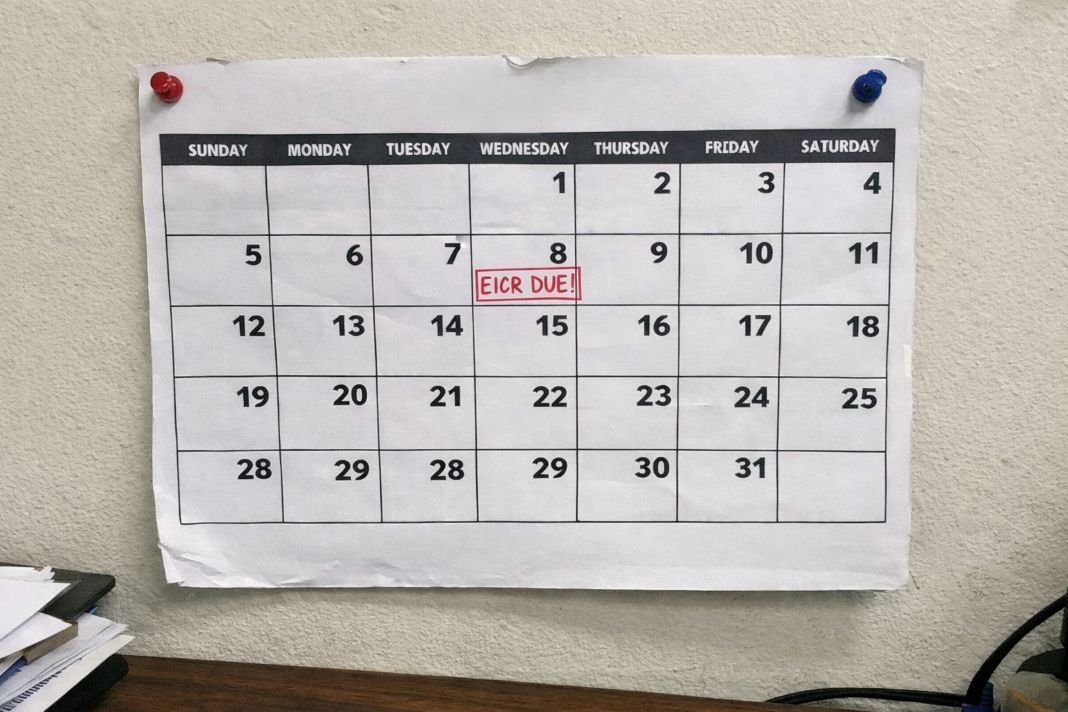
An illustrative image of a calendar pinned to an office wall with EICR due dates marked in red
Here's What We Have Covered In This Article
What Is a Commercial EICR and Why It Matters
A Commercial EICR, or Electrical Installation Condition Report, is an official document that confirms whether the electrical systems within a non-domestic property are safe, functional, and compliant with UK regulations. It is not a formality or an optional check. It is a safety measure supported by law and directly tied to business liability, tenant welfare, and insurance validity.
Unlike domestic EICRs, a commercial EICR addresses the higher demands, load variations, and regulatory obligations found in workplaces such as retail units, offices, factories, and warehouses. It ensures that landlords, occupiers, or duty holders have fulfilled their obligations under the Electricity at Work Regulations 1989.
A commercial EICR performs the following key functions:
- Identifies electrical faults or degradation before they become dangerous
- Assesses compliance with current electrical standards (BS 7671)
- Classifies issues by severity (C1 being immediate risk)
- Provides action points for remedial works or upgrades
- Validates the safety of the electrical installation at the inspection date
Failure to hold a current and valid commercial electrical report leaves property owners open to enforcement action, insurance rejection, or potential prosecution if an incident occurs.
Pro Tip: Grouping multiple inspections such as EICRs and EPCs can reduce operational delays and avoid repeated access issues.
Legal Requirements for Commercial EICRs in the UK
Commercial EICRs are required by multiple layers of regulation, with the principal obligation arising from the Electricity at Work Regulations 1989. This legislation requires that all electrical systems in a workplace must be maintained in a safe condition, which includes regular inspection and testing.
Additional enforcement may come from:
- The Health and Safety Executive (HSE) through compliance audits or investigations
- Local authorities as part of commercial licensing or enforcement
- Insurance providers, which may request EICRs to validate policy cover
- Fire risk assessors, where electrical installations are considered fire hazards
Responsibility for compliance typically falls to:
- The landlord, for leased commercial premises
- The business owner or operator, for occupied or managed properties
- Facilities or site managers acting in a duty of care role
Penalties for non-compliance can include prohibition notices, fines, invalid insurance claims, and in some cases, criminal charges if injury or damage occurs due to known electrical faults.
How Often Do Commercial EICRs Need to Be Done?
The general guidance under BS 7671 recommends that most commercial properties undergo a new EICR every five years. This five-year interval provides a structured approach to managing safety risks without over-testing.
However, this is not a one-size-fits-all rule. Some property types require more frequent inspections due to their function or risk profile.
Recommended inspection intervals by property type:
- Offices: every five years
- Shops and retail spaces: every five years
- Industrial units: every three years
- Temporary structures or events: annually
- Public venues such as cinemas or gymnasiums: every three years
Several factors may shorten the inspection frequency:
- High usage or heavy equipment loads
- Frequent changes in tenants or occupants
- Environmental conditions (moisture, dust, vibration)
- Older or previously flagged installations
There is also no such thing as a permanent EICR. Every report carries a recommended next inspection date, and the document expires once that date passes.
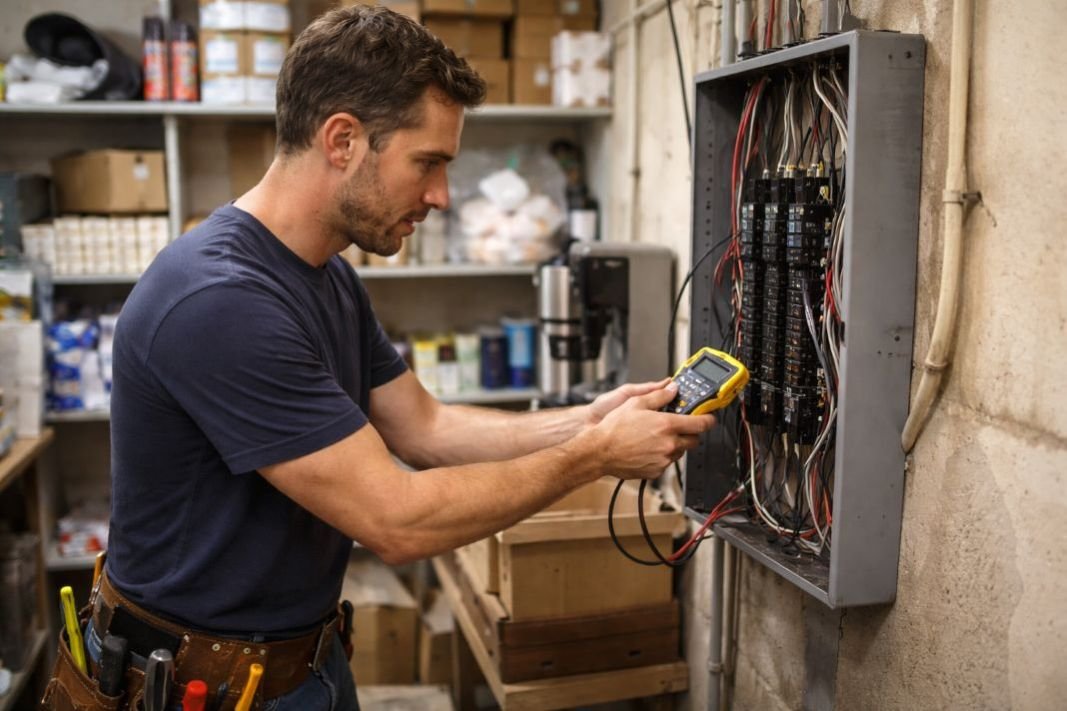
An illustrative image of an electrician performing an inspection in a retail shop using a tester
Combine Compliance Checks in One Visit
Save time by bundling your EICR with fire, gas, or EPC inspections for minimal disruption.
What Triggers an Early EICR?
Even with scheduled frequency, certain conditions require a business or landlord to arrange an EICR ahead of time. These are typically initiated by operational changes or fault indicators.
Common triggers for an unscheduled or early commercial EICR include:
- Change of tenancy or leaseholder: A new occupant means a new risk profile
- Electrical incident or fault: Tripping breakers, failing lights, or overheating outlets require immediate investigation
- Renovation or extension work: Any alteration to the electrical layout should be followed by inspection
- Fire risk assessments or insurance reviews: Gaps or outdated reports may prompt fresh testing
- Regulatory enforcement or tenant complaints: Safety inspections may be ordered under specific authority
Responding to these situations promptly with a certified inspection can protect against liability and limit further disruption.
Pro Tip: If an EICR includes C1 or C2 faults, remedial work should be arranged immediately to prevent enforcement risks.
Who Can Carry Out a Commercial EICR?
Not all electricians are qualified to complete a commercial EICR. Only those with the correct credentials and competence in non-domestic environments are permitted to produce valid and recognised reports.
Key accreditations to look for include:
- NICEIC Approved Contractors for commercial electrical testing
- TrustMark registered firms under government-endorsed schemes
- Membership in the Competent Person Scheme for electrical safety
To be compliant, the engineer inspecting the system must understand BS 7671 (UK Wiring Regulations), be authorised to sign legal certification, and carry applicable insurance.
Verifying credentials is straightforward:
- Ask for the engineer’s NICEIC registration number
- Confirm that the company provides EICRs for commercial, domestic, properties
- Ensure that the report issued is formatted correctly and includes a next inspection date, complete circuit data, and clear coding of defects (C1 to C3)
Using an unqualified contractor risks invalidating the report entirely, leaving legal and insurance obligations unmet.
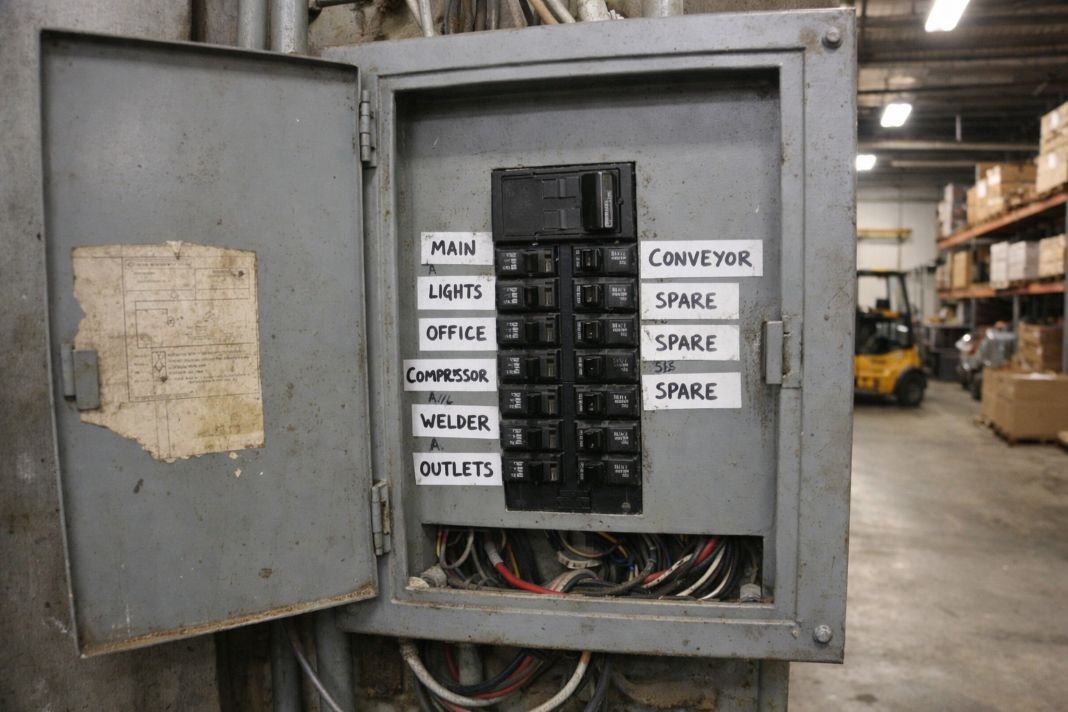
An illustrative image of an electrical panel with open cover showing labelled circuit breakers inside an industrial warehouse
What Happens During a Commercial EICR?
Knowledge the inspection process helps businesses prepare and avoid unnecessary disruption.
A standard commercial EICR follows these steps:
- Pre-inspection preparation: The engineer discusses access points, circuit coverage, and expected testing duration.
- Visual inspection: Checks for damaged wiring, overloaded boards, exposed conductors, or inadequate labelling.
- Testing and measurement: Instruments are used to verify insulation resistance, earth continuity, and fault loop impedance.
- Condition coding: Defects are added to the report using standard codes:
- C1: Immediate danger, requires urgent remedial work
- C2: Potential danger, action needed promptly
- C3: Improvement recommended, but not dangerous
- Report delivery: The completed certificate summarises the system’s condition, specifies next inspection date, and lists any required remedial actions.
At Landlord Building Certificates, reports are digitally delivered as standard, often within 24 hours, with clear notes and code interpretation to guide next steps.
Book a Certified Commercial EICR
Ensure your property remains legally compliant and safe with an accredited electrical inspection.
How to Stay Compliant Without Disruption
Staying compliant with EICR requirements does not need to disrupt daily operations or cause last-minute stress. A few planned actions can keep certification current across all sites.
- Use a compliance calendar: Record each certificate’s issue and expiry date in a shared system to prompt timely renewals.
- Bundle inspections: If a property also needs gas, fire alarm, or EPC certificates, consolidating these into one visit saves time and access complications.
- Work with a multi-service provider: Providers like Landlord Building Certificates in London can manage several compliance streams under one appointment window.
- Schedule during off-hours: For shops and offices, early morning or evening slots avoid interfering with trading hours or staff schedules.
- Act on identified issues promptly: If the EICR returns with C1 or C2 codes, completing the remedial actions quickly helps return the property to full compliance without the need for full re-inspection.
Maintaining electrical compliance in commercial properties is not difficult with the right structure in place. By planning ahead, choosing accredited electrical experts, and combining inspections where possible, businesses can stay legally safe, tenant-ready, and operationally efficient.