How does the Renters’ Rights Act affect an expired EICR or gas certificate?
The Act increases the practical consequences of letting a property with an expired Electrical Installation Condition Report (EICR) or Gas Safety Certificate (CP12). Landlords still rely on the existing electrical and gas safety regulations, but the new framework gives expired certificates greater weight in enforcement, tenancy management, and tenant complaints. In simple terms, a missed renewal is less likely to sit quietly in the background and more likely to become an active compliance problem.
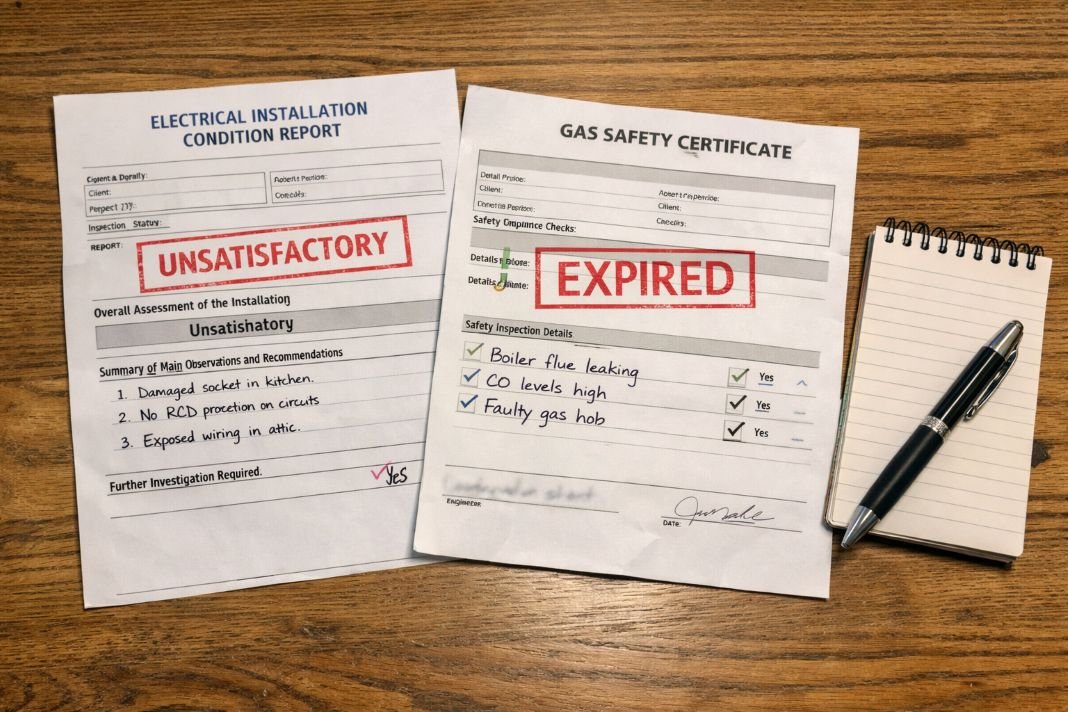
An illustrative image of a close-up of an expired Electrical Installation Condition Report and a Gas Safety Certificate
Here's What We Have Covered In This Article
Understanding the Renters’ Rights Act: What has changed for landlord compliance?
For many landlords, certificate renewals used to feel like a diary task that could sometimes slip by a few days without immediate fallout. The Renters’ Rights Act changes that practical reality. It does not replace the Electrical Safety Standards in the Private Rented Sector (England) Regulations 2020 or the Gas Safety (Installation and Use) Regulations 1998, but it sharpens how failures are viewed and acted on.
Before these changes, some landlords assumed that a late inspection mainly became an issue if a tenant raised it or if a council happened to look closely at the file. Under the newer approach, expired safety paperwork sits much closer to the centre of landlord compliance law. A lapsed certificate can now affect possession, complaint handling, enforcement risk, and the overall legal position of the tenancy.
Three points matter most:
- An expired certificate is still a breach of the underlying safety rules, even if the property itself appears well maintained.
- Local authorities have a clearer route to intervene where compliance deadlines are missed.
- Tenants are more likely to understand expired documents as a housing rights issue, not just an administrative oversight.
That shift matters because a breach is no longer just a paperwork problem on a back-office list. It can shape what a landlord can do next, what a tenant may report, and how quickly a local authority may respond.
Pro Tip: Keep digital copies of all certificates in a cloud-based folder with clear property references to ensure instant access during audits or tenant requests.

An illustrative image of a couple reviewing tenancy documents together at a living room table
What happens when your EICR expires under the new rules
Once an Electrical Installation Condition Report expires, the property no longer has current evidence that the fixed electrical installation has been inspected within the required period. For most rented homes in England, that puts the landlord on the wrong side of the Electrical Safety Standards in the Private Rented Sector (England) Regulations 2020.
A common misunderstanding is that there is an informal buffer after the expiry date. That is unsafe thinking. If the report expires on Monday, Tuesday is already a day without a valid current electrical safety certificate on file.
A simple timeline helps:
- Day 1 after expiry: The EICR has lapsed. The landlord should arrange a new inspection without delay.
- During the gap: The property may still be occupied, but the landlord is exposed because current compliance evidence is missing.
- If the issue comes to light: A tenant, agent, licensing team, or local council may ask for the valid report.
- If the council intervenes: Local authority enforcement can follow, including a notice requiring action within a set period.
- If the landlord fails to act: Penalty risk increases, and the compliance breach becomes harder to treat as a minor oversight.
Tenancy agreements do not override electrical safety law. A clause saying the tenant must allow access may assist with booking, but it does not erase the landlord’s duty to keep inspections current. Where access is difficult, landlords still need a clear record of reasonable efforts to arrange the visit.
Another point often missed is that renewal is not merely about getting an engineer through the door. If the report identifies C1, C2, or further investigation items requiring urgent work, the landlord may need remedial action before full compliance is restored. NICEIC-registered contractors and other properly qualified inspectors are therefore part of the process, but the report outcome matters just as much as the booking date.
The practical lesson is simple: an expired EICR is a live compliance issue from the day it runs out, especially where the property is being let, re-let, licensed, or reviewed by the council.
What happens when your Gas Safety Certificate (CP12) expires under the new rules
A lapsed Gas Safety Certificate (CP12), also known as a landlord gas safety record or gas cert, carries a particularly serious legal and safety weight. Gas checks are annual, and once the record expires, the landlord no longer holds current proof that gas appliances, pipework, and flues have been checked by a Gas Safe registered engineer.
Several consequences follow at once:
- The property falls out of line with the Gas Safety (Installation and Use) Regulations 1998.
- The landlord faces a clearer enforcement risk if the lapse is reported or identified.
- Insurance position and liability questions may become more difficult if an incident occurs during the gap.
- Tenant confidence often drops quickly once a missing gas safety record is raised.
Gas compliance also creates practical issues around access. Tenants must be given proper notice, and landlords should keep written records of appointments offered, rearranged visits, and any refusal of entry. Where access problems continue, the law still expects landlords to show persistent and reasonable efforts to complete the annual inspection.
No automatic extension applies because a boiler seems to be working normally. No informal pass applies because the previous CP12 was only recently valid. A gas safety lapse begins when the existing record expires.
Unlike some other property tasks, a gas check often has immediate insurance and risk-management implications. If a claim later turns on maintenance history, inspection dates and records may be examined closely. That does not mean every expired CP12 automatically invalidates cover, because policies differ, but it does mean the missing record can become a serious complication at exactly the wrong moment.
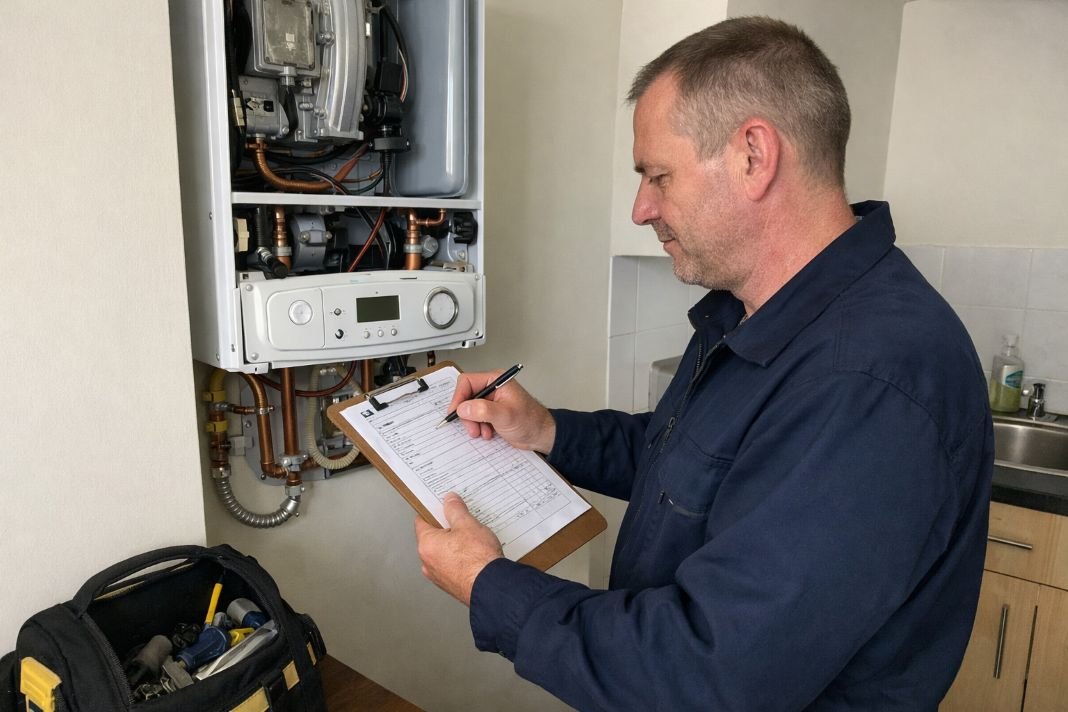
An illustrative image of a gas engineer in a navy uniform no hat checking a boiler in a plain rented flat
Renewals, inspections, and deadlines: managing the new compliance timelines
Landlords who manage one flat can often rely on calendar reminders. Portfolio landlords and agents usually need a more deliberate system, because EICRs, gas checks, EPCs, fire alarm testing, emergency lighting certificates, and PAT testing can start to overlap in awkward ways.
One practical answer is to plan renewals as a rolling schedule rather than as separate emergencies. Landlord Building Certificates is one example of a provider that works within that inspection-led model, where several statutory checks can be arranged in a coordinated visit. That kind of approach can reduce missed dates and repeated access arrangements, particularly in London portfolios with occupied properties.
A working routine might look like this:
- Review every expiry date at least two months in advance.
- Book gas checks early enough to allow for tenant access problems or repeat visits.
- Arrange EICRs with room for any remedial works that may follow the inspection.
- Store digital certificates in one place with clear property addresses and issue dates.
- Link renewal records to licensing, insurance, and tenancy paperwork so nothing sits in isolation.
Digital record-keeping matters more than many landlords expect. A certificate that exists but cannot be located quickly can still create stress during a complaint, audit, or council query. Clear files, named consistently and backed up, make a real difference when deadlines collide.
Some landlords also benefit from grouping inspections by building or by month. A block with shared management can often be scheduled more efficiently than a set of unrelated single appointments across the year. Gas Safe registration, NICEIC approval, TrustMark membership, and similar accreditation markers remain useful checks when selecting inspection providers, especially where several compliance services are being coordinated under one booking structure.
A renewal calendar works best when it allows for delay, not when it assumes everything will go right first time.
Book a Compliance Check
Stay up to date with required safety certificates by scheduling an inspection with our trusted team.
Enforcement, penalties, and tenant rights: what landlords need to know now
Expired certificates can now move through the enforcement process with more visibility and less tolerance for drift. The sequence is usually procedural rather than dramatic, but that does not make it light-touch.
A typical path looks like this.
Stage 1: The issue is identified
A tenant may ask for the current record, a licensing application may expose the gap, or a local authority may spot the expiry during a broader housing review. Once the missing certificate is visible, the matter can shift from internal admin to formal compliance.
Stage 2: The council seeks evidence
Local authorities commonly ask for documents first. If the landlord cannot produce a valid EICR or current gas safety record, the authority may move to an enforcement notice or another formal request for action under the relevant housing and safety rules.
Stage 3: A notice or warning is issued
The authority may set a deadline for compliance. At this stage, speed matters. Landlords who respond promptly, provide evidence of a booked inspection, and complete required works are generally in a stronger position than those who ignore the notice or argue over the expiry date.
Stage 4: Penalties can escalate
Failure to comply may lead to financial penalties or further legal action, depending on the exact breach and the authority’s powers. The Renters’ Rights Act does not mean every late certificate leads straight to the maximum sanction, but it does support a firmer view of expired safety documentation as a tenant protection issue.
Stage 5: The tenancy position may become harder to manage
An unresolved breach can affect wider landlord decisions and may strengthen a tenant’s position in a dispute. Even where the main concern begins with a single expired document, the file can widen to include repair handling, record-keeping, and whether the landlord has met broader legal duties.
Some landlords fear that one missed deadline automatically leads to the harshest outcome. That is usually too simplistic. Enforcement tends to depend on the facts, the length of the lapse, the response after discovery, and whether the property presents wider safety concerns. A short gap that is corrected quickly is plainly different from repeated inaction across multiple properties, and councils can see that difference.
Pro Tip: Set automated reminders at least two months before each certificate expiry to allow time for any unexpected access delays or remedial works.
Common misconceptions and practical realities: staying ahead of compliance risks
One of the most persistent myths is the so-called grace period. In practice, landlords should work on the basis that expiry means expiry. If a certificate is out of date, the compliance position is already compromised.
Another misunderstanding is that booking an inspection is the same as being compliant. Booking is useful evidence of action, but the legal problem is not fully resolved until the inspection is completed and any required follow-up work is dealt with properly.
Some landlords also assume that a small delay will always be treated as minor if the tenant has not complained. That is risky. The absence of a complaint does not turn an expired document into a valid one, and many issues surface later during licensing, possession proceedings, insurance checks, or a change of managing agent.
A steadier approach is to treat EICR and CP12 renewals as fixed operational dates, in the same category as rent accounting or deposit protection. Once compliance becomes routine rather than reactive, deadlines stop piling up into avoidable problems. That mindset is likely to matter even more as rental regulation continues to tighten around safety, documentation, and proof of action.