
Why do some landlords in London fail a gas safety inspection on the first visit?
Most first-visit failures come down to practical issues rather than dramatic defects. Appliances may be blocked, paperwork may be missing, access may not be arranged, or an engineer may find poor maintenance, unsafe installation work, or faults in pipework and meters. A landlord who prepares the property, keeps records in order, and uses a Gas Safe registered engineer is far less likely to lose time on a repeat visit.
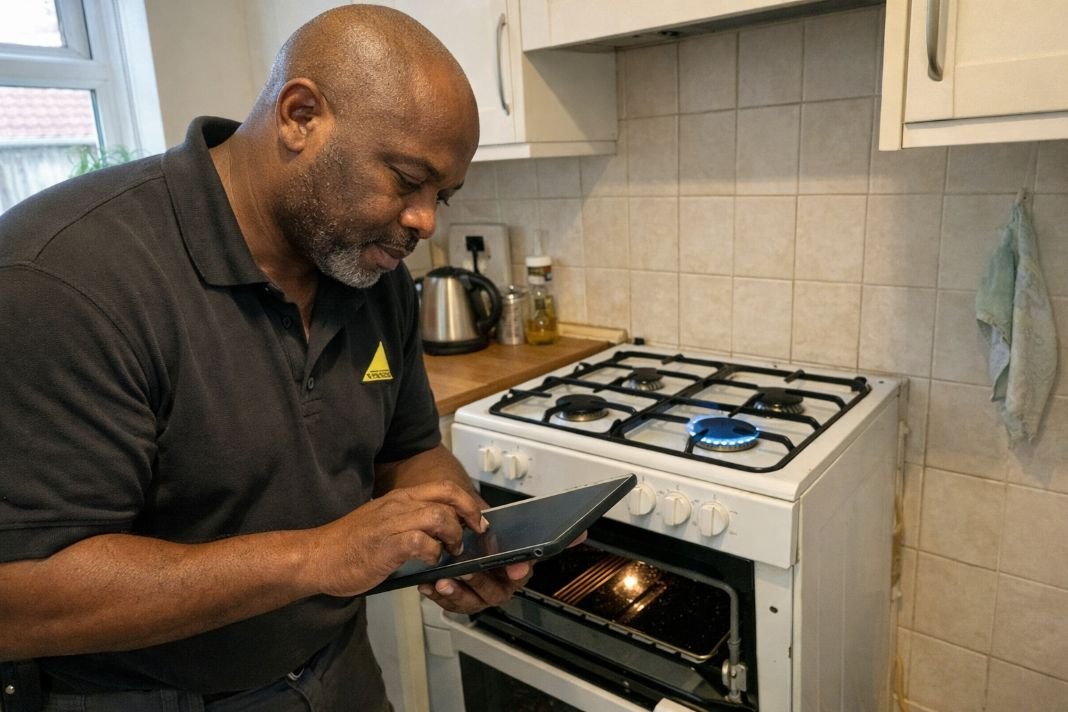
An illustrative image of a gas safe engineer inspecting an accessible gas cooker
Here's What We Have Covered In This Article
Understanding Gas Safety Inspections: What’s Really Required?
A Gas Safety Certificate (CP12), often called a landlord gas safety record or gas cert, is a legal document that confirms gas appliances, flues and related fittings have been checked. For rented property, that check sits under the Gas Safety (Installation and Use) Regulations 1998, and the inspection must be carried out by an engineer on the Gas Safe Register.
Many landlords think a gas safety check is the same as a routine service. It is not. A service focuses on maintenance and performance, whereas a statutory inspection checks whether appliances and installations meet the legal standard for safe use in a rented property.
During a legal gas inspection, the engineer is usually looking at points such as:
- the safe operation of each gas appliance
- signs of gas leaks or unsafe pressure
- ventilation and air supply
- the condition and suitability of flues
- whether safety devices appear to work as intended
- whether the installation shows visible defects or non-compliant work
Passing is not always a simple yes or no. One appliance may be satisfactory while another cannot be tested because a cupboard blocks access or a tenant has locked a room. In the same way that an MOT cannot be completed properly if the bonnet will not open, a landlord gas certificate cannot be issued cleanly if key parts of the system cannot be inspected.
Pro Tip: Review tenant communications in advance and provide both written and verbal reminders about inspection dates and required access.
An illustrative image of a landlord and Gas Safe engineer
1. Inaccessible or Obstructed Gas Appliances
A boiler hidden behind stored boxes is one of the most common examples. Another is a hob that cannot be inspected properly because a fitted panel has been fixed in front of pipe connections. In occupied London rentals, simple access problems can stop an engineer before any technical testing even begins.
A Gas Safe registered engineer must be able to reach every relevant appliance safely. That includes boilers, cookers, fires and, where relevant, visible flues and pipe connections. If the appliance sits in a locked room, behind heavy furniture, or inside a packed utility cupboard, the visit can become an inspection failure for access reasons alone.
Common access issues include:
- boxed-in boilers with no practical inspection space
- kitchen appliances pushed tight against isolation points
- tenant belongings blocking cupboards or meter locations
- locked outbuildings or bedrooms containing gas equipment
- sealed units or decorative covers that prevent safe viewing
Before the visit, landlords can ask tenants to clear the area around each appliance and make sure all relevant rooms, cupboards and external spaces are open. A short pre-visit message with a list of locations often works better than a vague reminder. In furnished flats, even moving one chest of drawers can be the difference between a completed gas safety record and a wasted appointment.
2. Out-of-Date or Missing Gas Appliances Documentation
Paperwork does not replace the inspection, but it can matter when the engineer needs appliance details, installation history or manufacturer guidance. Missing records are easy to overlook, especially in properties that have changed hands, been refurbished, or had replacement boilers fitted years ago.
An older appliance without a clear installation record or manual may slow the inspection if the engineer needs to confirm model information or check specifications. That does not mean every missing booklet causes failure, but documentation gaps can create uncertainty that makes sign-off harder.
Useful records to keep in one place include:
- The previous Gas Safety Certificate (CP12)
- Any appliance installation certificate or commissioning record
- The manufacturer’s manual, if available
- Service records and repair notes
- Proof of any remedial work carried out after an earlier gas safety check
If paperwork has gone missing, landlords can often rebuild the file. Previous managing agents, installers, boiler manufacturers and earlier engineers may hold copies of records. Appliance manuals are also commonly available from manufacturer libraries if the model number is still readable. A tidy digital folder is usually easier to maintain than a drawer full of loose certificates.
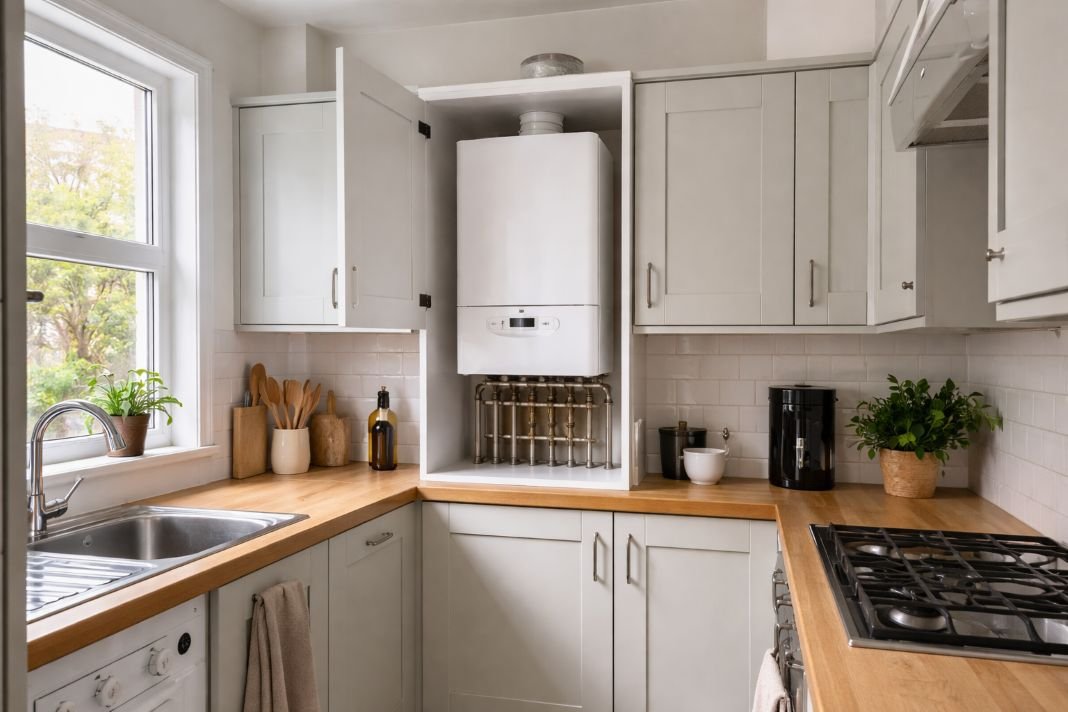
An illustrative image of a London flat kitchen with clear access to a modern boiler
3. Unsafe or Non-Compliant Gas Installations
Older London housing stock often carries the marks of several decades of alterations. A kitchen may have been refitted, a boiler moved, or pipework rerouted during past works. Some of those changes were done properly. Others were not.
An unsafe gas installation does not always mean a dramatic leak or obvious damage. In many cases, the issue is that the work no longer meets expected safety standards, or it appears to have been installed in a way that a certified gas engineer cannot accept. DIY alterations, unsuitable flue arrangements, poor ventilation provision, and outdated fittings can all raise concerns under the Gas Safety (Installation and Use) Regulations 1998 and relevant British Standards.
Inspectors often pick up issues such as:
- boiler flues that terminate in unsuitable positions
- inadequate ventilation for the appliance type
- unsupported or poorly routed pipework
- signs that a gas appliance has been moved without proper installation work
- damaged seals, casings or connections
- gas work that appears inconsistent with professional fitting standards
Sometimes the fix is minor. In other cases, the engineer may classify the situation as unsafe and advise that remedial work is needed before a valid landlord gas certificate can be issued. That is one reason first-visit failures are not always about neglect. In an older flat converted from a house, a landlord may inherit non-compliant work done long before the current tenancy began.
Arrange Your Gas Safety Inspection
Book a qualified Gas Safe engineer at a time that suits you and ensure your property meets legal compliance.
4. Faulty or Poorly Maintained Gas Appliances
Missed servicing often shows up during the annual gas safety check. Boilers and gas fires can keep running in a way that looks normal to a tenant, even when wear, residue or declining component condition is already affecting safe operation.
Regular servicing and legal inspection are linked, but they are not identical. A service follows manufacturer’s service guidelines and deals with maintenance. The inspection tests whether the appliance is safe at the time of the visit. A boiler that has skipped its recommended service interval may still operate, yet fail the gas safety check because a fault has developed in the meantime.
Landlords should keep an eye on patterns such as repeated breakdowns, unusual ignition delays, scorch marks, warning lights, irregular flame appearance or tenant reports of smells and shutdowns. Those signs do not confirm danger on their own, though they do justify prompt attention from a Gas Safe engineer.
A simple maintenance routine usually covers the basics:
- keep annual servicing dates recorded
- review past repair notes before the certificate renewal is due
- act on tenant reports instead of waiting for the next inspection
- replace ageing appliances where repairs are becoming frequent
One neglected boiler can hold up the whole visit, particularly if the engineer finds faults that should have been addressed months earlier.
Pro Tip: Keep digital copies of all certificates and installation records in a single online folder to speed up future inspections.
5. Gas Meter or Pipework Issues
Meters and pipework often receive less attention than the boiler itself, even though they form part of the wider safety picture. In older London properties, visible corrosion, awkward meter placement and historic alterations to pipe runs are all common enough to cause trouble on inspection day.
Some defects are straightforward. A meter cupboard may be jammed shut, or the space around the meter may be so packed that safe access is impossible. Other concerns involve the condition of the pipework, including corrosion, poor support, damage, or signs of previous work that looks makeshift.
Landlords can check a few practical points before the visit. The gas meter should be reachable, the cupboard or box should open, and visible pipe runs should not be hidden behind fresh storage or recent joinery work. If a property has had refurbishments, pay attention to any area where flooring, kitchens or utility units may have altered access to existing gas lines. In a Victorian conversion or an ex-local authority flat, those hidden alterations are often where small inspection problems begin.

An illustrative image of a landlord standing in a rental property living room
6. Tenant Access and Communication Failures
A valid inspection still depends on someone opening the door and allowing the engineer to reach the appliances. Access problems are one of the most ordinary reasons a first visit fails, especially in London where tenants may work long hours, sublet rooms, or misunderstand the appointment window.
Landlords have duties under the Gas Safety (Installation and Use) Regulations 1998, but tenants also need reasonable notice and clear information. A vague message that says an engineer is coming sometime next week is often not enough. Good communication lowers the chance of missed appointments without turning the process into a dispute.
Useful habits include:
- Giving notice in writing with the date and time window
- Explaining which rooms or cupboards need to be accessible
- Reminding tenants shortly before the visit
- Confirming how keys or managed access will work if the tenant cannot attend
Missed appointments become more likely where shared houses, managed blocks and busy family homes are involved. A tenant may be willing, but one locked bedroom or one misread text message can still stop the inspection. Written records of appointment attempts also matter if access becomes an ongoing issue and the landlord later needs to show they took reasonable steps.
7. Booking the Right Engineer: Credentials and Accreditation
The inspection is only valid if it is carried out by a Gas Safe engineer with the right registration for the work involved. That point sounds obvious, yet some landlords still book on price or availability alone and assume any heating engineer can issue a lawful landlord gas safety record.
Checking credentials is simple. Look up the engineer or business on the Gas Safe Register, confirm the registration is current, and make sure the engineer is qualified for the appliance type being inspected. Gas Safe ID should also be available on the day of the visit. TrustMark can add reassurance about the business framework, although Gas Safe registration remains the central requirement for gas work.
Landlord insurance, compliance records and enforcement issues all become harder to deal with if the original inspection was not carried out by a properly accredited professional. For landlords who want inspections grouped with other certificates, a provider such as Landlord Building Certificates may also be handling Electrical Installation Condition Reports (EICR) and Energy Performance Certificates (EPC), but the gas side still depends on the correct Gas Safe credentials being in place for that specific visit.
Avoiding Repeat Failures: Building a Routine Compliance Mindset
Most repeat failures come from treating the gas safety check as a single annual task instead of part of normal property management. Once landlords view certificates as time-bound records within a wider compliance cycle, preparation becomes much easier.
A workable routine usually includes one calendar for renewals, one digital folder for records, and one process for tenant communication before each visit. Grouping a gas cert with other due items, such as an EICR or EPC where timing aligns, can also reduce disruption and cut down on separate appointments.
Landlords who stay organised usually do three things well: they keep appliance histories, they deal with access before the engineer arrives, and they act on minor issues before those issues grow into failed inspections. That approach turns compliance from a yearly scramble into ordinary admin, which is exactly where it belongs.