How can commercial landlords in London prepare their sites for a first-time EICR inspection to be successfully completed?
Commercial landlords in London can prepare for an Electrical Installation Condition Report (EICR) by gathering necessary documentation, ensuring uninterrupted site access, readying electrical installations, coordinating with tenants and staff, and proactively resolving common compliance issues. This level of preparation helps ensure that the inspection can be finished in one visit, saving time and preventing delays.

An illustrative image of a EICR inspector speaking with a site representative in front of a modern office building
Here's What We Have Covered In This Article
Understanding the Commercial EICR Process in London
A Commercial Electrical Installation Condition Report, or EICR, is a formal assessment of a property’s electrical safety and compliance. In London, regulatory bodies require these inspections to protect occupants, staff, and visitors, while providing landlords with legal evidence of ongoing compliance.
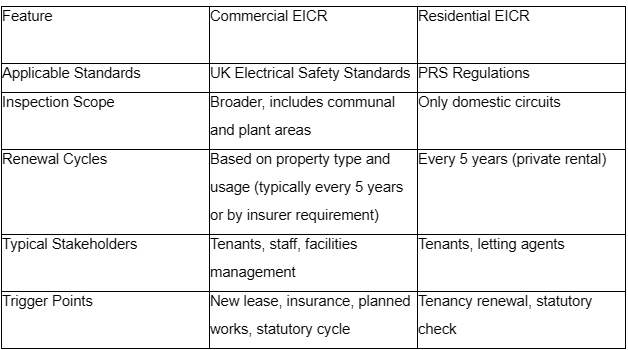
Commercial EICRs differ from residential assessments in several important ways. The following table highlights key differences:
An EICR inspection unfolds in structured steps:
- Initial review of previous certification and site documentation.
- Physical walkthrough to assess accessibility and identify potential hazards.
- Examination of fixed electrical systems, distribution boards, and circuits.
- Live testing to confirm safety and compliance with UK regulations.
- Detailed recording of findings, including recommendations or necessary remedial actions.
- Issuance of the completed report with clear coding reflecting any deficiencies or hazards.
Failed visits tend to result from incomplete documentation, blocked access, or an unprepared site. Preventing these issues requires careful, advance planning.
Pro Tip: Digital copies of previous electrical certificates and site plans speed up the inspection and reduce the chance of delays.
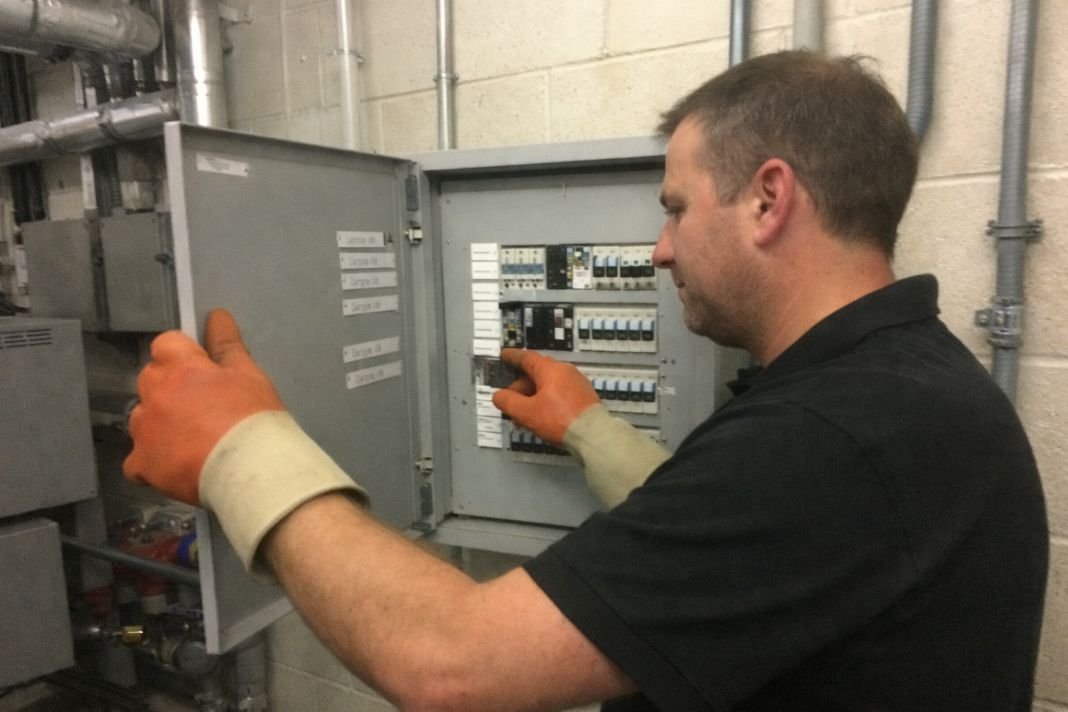
An illustrative image of an electrician checking a distribution board in a well-lit plant room
An EICR inspection unfolds in structured steps:
- Initial review of previous certification and site documentation.
- Physical walkthrough to assess accessibility and identify potential hazards.
- Examination of fixed electrical systems, distribution boards, and circuits.
- Live testing to confirm safety and compliance with UK regulations.
- Detailed recording of findings, including recommendations or necessary remedial actions.
- Issuance of the completed report with clear coding reflecting any deficiencies or hazards.
Failed visits tend to result from incomplete documentation, blocked access, or an unprepared site. Preventing these issues requires careful, advance planning.
Important Pre-Inspection Documentation and Access
A number of practical issues can stall or derail an EICR visit. For example, a property manager once scheduled an early-morning inspection but the engineer was delayed because the necessary keys were with a staff member on leave and alarm codes were not shared. Such problems are avoidable.
Here is a pre-inspection documentation and access checklist:
- Previous electrical certificates Keep EICRs, installation certificates, and records of any remedial works readily available.
- Detailed site plans Provide up-to-date plans that show all electrical installations, distribution boards, and plant rooms.
- Access permissions and keys Supply keys, fobs, or entry codes for all locked areas and risers.
- Alarm codes and access systems Communicate any security procedures or disable alarms during the inspection window.
- Maintenance records Have logs of electrical work performed since the last inspection on hand.
- Tenant and staff coordination details Ensure contact information is up to date for anyone responsible for access on the day.
Ideally, LBC receives these documents in digital form ahead of arrival. For some legacy properties, paper records may still apply, but digital files are strongly encouraged. Clear document handover minimises the risk of wasted visits and unexpected charges.
Advance preparation is the best way to ensure that engineers can proceed with inspection immediately upon arrival.
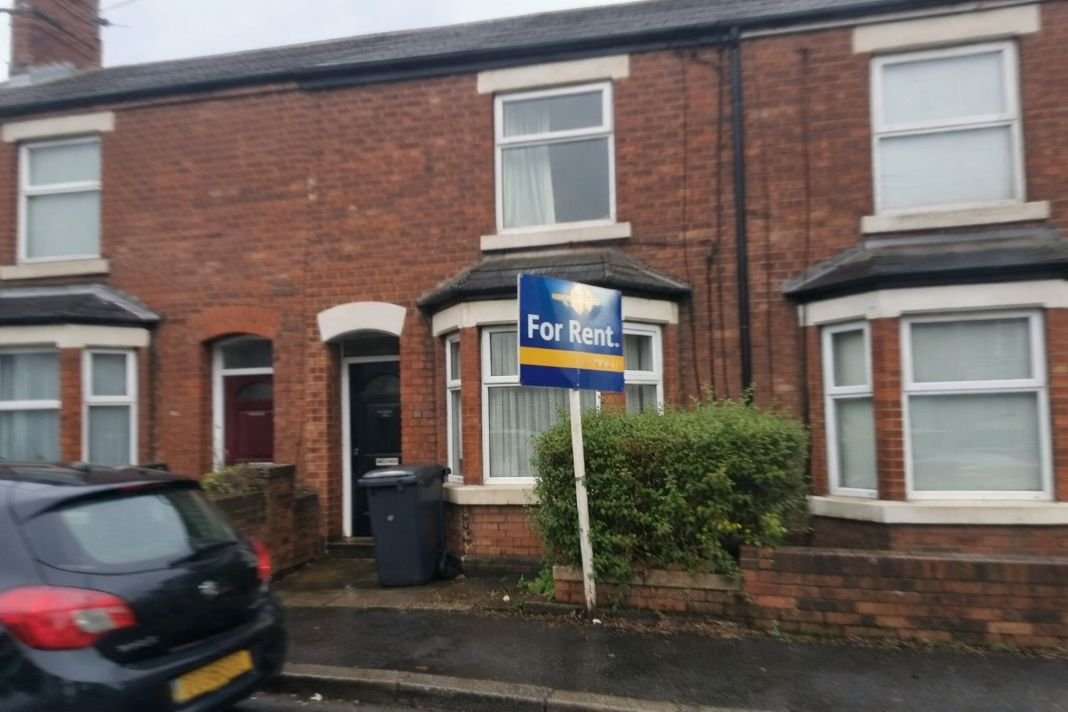
An illustrative image of a terraced rental property on a typical UK street with a for rent sign visible
Explore EICR and Remedial Packages
See our bundled EICR and remedial services designed to simplify your safety obligations.
Preparing the Electrical Installation for Inspection
Electrical installations that are physically inaccessible or improperly labelled are a leading cause of incomplete EICRs. Before your inspection, walk through the site with a focus on removing common barriers.
Preparation steps for your electrical installation:
- Clear access to all distribution boards and consumer units Move stored items, unlock panels, and remove obstacles so that test equipment can be connected safely.
- Label boards and circuits Check that all distribution boards and circuit breakers are clearly labelled and correspond to your site plans.
- Address temporary works If building work is underway, remove temporary wiring from key circuits or clearly identify it for the engineer.
- Locate and test isolation switches Ensure switches are accessible and functional in all plant rooms and risers.
- Provide safe means of access Arrange for ladders or lift keys if distribution boards are situated at height or in locked service areas.
Common pitfalls:
- Locked risers or service ducts with no access on the day.
- Storage or stock blocking access panels.
- Incomplete labelling, leading to time lost tracing circuits.
- Ongoing works masking or isolating key sections.
Proactive attention to these issues allows the inspection to proceed without unnecessary delays or repeat appointments.
Coordinating with Tenants, Staff, and Other Stakeholders
A well-organised inspection depends not just on technical readiness but on clear communication with everyone impacted by the visit. Consider a scenario in which an engineer arrives at a multi-tenant building but building security has not been informed about the inspection. Access is delayed, and tenants are caught off guard.
Templates and approaches for coordination:
- Notice to tenants or occupants: “We wish to advise that a statutory electrical safety inspection will take place on [date] between [hours]. Access to all electrical areas is required. Please speak to [contact] with any concerns.”
- Staff and facilities notification: “An engineer from Landlord Building Certificates is scheduled for an EICR inspection. Please ensure all plant rooms and risers are accessible, and that keys and codes are available.”
- Contractor and security briefing: “Please verify engineer ID on arrival and provide access in line with normal procedures. Inspection areas are listed in the attached plan.”
Top tips for smooth coordination:
- Provide tenants and staff with at least 24 to 48 hours’ notice.
- Share a schedule of planned access times, especially for sensitive or shared spaces.
- Confirm receipt of key instructions by all relevant stakeholders before the visit.
Efficient communication makes the inspection process smoother for everyone, minimising disruption to operations while meeting legal notice requirements.
Addressing Common Compliance Issues Before the Visit
Many EICR failures in commercial settings are due to preventable, routine faults. Acting early can help sidestep delays or costly follow-ups.
Common issues to watch for:
- Broken or missing covers on distribution boards.
- Damaged sockets, switches, or faceplates.
- Exposed wiring, especially near workstations or storage areas.
- Evidence of overheating, such as scorched outlets or persistent tripping.
- Outdated installations that do not meet current BS 7671 requirements.
- Emergency lighting or fire alarm circuits that are not labelled or tested.
When these minor faults are spotted ahead of time, scheduling a qualified contractor for remedial repairs before the inspection ensures that the EICR can be completed first time.
If you are unsure whether a particular issue is significant, it is usually wise to consult your electrical contractor or contact Landlord Building Certificates for pre-inspection advice.
Being proactive in addressing these details means the inspection is more likely to be a formality rather than a source of stress.
Pro Tip: Notify all tenants and contractors at least 48 hours before the scheduled EICR to ensure site access runs smoothly.
What to Expect on Inspection Day
Inspection day is straightforward if all preparations are in place. A certified engineer will arrive at the agreed time, typically introduced by the site representative or property manager.
A typical inspection runs as follows:
- Arrival and induction: Engineer is introduced and briefed by the site contact.
- Document review: The engineer reviews past certificates and site plans.
- Site walkthrough: Access is checked, and distribution boards are identified.
- Live testing: Circuits are tested for safety and compliance.
- Observations and immediate queries: Any concerns or access issues are raised for resolution on the spot.
- Preparation of findings: The engineer completes their assessment and compiles notes for the report.
The inspection is usually non-intrusive, though some operational disruption may occur if circuits must be switched off for short periods.
What if issues are found during inspection?
If minor faults are identified, the engineer will note them in the report, clearly coding each issue. In most cases, the EICR can still be issued, but remedial action will be specified. If a significant hazard is encountered, immediate remedial action or disconnection may be required for safety reasons.
Being present or having a trusted representative available throughout the inspection ensures swift communication and avoids unnecessary delays.
After the Inspection: Receiving and Acting on Your EICR
Once the inspection is complete, you can expect to receive your digital EICR promptly, often on the same or next business day if using a provider like Landlord Building Certificates.
The EICR report contains specific codes indicating the status of each part of your installation:
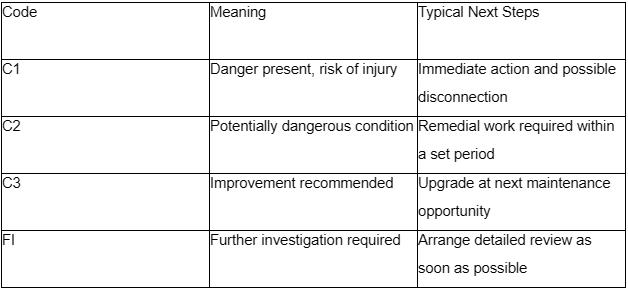
If your report highlights C1 or C2 items, address these promptly to remain compliant and fulfil your statutory obligations. LBC offers bundled packages for remedial work and re-inspection, which can help simplify the process.
Checklist for post-inspection actions:
- Read your report carefully and note all codes.
- Arrange remedial works for any C1, C2, or FI codes.
- Schedule a follow-up inspection if required.
- File the certificate with your compliance documentation and notify all relevant stakeholders, including insurers if necessary.
Acting quickly and methodically on the report helps maintain your property’s compliance, ensures tenant safety, and minimises the risk of enforcement or void insurance.
Successful preparation and coordination mean that a commercial EICR can be completed in a single visit, freeing up your time and reducing administrative burden. With a reliable partner like Landlord Building Certificates, commercial landlords and managers in London can approach compliance as a structured, manageable process that supports both legal obligations and property operational needs.