Fixed-fee vs variable-price certificates: what landlords actually mean
What is the difference between fixed-fee and variable-price certificates for landlords?
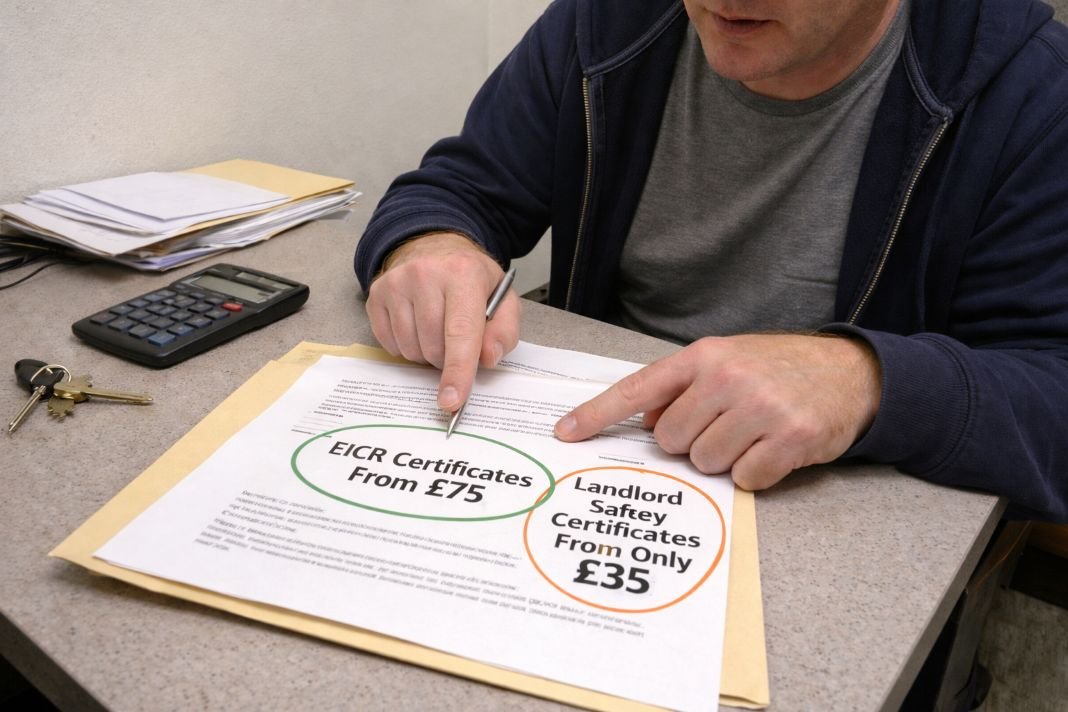
Landlords comparing quotes on safety certificates are really deciding how much unpredictability they’re comfortable with. Fixed fees mean one agreed price for a job with clearly defined scope. Variable pricing means you’ll only know the true cost after the job begins, depending on things like circuit numbers, appliances, and access.
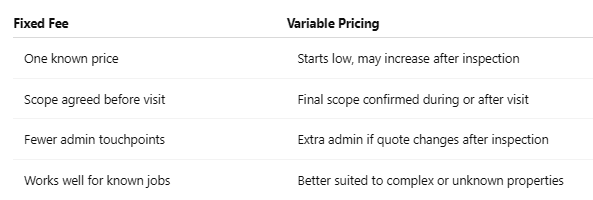
The more predictable the property, the better fixed-fee works. The more uncertainty which implies that alterations, old wiring, unclear records which implies that the more sense variable pricing makes.
Here's What We Have Covered In This Article
What you’re paying for: inspection time, reporting, and liability
Certificates are the output. What matters is the input which implies that time spent on-site, professional testing, and formal liability accepted by the provider.
An EICR should include circuit testing, condition coding, and reporting aligned with IET standards. Gas safety certificates require a Gas Safe registered engineer and must meet HSE documentation rules.
These aren’t just signatures. A certified inspection report is your proof of due diligence, and it can protect you if something goes wrong.
The pricing ‘gotchas’: circuits, appliances, access, and travel costs
Some of the most common reasons quotes rise after booking include:
- Circuits: EICRs usually include a base number. Extra circuits are billed per unit.
- Appliances: A CP12 often covers one boiler. Hobs, cookers, and fires may cost more.
- Access: Tenant not home? No key left? Loose dog? You might get charged for a rebooking.
- Travel: In London, parking and congestion zone fees may not be in the original quote.
Use an inspection checklist to clarify all this before confirming a compliance visit quote:
- Confirm how many circuits or appliances are included in the quote.
- Check for any limits on what’s included (e.g. number of circuits or appliances).
- Ask about re-visit policies and access requirements.
- Verify whether parking or congestion charges apply.
- Get written confirmation of the scope and exclusions.
Pro Tip: Bundle inspections to save on travel, access coordination, and admin time..
Gas Safety (CP12): when fixed fees usually win
Gas inspections are relatively predictable. If you know how many appliances are present and access is clear, fixed pricing tends to be accurate and good value.
You can also schedule them up to two months early without losing time on your renewal cycle. That makes them easy to combine with other certificates.
Provide:
-
Appliance count
-
Appliance types
-
Access instructions
This makes it easier to get a reliable fixed quote and avoid duplicate visits.
EICR pricing models: per-property vs per-circuit (and why it matters)
Electrical inspections vary more. The number of circuits, access to sockets, and condition of the wiring can change the job dramatically.
Per-property pricing often works for small, known properties. Per-circuit pricing is more accurate when conditions are unclear or the circuit count is high.
If a quote seems low, check how many circuits are included which implies that and what each extra will cost.
In London compliance services, circuit volume is a major driver of time and price.
Fire alarm, emergency lighting, PAT: why scope definition is everything
These systems are not generic which implies that they’re built around assets, and priced accordingly.
Know the number of detectors, alarm zones, and lights. PAT pricing is nearly always per item.
To get a valid fixed quote:
-
List your fire or lighting assets
-
State the system type
-
Provide the last inspection date or current logbook
That makes quoting straightforward and avoids extra charges.
The “total cost of compliance” method (a simple calculator approach)
Chasing the cheapest quote can backfire. It’s better to estimate what the job will actually cost once you add time and risk.
Total Cost = Base Price + Expected Extras + Revisit Risk + Your Time
Fixed pricing reduces uncertainty. Variable pricing can work well for clean, accessible properties. Multi-certificate inspections which implies that gas, EICR, EPC which implies that done in one visit often cost far less overall.
Bundle and Save on Safety Certificates
Book gas, electrical, and fire safety checks in one visit. Save time, reduce admin, and stay compliant.
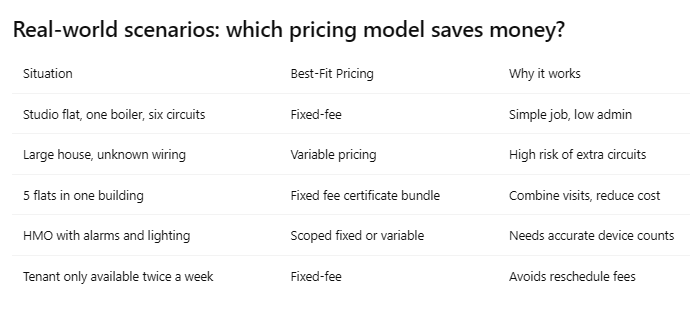
Real-world scenarios: which pricing model saves money?
How to force price clarity before booking (without being awkward)
Before booking, ask:
- How many circuits/appliances are included?
- Are parking, congestion, or travel costs extra?
- What happens if access fails?
- Will you confirm all exclusions in writing?
- Can I book gas and electric in one visit?
These steps help you avoid hidden charges and ensure the quote reflects the real scope.
Following this checklist helps turn vague estimates into clear, comparable quotes.
Pro Tip: Always confirm how many circuits or appliances are included before you accept a quote.
How Landlord Building Certificates keeps compliance cost-controlled
LBC helps landlords stay legal without surprise costs. Their engineers are Gas Safe, NICEIC, and TrustMark accredited. Services include:
-
CP12 fixed price gas safety checks
-
EICRs with circuit-based or fixed pricing
-
EPCs and fire alarm testing
-
Emergency lighting and PAT
They routinely offer multi-certificate inspections to streamline visits and reduce disruption. Certificates are typically issued quickly, and pricing is outlined clearly before work begins.
With coverage across West and North London, LBC reduces admin, cuts costs, and helps you stay ahead of renewal deadlines.
FAQs: fixed price, variable price, bundling, and certificate timing
-
Is fixed-fee always cheaper? No. But it’s easier to budget and avoids cost creep.
-
What does “from £X” usually exclude? Extra circuits, appliances, re-visits, and travel fees.
-
Can I bundle gas and electrical checks in one visit? Yes. Multi-certificate inspections are more efficient.
-
How often do I need an EICR? Every 5 years, or at tenancy change if required.
-
Can I renew a CP12 early? Yes, up to two months before the expiry date.
-
Why do EICR quotes vary so much? Circuit count, property condition, and provider standards.
-
Do extra circuits or appliances cost more? Often yes. Clarify this before booking.
-
How do I avoid hidden fees? Ask direct questions. Confirm scope. Get everything in writing.
Fixed Price Safety Checks with No Hidden Costs
Know what you’re paying upfront with clear, landlord-friendly pricing.