
Does a valid gas safety certificate stay valid when one tenant leaves and another moves in?
Yes, a valid Gas Safety Certificate, often called a CP12 or landlord gas safety record, can carry over to a new tenant if it is still in date. Landlords do not need a fresh gas safety check simply because the tenancy changes, but they must give the incoming tenant a copy of the current record before occupation and keep the annual inspection cycle on track.
Here's What We Have Covered In This Article
Understanding Gas Safety Certificate (CP12) Requirements for Landlords
A Gas Safety Certificate is the record produced after a gas safety check on relevant appliances, pipework and flues in a rented property. Under the Gas Safety (Installation and Use) Regulations 1998, landlords must arrange an inspection every 12 months by an engineer on the Gas Safe Register. The document serves as legal evidence that the required check took place.
A few legal points matter most:
- The inspection must be completed every year.
- The check must be carried out by a Gas Safe registered engineer.
- Existing tenants must receive a copy of the landlord gas safety record within 28 days of the check.
- New tenants must receive a copy before they move in.
Confusion often starts at tenant changeover. Some landlords assume a new occupier automatically triggers a new gas cert. The law does not work that way. The key issue is whether the current certificate is valid and whether the incoming tenant receives it at the right time.
Consider a simple example. If a property passed its gas safety check in March and a new tenant moves in during July, the March record still applies. The inspection date remains the anchor point, and the next annual renewal still falls around the following March.
Does a Gas Safety Certificate Carry Over to New Tenants?
In most cases, yes. A current CP12 carries over to the new tenant until its expiry date, provided no separate issue means a fresh inspection is needed.
The certificate relates to the property and its gas installations at the time of inspection, not to the identity of the tenant. A tenancy ending does not cancel a valid landlord gas safety record. What changes at a new let is the landlord’s duty to hand over the documentation correctly.
A few practical implications are worth keeping in mind:
- A new tenant does not automatically mean a new inspection.
- An expired gas safety certificate cannot be reused for a fresh tenancy.
- A short void period does not reset the annual renewal cycle.
- Appliance changes or gas work carried out after the last check may justify another inspection.
Take two common scenarios. One landlord has a valid gas safety record dated six months ago and re-lets the flat after a brief gap. That certificate can still be used, as long as the new tenant gets a copy before moving in. Another landlord has a certificate that expired during a long void period. In that case, a new gas safety check is needed before the property is occupied again.
Letting agents and property managers often build this into their pre-tenancy process because the issue is less about tenant transfer and more about certificate validity, timing and proof of delivery.
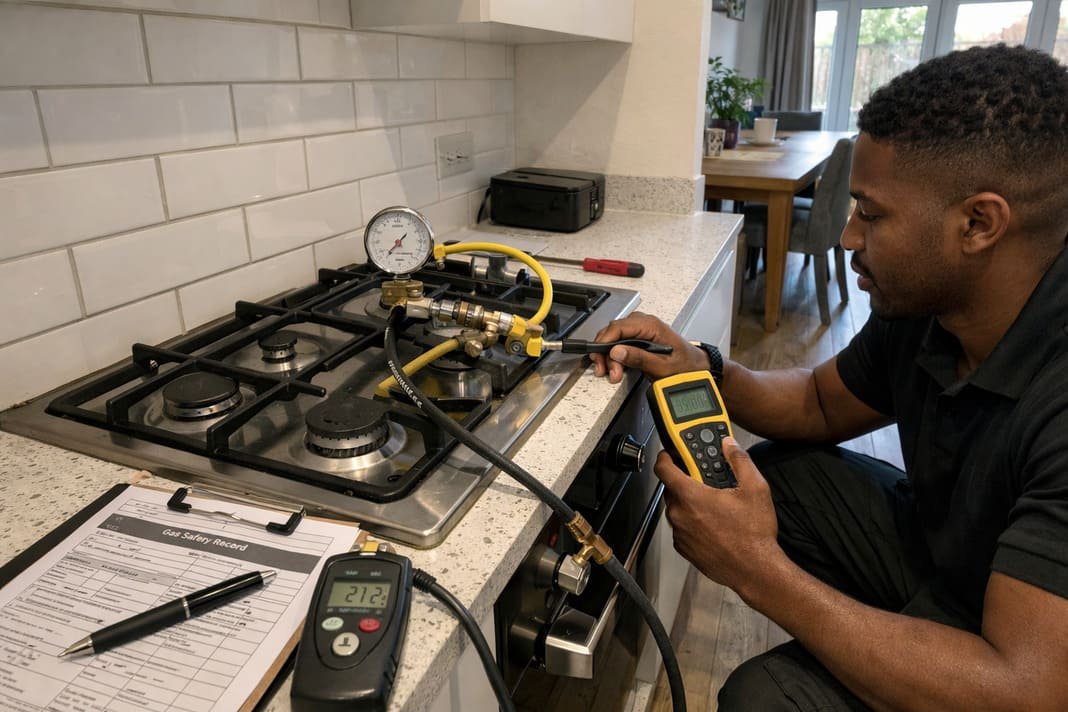
Gas Safety Certificate London kitchen appliance inspection and gas compliance service for residential properties – Illustrative I
Legal Obligations When Letting to a New Tenant
A new tenancy creates a clear paperwork duty, even if the current gas safety certificate remains valid. Landlords must make sure the incoming occupier receives the right document at the right stage.
The simplest way to stay compliant is to follow the sequence below.
- Check that the existing Gas Safety Certificate is still within its 12-month validity period.
- Confirm that the inspection was completed by a Gas Safe registered engineer.
- Give the new tenant a copy of the current landlord gas safety record before occupation starts.
- Keep a record showing when the document was issued or shared.
- Retain gas safety records for at least two years.
Timing matters. Existing tenants should receive the report within 28 days of the inspection. New tenants fall under a different rule, which means that they must receive the record before moving in. Leaving it until the tenancy has already started can create a compliance problem, even if the gas check itself was done on time.
Portfolio landlords and agents usually need a consistent handover process because missed paperwork tends to happen during busy turnaround periods. A digital copy stored with tenancy documents can make the handover much easier to evidence if any issue arises later.
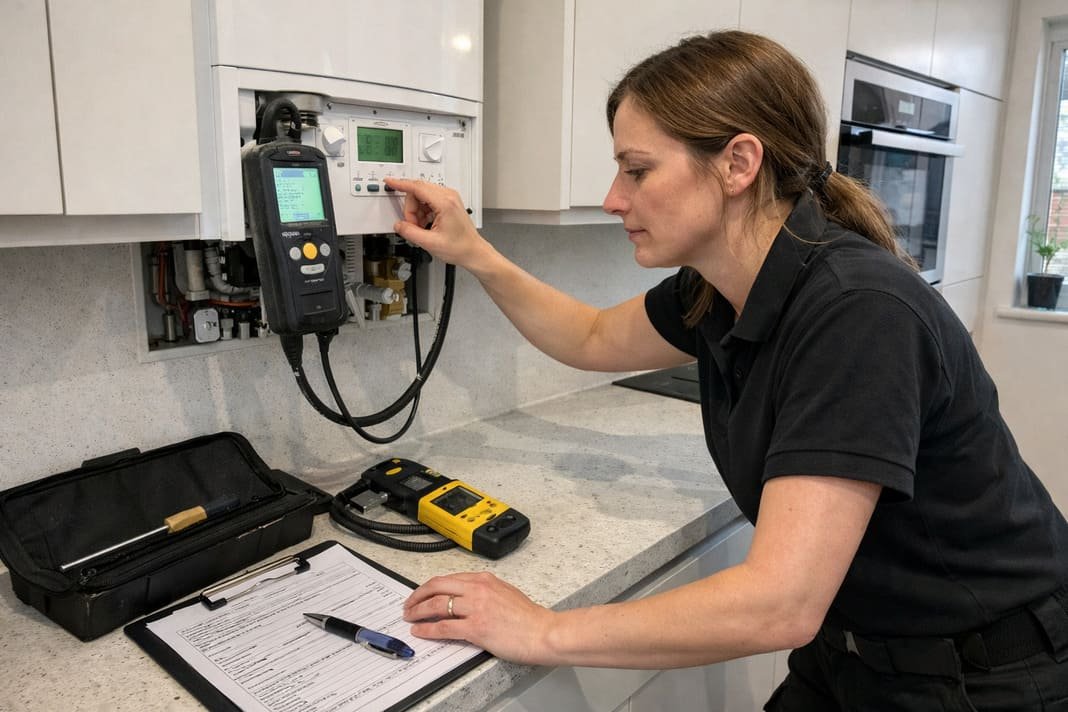
Gas Certificate London boiler inspection and gas safety compliance service for landlords homeowners and rental properties – Illustrative
Common Pitfalls and How to Avoid Them
Most gas safety certificate mistakes are administrative rather than technical. The inspection may have been done properly, yet the landlord still faces problems because the record expired, was not passed on, or was filed badly.
Several patterns come up again and again:
- Using a certificate that expires just before move-in. Prevention tip: check the inspection date during marketing, not on key handover day.
- Forgetting to give the incoming tenant the CP12 before occupation. Prevention tip: include it with the tenancy pack as a standard document.
- Assuming a void period pauses the annual renewal date. Prevention tip: treat the renewal cycle as fixed unless a new inspection is carried out.
- Misplacing older records. Prevention tip: keep digital copies in one property file with clear dates.
- Relying on someone not on the Gas Safe Register. Prevention tip: verify the engineer’s registration before the visit.
Insurance providers, local authorities and managing agents may all ask for compliance documents in different situations. An expired or missing gas cert can create avoidable friction, particularly if a claim, inspection or licensing issue appears at short notice.
Short gaps between tenancies often create the biggest problems because people assume the paperwork can wait until after move-in, and that is exactly where deadlines get missed.
The Role of Accredited Providers in Gas Safety Compliance
Gas safety checks should always be carried out by a Gas Safe engineer. That is the baseline requirement. Beyond that, landlords often benefit from providers whose work is inspection-led, well documented and easy to track across multiple properties.
A straightforward comparison helps.
- Accredited, compliant provider: uses Gas Safe registered engineers, issues proper records, follows inspection standards, and gives clear documentation.
- Informal or unverified contractor: may not be legally authorised, may produce incomplete paperwork, and may leave the landlord without reliable evidence of compliance.
Professional standards matter because the certificate itself is only part of the picture. The inspection process, the accuracy of the report and the quality of record-keeping all feed into compliance. TrustMark and NICEIC are relevant markers in wider property safety work, although gas checks themselves must rest on Gas Safe registration.
For landlords managing more than one property, operational efficiency becomes part of compliance. A provider such as Landlord Building Certificates may fit into that model where combined visits and digital reporting reduce admin across gas, electrical and other statutory checks. The real value lies in having documents that are easy to retrieve when renewals, audits or tenant handovers come around.
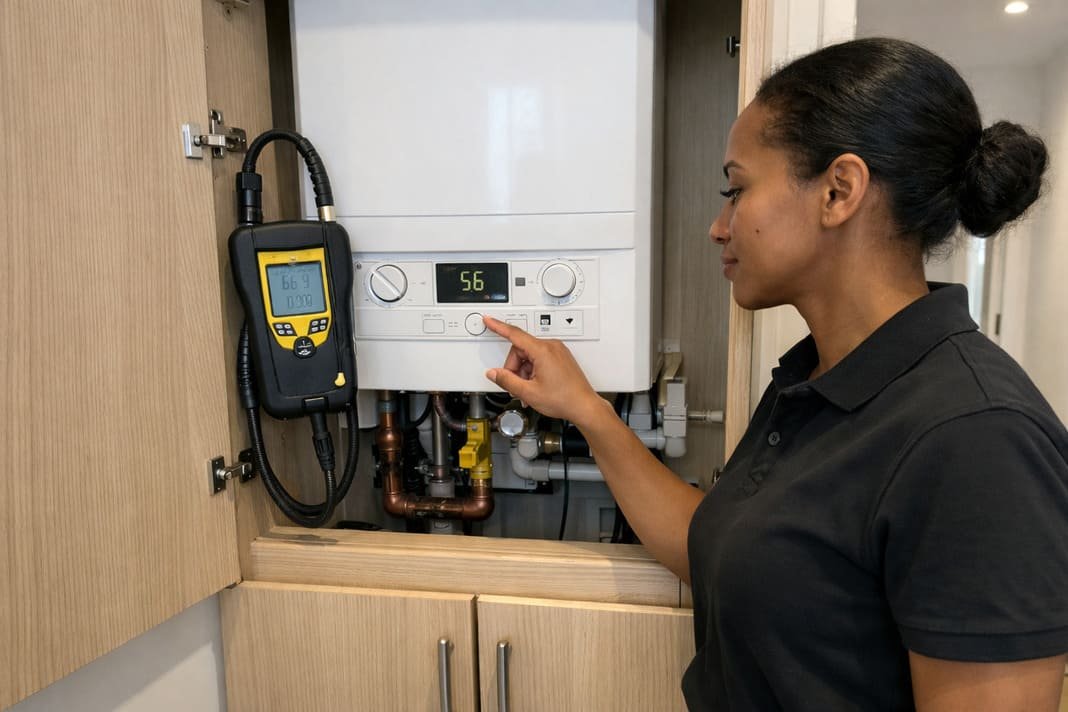
Gas Safety Certificate London home boiler inspection and gas compliance service for residential properties – Illustrative Image
Looking Ahead: Staying Proactive with Gas Safety Compliance
Gas safety compliance tends to feel difficult only when it is left until the last minute. Once the annual cycle, document storage and tenancy handover are treated as routine admin, the process becomes far easier to manage.
A few habits can keep things orderly:
- Log each CP12 renewal date in a shared calendar or property management system.
- Store every gas safety record digitally with the inspection date clearly labelled.
- Review certificate dates before advertising a property for re-let.
- Build document handover into the standard move-in process.
Landlords who stay ahead of the dates usually avoid the last-minute scramble that leads to missed appointments or incomplete files. The annual gas safety check is a fixed duty under the Regulations, but it does not need to disrupt a tenancy cycle.
A valid gas safety certificate can carry over from one tenant to the next, yet the handover duty never carries itself. Keeping one eye on the expiry date and the other on the paperwork is usually enough to keep the position clear.