What certificates must landlords renew, and how often?
Landlords in England are legally required to renew key property safety certificates on a regular schedule. These include recurring inspections for electrical, gas, energy, fire alarm, emergency lighting, and frequently portable appliances. Missing a certification deadline can lead to enforcement notices, insurance complications, or legal disputes. Structuring a compliance calendar helps ensure that all renewals stay on track without unnecessary disruption to tenants or property operations.
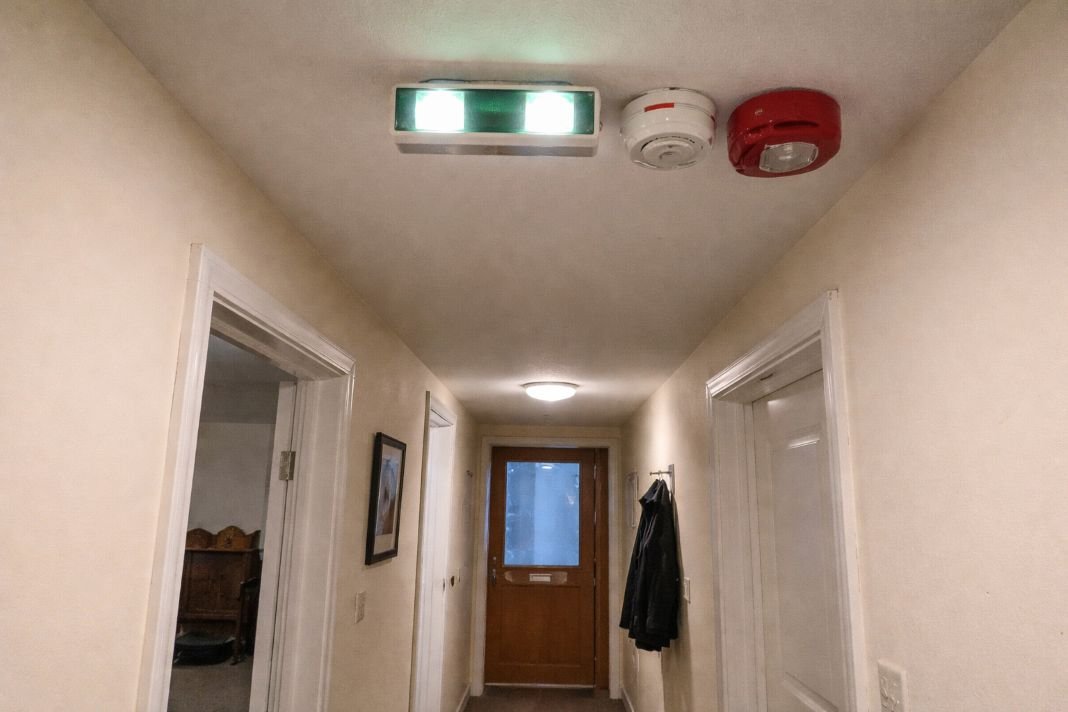
An illustrative image of a hallway in a shared house showing emergency lighting and fire alarm units on the ceiling
Here's What We Have Covered In This Article
Electrical Installation Condition Report (EICR)
An EICR assesses the condition of fixed wiring systems within a property and is mandated by the Electrical Safety Standards in the Private Rented Sector (England) Regulations 2020. Landlords must carry out a periodic inspection at least every five years, or sooner if the report specifies an earlier re-test date.
Key facts landlords should know:
- Renewal cycle: Every 5 years or earlier if the last report deems it necessary.
- Trigger events: New tenancies, major electrical works, or changes in occupancy use.
- Common failures: Old consumer units, insufficient earthing, or overloaded circuits.
- Legal risks: Letting with an expired or failed EICR can attract fines of up to £30,000.
- Efficiency tip: Combine EICR checks with PAT or fire inspections in a single visit.
The EICR is not a one-off task. Landlords must maintain valid, in-date certificates and act promptly on any remedial work flagged.
Pro Tip: Bundling EICR, PAT, and fire inspections with the same engineer can help cut costs and reduce repeat visits.
Gas Safety Certificate (CP12)
All rental properties with gas appliances must be covered by a valid Gas Safety Certificate, renewed every 12 months. The inspection checks appliances, flues, and pipework and must be conducted by a Gas Safe registered engineer.
Before your CP12 check, prepare:
- Clear access to all gas appliances and meters.
- Appliance manuals if readily available.
- Basic property details for accurate certification.
What the inspection typically includes:
- Visual inspection of appliances.
- Pressure testing of pipework.
- Flue condition checks and ventilation assessment.
Why it matters: An expired CP12 can void landlord insurance, trigger enforcement by the Health and Safety Executive (HSE), or delay property marketing.
Some landlords assume that regular boiler servicing covers their legal duties. In reality, this is separate from the statutory CP12 inspection.
Energy Performance Certificate (EPC)
An EPC rates a property’s energy efficiency from A (most efficient) to G (least efficient). For rental properties, a valid certificate is legally required before advertising and must be renewed every 10 years, and unless significant energy upgrades trigger early reassessment.
Key EPC points:
- Renewal: Every 10 years, or sooner after major changes like insulation, windows, or heating systems.
- Minimum rating for rentals: Band E is currently the legal threshold in most circumstances.
- Implication: Properties under Band E cannot be legally let, with some exemptions requiring formal registration.
Valid EPC vs Expired EPC
|
Status |
Impact
|
|---|---|
|
In date |
Can advertise and let |
|
Out of date |
Cannot legally rent or renew tenancy |
EPCs have become a screening factor for tenants, agents, and insurance providers. A poor rating may affect marketability and default risks. Bundling EPC renewals with other compliance checks can reduce booking hassle and costs.
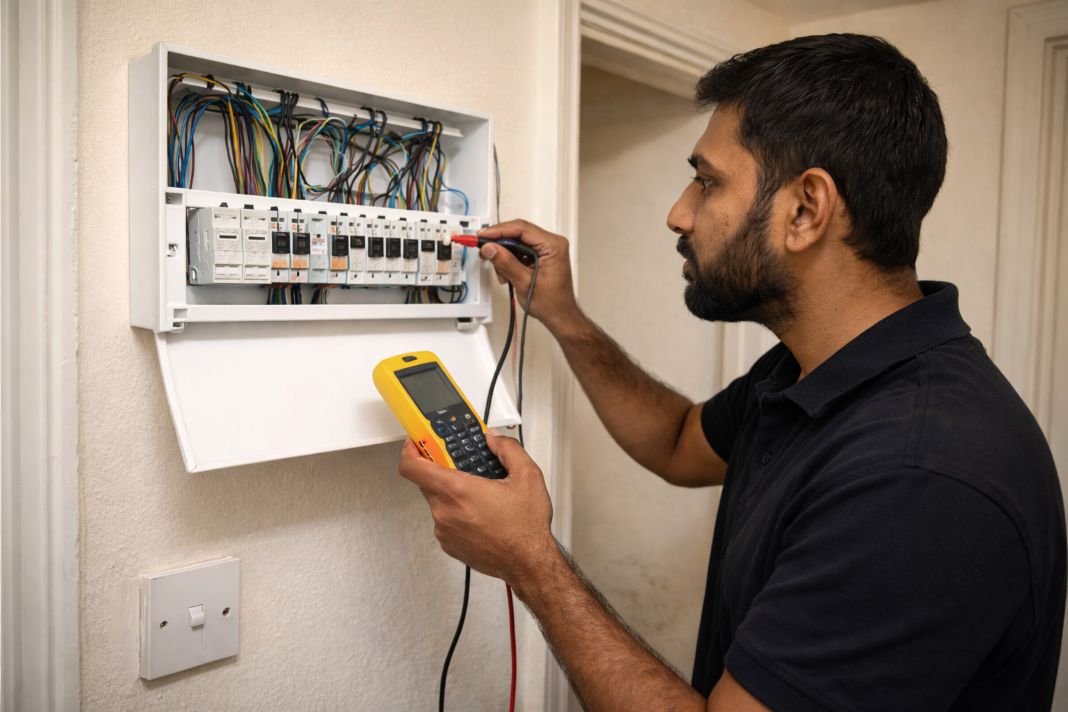
An illustrative image of an electrician checking a consumer unit with the panel open inside a typical UK rental property.
Book Your Inspection Online
Start your compliance process quickly by booking your landlord safety inspections online at your convenience.
Fire Alarm Certificate
Multi-occupancy homes (HMOs) and larger rental properties must have fire alarm systems installed and certified regularly, typically every 12 months. Certification confirms that alarms are tested to legal standards, often under BS 5839 guidelines.
Landlords requiring fire alarm certification typically include:
- HMOs, especially those under local authority licensing.
- Blocks of flats with shared alarms.
- Larger single lets with complex layouts or past enforcement action.
Common errors to avoid:
- Relying solely on battery-operated smoke detectors.
- Skipping annual certification despite functioning alarms.
- Overlooking certification for newly installed systems.
Fire alarm checks can be coordinated with emergency lighting and PAT testing. LBC engineers offer bundled inspections for precisely this reason.
Pro Tip: Booking inspections 4 to 6 weeks ahead of expiry allows time for follow-up repairs and avoids compliance gaps.
Emergency Lighting Certificate
Emergency lighting, which activates during capability failure, is legally required in many HMOs and all commercial premises with shared spaces. It must be tested and certified annually, in accordance with BS 5266.
Required in spaces such as:
- Communal stairwells and corridors.
- Shared kitchens and lounges in HMOs.
- Reception areas and escape routes in mixed-use blocks.
Inspection covers:
- Functionality of emergency luminaires.
- Duration testing (usually 3 hours).
- System layout assessment and signage checks.
A common misconception is that emergency lighting is exclusive to commercial sites. In reality, many London HMO operators are required to maintain and certify these systems annually.
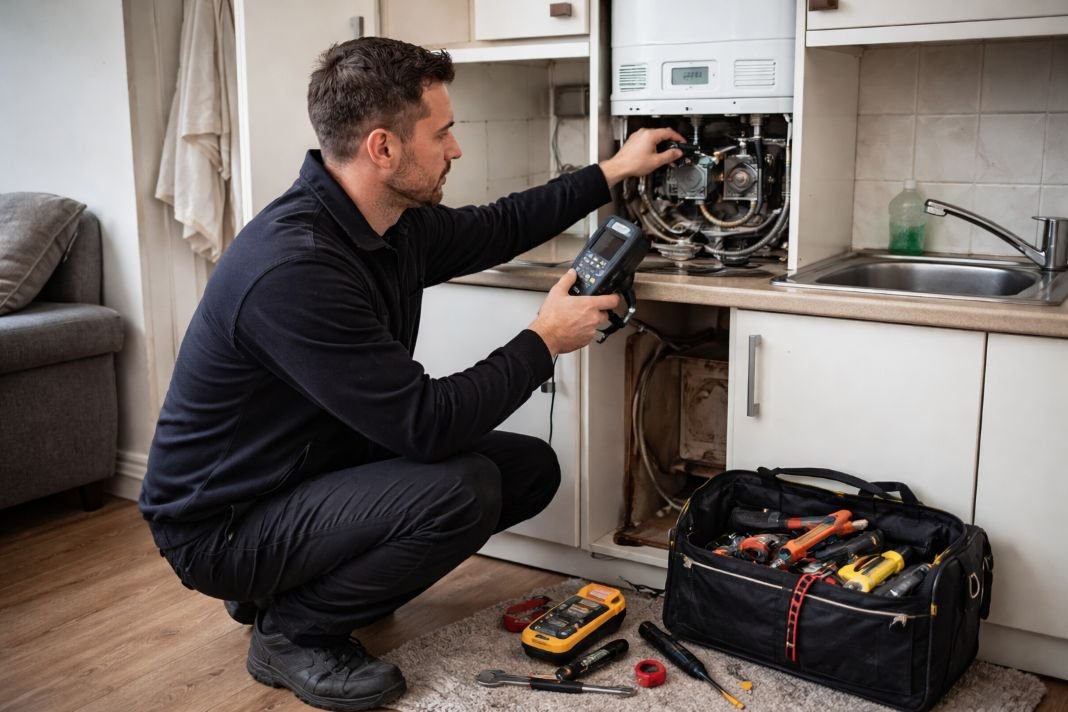
An illustrative image of a gas engineer wearing all black no hat testing a boiler in a small rental flat
Portable Appliance Testing (PAT)
PAT testing verifies the safety of plug-in electrical items, but it is not strictly required by law in all rented properties. However, it remains a recognised best practice, especially where landlords supply appliances or operate HMOs.
Common PAT testing scenarios:
- Furnished rentals with white goods or televisions.
- HMOs with shared kettles, toasters, or microwaves.
- Student or high-turnover tenancies with repeat occupancy.
Advantages include:
- Demonstrable commitment to tenant safety.
- Insurance protection in accident or fire claims.
- Visual inspection tags and logs for compliance evidence.
Examples of appliances tested:
- Fridges, washing machines, kettles, microwaves, chargers.
While not mandatory, PAT testing supports responsible property management and can be easily bundled with EICR or fire alarm inspections for efficiency.
Bundle Certificate Services
Save time and reduce costs by combining multiple inspections into one visit. Ask about our bundle options.
Coordinating Certificate Renewals: A Year-Round Calendar
With different timelines and renewal dates, landlords managing multiple properties often face a disjointed compliance workload. A structured renewal calendar helps avoid last-minute scrambles, double-booked engineers, and expired documentation.
Strategies to streamline certificate renewals:
- Group by expiry date: Align inspections that fall within the same quarter.
- Bundle visits: Use property certificate providers like LBC that offer combined EICR, gas, fire, and EPC inspections in a single slot.
- Keep digital reminders: Use cloud folders or management software to log certificate dates.
- Work backward from expiry: Book inspections 4 to 6 weeks before deadlines to allow time for any remedial work.
- Minimise tenant disruption: Coordinate access windows and notify occupants in advance.
Landlord Building Certificates supports this process by offering consolidated inspection services, same-day digital delivery, and fixed pricing models. For landlords with three or more properties, aligning inspections across a rolling calendar can reduce both cost and administration while maintaining full compliance across the portfolio.