
What should a London landlord check before re-letting after a move-out?
A landlord should confirm that every required safety certificate is valid before marketing or re-letting the property. In practice, that usually means checking the Electrical Installation Condition Report (EICR), Gas Safety Certificate (CP12), Energy Performance Certificate (EPC), and, where relevant, fire alarm, emergency lighting, and Portable Appliance Testing (PAT) records, then organising any inspections or remedial works before a new tenant moves in.

An illustrative image of a London landlord standing in an empty flat, reviewing a folder of certificates
Here's What We Have Covered In This Article
Understanding your legal compliance duties before re-letting
A change of tenancy is the point at which many compliance gaps come to light. London landlord duties sit within a clear statutory framework. The Electrical Safety Standards in the Private Rented Sector (England) Regulations 2020, the Gas Safety (Installation and Use) Regulations 1998, and the Energy Efficiency (Private Rented Property) (England and Wales) Regulations 2015 shape much of the re-letting process. Local authorities, insurers, and licensing teams may also expect evidence that the property meets the right standards at the right time.
A useful distinction is the one between what the law requires and what good management practice recommends.
- Legal requirements include holding valid certificates where the law requires them, completing renewals on time, carrying out any necessary remedial work, and providing certain records to tenants.
- Best practice includes arranging inspections well before expiry, keeping a central digital file of documents, combining multiple visits where possible, and checking appliances and alarms between tenancies even where a fresh certificate is not strictly due.
One common mistake is assuming that compliance can wait until a new tenant has been found. In reality, expired certificates can delay marketing, hold up move-in dates, and create problems with insurance or licensing. Another is thinking that a property was compliant once, so it remains compliant automatically. Renewal cycles do not pause because a flat is empty.
Where a landlord misses a legal requirement, the risks are practical as well as financial. Enforcement action, void periods, difficulty proving compliance after an incident, and disputes with insurers all become more likely. That matters most in the short gap between one tenancy ending and the next beginning, because that is when documents, dates, and safety checks need the closest attention.
Pro Tip: Align inspection dates for gas, electrical, and EPC to minimise void periods and reduce repeated property access.
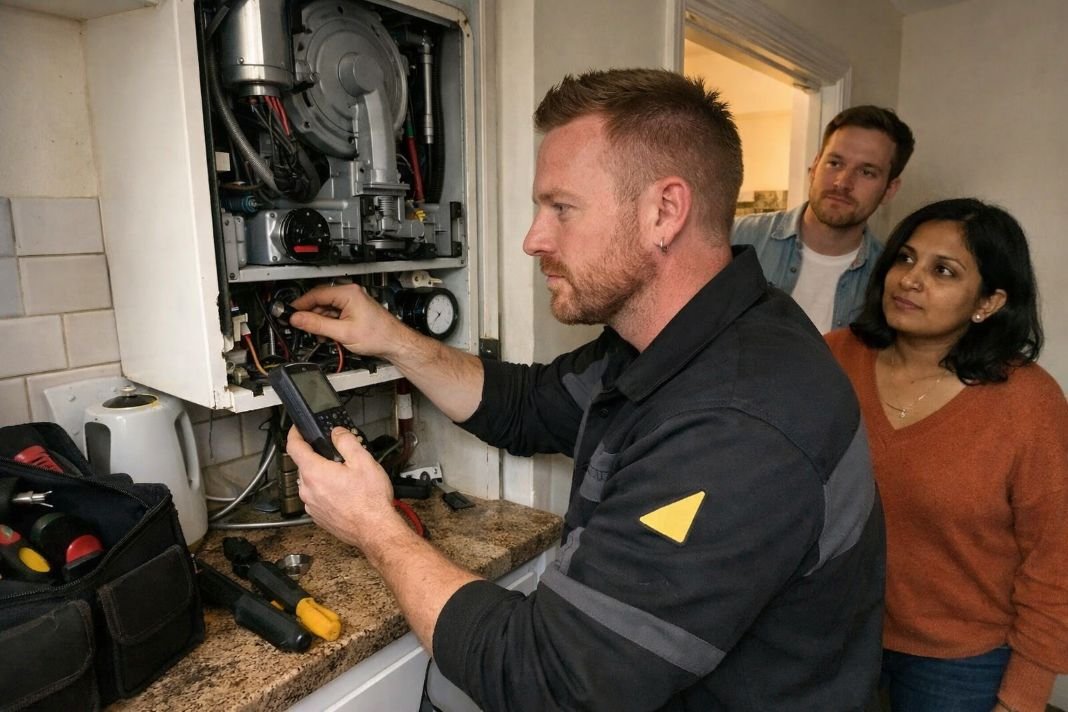
An illustrative image of a Gas Safe engineer in a smart uniform examining a combi boiler in a small London flat
Electrical Installation Condition Report (EICR): what needs checking and when
An Electrical Installation Condition Report (EICR) is a formal inspection of the fixed electrical installation in the property. Landlords in England generally need a valid report for rented homes, and the usual validity period is five years unless the report states a shorter interval.
If a tenant moves out, the first step is simple. Check the date on the current electrical safety certificate and read the outcome, not just the front page. A report can still be in date but contain observations or recommendations that need attention before the next tenancy.
What an EICR looks at
A periodic electrical inspection focuses on the fixed wiring and related components. That usually includes consumer units, circuits, sockets, light fittings, earthing and bonding, and signs of wear, damage, or unsafe alterations. The purpose is to identify electrical hazards in the installation itself, rather than to test every plug-in appliance.
When to renew it
A fresh EICR may be needed if the existing report has expired, if the report required remedial works that were never completed, or if there is reason to believe the installation has changed significantly since the last inspection. A landlord who has added circuits, replaced a consumer unit, or carried out substantial electrical works should review whether the existing paperwork still reflects the current installation.
The basic process is usually as follows:
- Check whether the current EICR is still within its validity period.
- Book a periodic inspection with a qualified engineer, often one working under a recognised scheme such as NICEIC.
- Review the result carefully, including any coded observations.
- Arrange remedial works if the report is unsatisfactory.
- Keep the final report and any follow-up confirmation with the property records.
An unsatisfactory result does not automatically mean the property cannot be let forever, but it does mean the defects identified need prompt action. If a move-out reveals an outdated consumer unit and damaged sockets, the inspection may lead straight into remedial works before advertising starts. That is far easier to manage in an empty property than after a new tenant has unpacked.
Landlord Building Certificates is one of several providers in London that organise inspection-led electrical checks, which means landlords can often align the EICR with other certificates during the same vacancy window.
Gas Safety Certificate (CP12): renewals, records, and risks
A Gas Safety Certificate (CP12), also known as the landlord gas safety record or gas cert, must usually be renewed every year where gas appliances or pipework fall within the landlord’s responsibility. That annual timetable remains one of the clearest legal duties in rental property compliance.
The inspection must be carried out by an engineer on the Gas Safe Register. Checks typically cover relevant gas appliances, associated flues, and the safety of the installation. Boilers are an obvious focus, but gas hobs, ovens, and fires may also fall within the inspection where provided by the landlord.
For a re-let, the renewal steps are straightforward:
- Confirm the expiry date on the current CP12.
- Arrange the gas safety check before the new tenancy begins if renewal is due.
- Review the record to make sure all appliances checked are listed correctly.
- Store the certificate securely and provide it where required.
Timing matters here because an expired certificate can cause an immediate compliance problem. If a tenant leaves on 10 June and a new tenancy starts on 15 June, a CP12 that expired in late May needs attention before handover, not after keys have changed hands.
Record-keeping deserves the same attention as the inspection itself. The certificate is legal evidence that the check took place, so it should be easy to retrieve if a tenant, insurer, local authority, or licensing team asks for it. A missing file can become almost as awkward as a missed renewal, particularly where several properties are being managed at once.
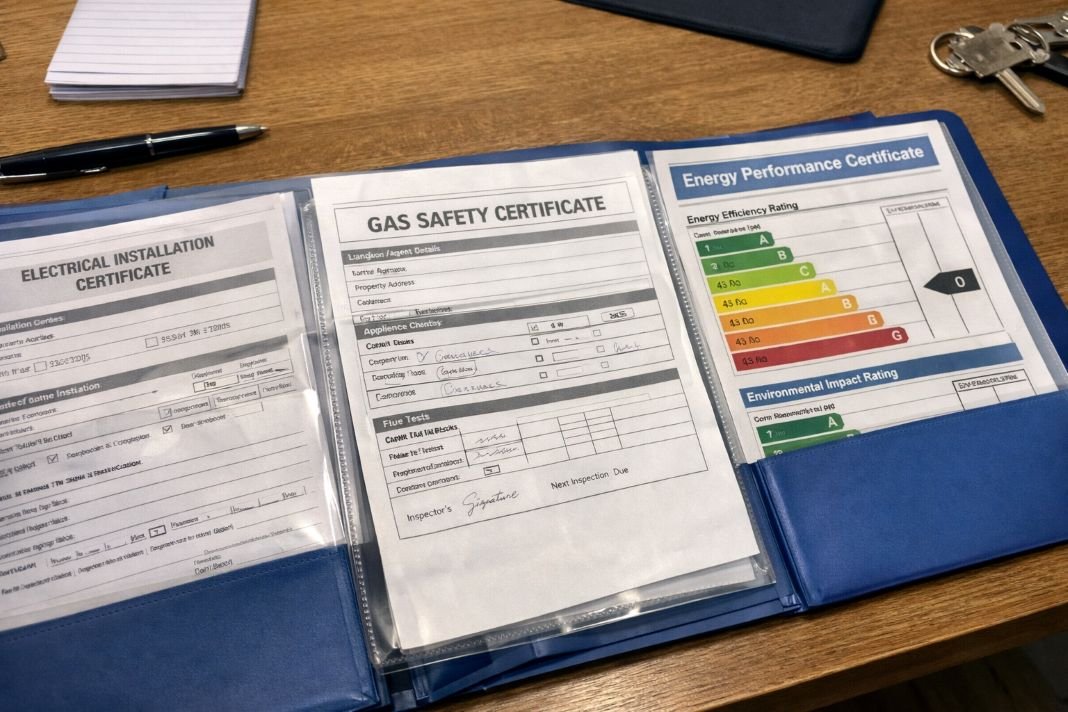
An illustrative image of landlord safety certificates including electrical, gas, and energy performance documents
Energy Performance Certificate (EPC): minimum standards and re-letting triggers
An Energy Performance Certificate (EPC) is usually required when a property is marketed for rent, and the document remains valid for ten years unless a new assessment is needed sooner. For many landlords, the key issue is not just whether the energy certificate exists, but whether the rating is good enough to let the property lawfully.
Under the Energy Efficiency (Private Rented Property) (England and Wales) Regulations 2015, most privately rented properties need to meet the minimum EPC standard unless a valid exemption applies. That point becomes especially relevant between tenancies, because re-letting can bring a poor rating back into focus.
A quick sense check helps:
- Usually valid for re-letting: the EPC is still in date and the rating meets the current minimum standard.
- Likely to cause delay: the EPC has expired, the property has no EPC where one is required, or the rating falls below the minimum standard without a valid exemption.
Marketing often depends on this document being in place. If a flat comes back onto the market in June but the EPC expired in April, the landlord may need a fresh assessment by an Approved Energy Assessor before the listing is properly supported. That can slow down viewings and paperwork at exactly the point when momentum matters.
Where a property falls below the minimum standard, improvement works may be needed before the next tenancy. The scope depends on the building, but common areas include insulation, heating controls, glazing, and lighting. Energy ratings are not simply an administrative detail in the re-letting file. They can affect whether the property can be offered at all.
Book Your Property Inspection Today
Arrange expert electrical, gas, and EPC checks with quick London turnaround. Streamline compliance before your next tenancy.
Fire and emergency lighting certificates: meeting London’s safety standards
Fire safety duties vary with the type of property. A single self-contained flat and a licensed HMO do not always carry the same inspection and certification demands, which is why this area causes confusion during re-lets.
For many London landlords, the main issue is knowing when a Fire Alarm Certificate or Emergency Lighting Certificate is expected as part of the wider safety record. That tends to be especially relevant in HMOs, converted buildings with common parts, and properties subject to local authority licensing conditions. Insurance policies may also expect evidence of appropriate testing and maintenance.
Common areas to review include the following:
- Fire alarm testing arrangements and any fire cert already on file
- Emergency lighting checks in shared areas where such systems are installed
- Licensing conditions attached to HMOs or other regulated properties
- The distinction between basic domestic alarm provision and a larger managed system
HMO compliance deserves particular attention. A small flat with standalone smoke alarms may involve a different level of documentation from a shared house with a panel system, detectors in circulation spaces, and emergency lighting in common areas. In that setting, certification is closely tied to licensing and inspection history, rather than being treated as a general maintenance task.
Another oversight appears in converted London properties where common parts are easy to forget during a quick re-let. A landlord may focus on the flat itself and miss the stairwell lighting test records or fire alarm servicing documents that support the building’s wider safety position. Where those records matter, they should be reviewed before a new tenant moves in, not after a licensing inspection has been booked.
Pro Tip: Storing certificates digitally with clear file names makes document retrieval much faster during tenancy changeovers.
Portable Appliance Testing (PAT): when and why it matters
Portable Appliance Testing (PAT) is often misunderstood. PAT testing is not a blanket legal requirement in every tenancy in the same way as a yearly gas safety check, but landlords still have duties to keep electrical equipment they provide safe.
That is why a PAT test is often treated as sensible best practice, especially in furnished or part-furnished rentals. If the property includes portable appliances owned by the landlord, testing can provide a clear record that those items were checked before the next tenant took possession.
Typical items might include kettles, toasters, microwaves, lamps, televisions, extension leads, and white goods with plugs. A changeover is a practical moment to compare the appliance inventory against what is actually in the property, remove damaged items, and arrange any appliance safety check that is due.
Documentation matters here because liability questions tend to arise after a fault, not before one. A simple PAT testing certificate, paired with an inventory and dated handover record, gives a landlord far better evidence than memory alone if an issue later concerns a supplied appliance.
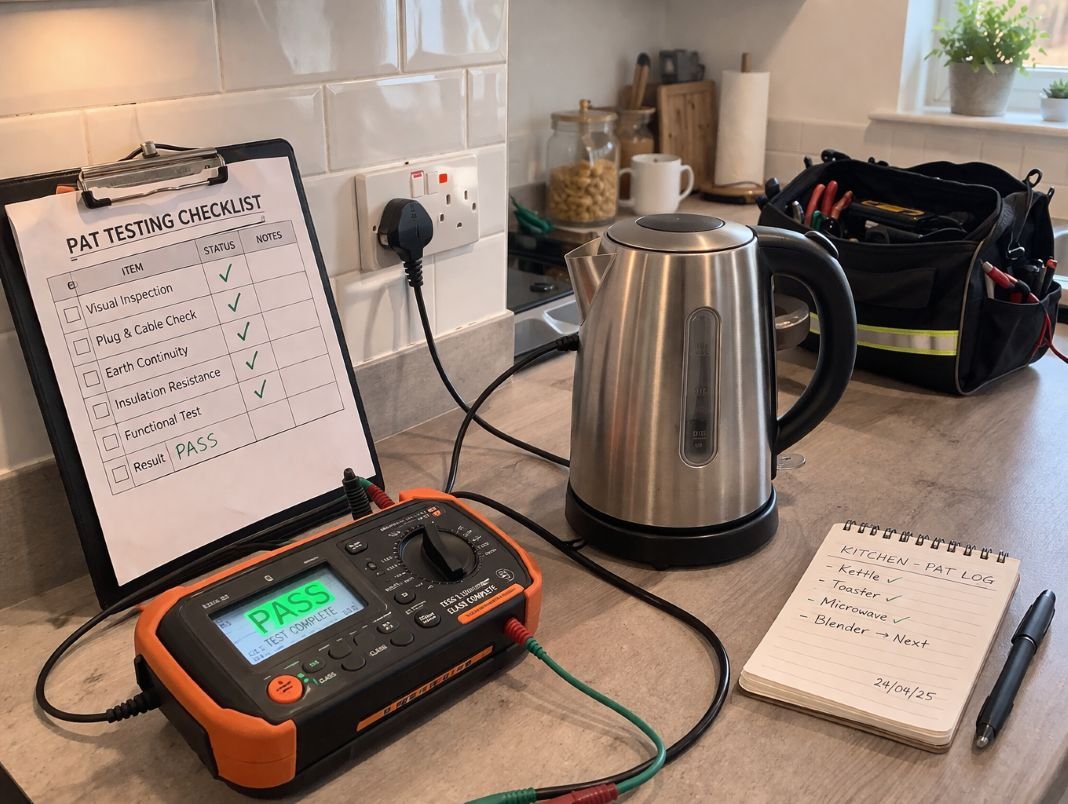
An illustrative image of a professional PAT tester checking a kettle
Preparing documentation and evidence for re-letting
Once inspections are complete, the next job is pulling everything into one usable record. Re-letting paperwork becomes much easier to manage when certificates, expiry dates, and remedial notes sit in a single place instead of across emails, paper folders, and old agent files.
The core document set often includes the EICR, CP12, EPC, any relevant fire alarm certificate, any emergency lighting records, and PAT certificate paperwork where appliances are supplied and tested. If works were carried out after an unsatisfactory inspection, keep the follow-up confirmation with the original report so the compliance history is clear.
A practical file for a re-let should include:
- Current certificates with visible issue and expiry dates.
- Evidence of remedial works linked to any failed or conditional inspection.
- Records ready to provide at tenant handover or if requested by a local authority, insurer, or agent.
- A simple renewal diary showing what falls due next and when.
Digital storage usually makes this easier. Searchable PDFs, clear file names, and a property-by-property folder structure save time when a tenant, managing agent, or council officer needs a copy at short notice. Providers such as Landlord Building Certificates often issue digital certificates promptly, which suits landlords trying to keep a short void period under control.
Combined inspections can also reduce paperwork drift. If the gas check, electrical certificate, and EPC are arranged in the same vacancy window, dates are easier to track and fewer loose ends remain by the time a new tenancy agreement is ready.
Common compliance pitfalls and how to avoid them
A move-out often creates a false sense of breathing space. The property is empty, a few repairs are planned, and the next tenancy feels a week or two away. That is exactly when missed deadlines happen.
Several re-letting pitfalls come up again and again:
- Expiry dates are checked too late, leaving no time for inspections or repairs before move-in.
- Old certificates are assumed to cover the next tenancy without anyone confirming validity.
- HMO or licensing-specific fire safety records are overlooked because the focus stays on the flat interior.
- Appliance inventories are not updated, so supplied items remain in use without any recent safety record.
- Booking is left until the property is remarketed, even though inspection slots can fill quickly in London.
A more reliable approach is to treat the end of one tenancy as the start of the next compliance cycle. As soon as notice is given, review every certificate, note what expires soon, and line up any inspections that may lead to follow-on works. That way, the vacancy period becomes a controlled maintenance and certification window instead of a race against a move-in date.
Over time, the landlords who handle re-letting smoothly are usually the ones who make compliance routine. They keep dates visible, records accessible, and inspections close to renewal points, so handovers stay orderly even when the market is busy.