Can a gap between EICR certificates void landlord insurance in London?
A gap between an old and new Electrical Installation Condition Report (EICR) does not automatically void landlord insurance, but it can create risk. Much depends on the wording of the policy, the facts of any claim, and whether the landlord can show reasonable compliance with electrical safety duties. In London, where rental property compliance is closely watched, an expired electrical safety check can raise issues with both insurers and local authorities.
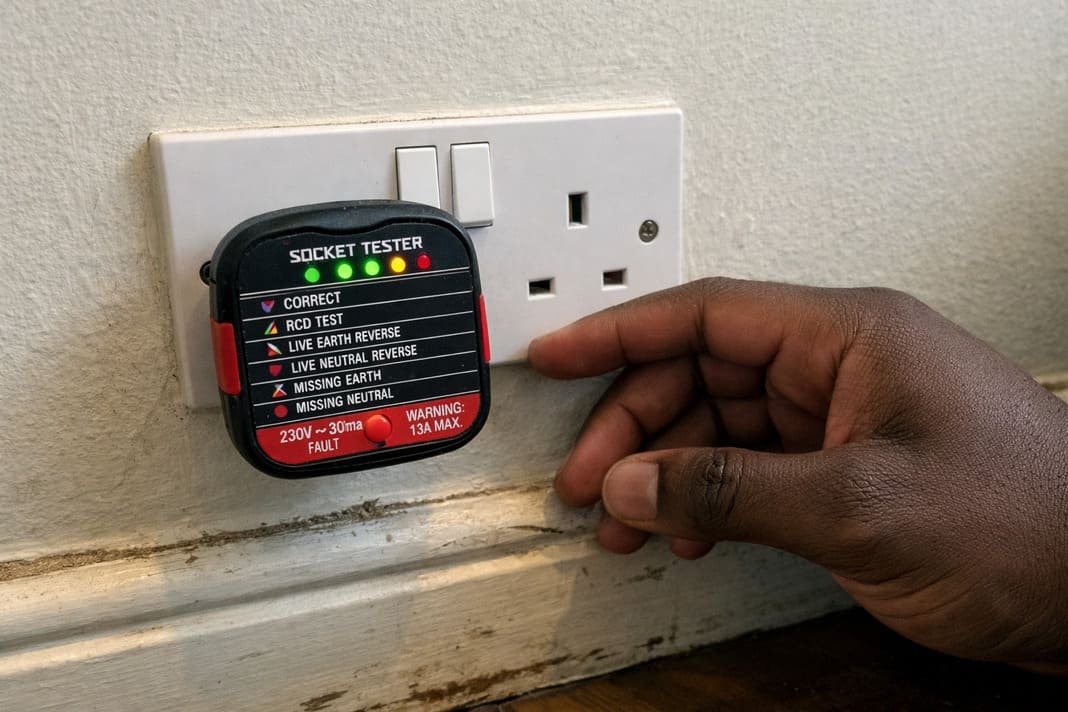
Electrical Safety Check London residential socket and appliance inspection service for compliance testing and certification in fl
Here's What We Have Covered In This Article
Understanding EICR requirements for London landlords
An Electrical Installation Condition Report (EICR) is the formal inspection report used to assess the safety of a property’s fixed electrical installation. For landlords in England, the Electrical Safety Standards in the Private Rented Sector (England) Regulations 2020 require rented homes to have the electrical installation inspected and tested at least every five years, or sooner if the report says that a shorter interval is needed.
For many landlords, the main point of confusion is timing. An EICR is not an open-ended electrical certificate. It has a recommended validity period, and once that period ends, the landlord should already have arranged the next periodic inspection.
What counts as a gap is usually straightforward:
- If the old EICR expires on 1 June and the new one is issued on 10 June, there has been a gap in coverage.
- If the report recommends a reinspection in three years instead of five, that earlier date becomes the relevant deadline.
- If remedial works were required after the last inspection, the landlord still needs evidence that those works were completed properly and on time.
Some landlords assume that an expired report remains acceptable if no faults have appeared. That assumption is risky. The legal duty is tied to inspection intervals, not to whether a tenant has noticed a problem.
EICR renewal also sits alongside other rental property compliance duties, including gas safety, smoke alarms, and energy paperwork. Each certificate has its own timetable. In practice, missed dates often happen when records are spread across emails, paper files, and different contractors, which is one reason many London landlords now prefer a more consolidated approach.
How insurance providers assess gaps in EICR coverage
An insurer usually looks at a lapse in EICR coverage as part of a wider risk picture. A short delay between reports does not always lead to policy voidance, but it can draw attention during underwriting, renewal, or a claim.
Imagine a tenant reports an electrical fire after the old EICR expired and before the new one was issued. The claims department may ask for evidence of the last inspection, any remedial works, and proof that the landlord was meeting policy terms and conditions. If the property was overdue for an electrical safety check, the insurer may examine whether that non-compliance is linked to the loss.
Underwriters and claims teams often focus on points such as these:
| What insurers may review | Why it matters |
|---|---|
| Date of the last valid EICR | It shows whether the property was inspected within the expected period |
| Any recommendations for further inspection | It indicates whether a shorter renewal cycle applied |
| Evidence of remedial electrical works | It helps show that known defects were addressed |
| Policy wording on maintenance and legal compliance | It may affect cover, exclusions, or claims handling |
| Records showing booking attempts or delays | It may support the landlord’s position if there was a brief lapse |
Policy voidance is usually treated seriously, and insurers do not apply it casually. In many cases, the real issue is whether the landlord failed to meet a policy condition, whether material information was missing, or whether the expired EICR is connected to the event being claimed for. A technical breach with no relevance to the loss may be treated differently from an ignored safety defect in the electrical installation.
Landlord Building Certificates often operates in the practical space where this matters most: records, dates, inspection evidence, and quick turnaround. Those details can be dull to manage, yet they become very important once a file reaches a claims handler.
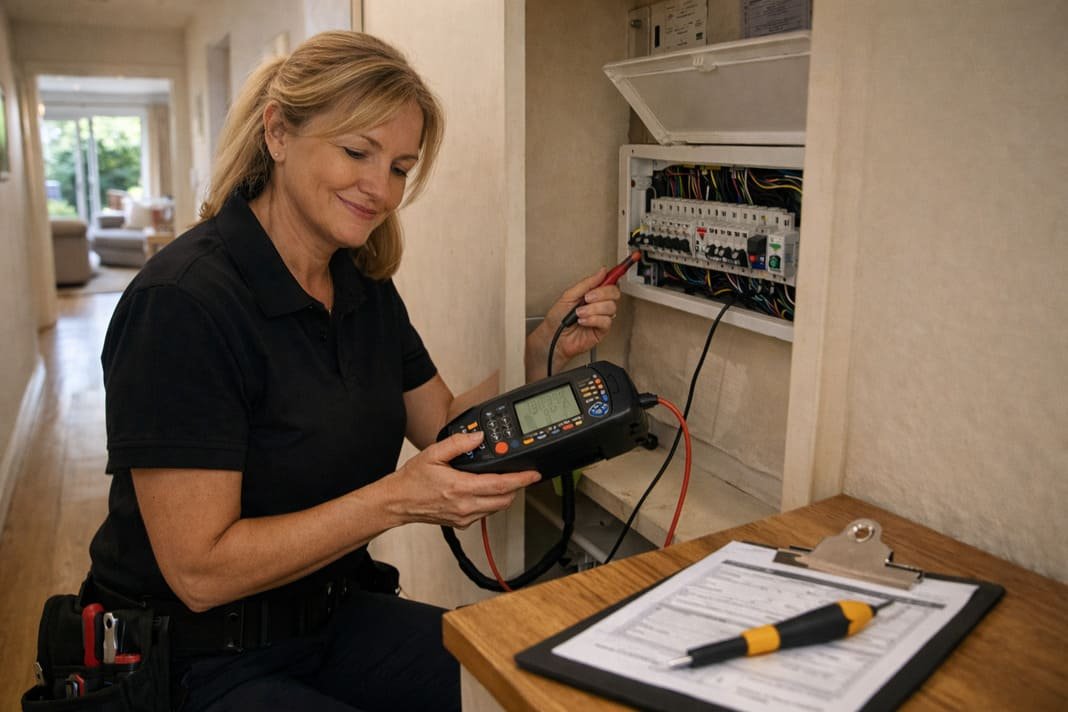
EICR Certificate London rented home electrical safety inspection service for landlord compliance and certification – Illustrative
Legal and regulatory implications of EICR gaps
An EICR gap is first a compliance issue under housing safety regulations. Insurance concerns may follow, but the legal position starts with the landlord’s statutory duty to keep the electrical installation inspected within the required period.
Local councils can enforce the Electrical Safety Standards in the Private Rented Sector (England) Regulations 2020. If a landlord fails to obtain a valid report on time, the consequences may unfold in stages:
- The local authority may ask for a copy of the current EICR.
- If the report is missing or out of date, the council may treat that as a breach of the regulations.
- Remedial action can be required where unsafe conditions or missing compliance records are identified.
- Financial penalties may follow in more serious cases or where landlords ignore enforcement notices.
That process is separate from insurance. A landlord can be in breach of regulations even if no claim is ever made. Equally, a landlord can face an insurance query even where the council has not yet taken action.
The overlap matters because a legal breach can influence how an insurer views risk, disclosure, and policy conditions. If a claim relates to electrical damage, injury, or fire, an expired EICR may become part of the factual background. That does not create an automatic exclusion in every case, but it gives the insurer a clear reason to scrutinise the file more closely.
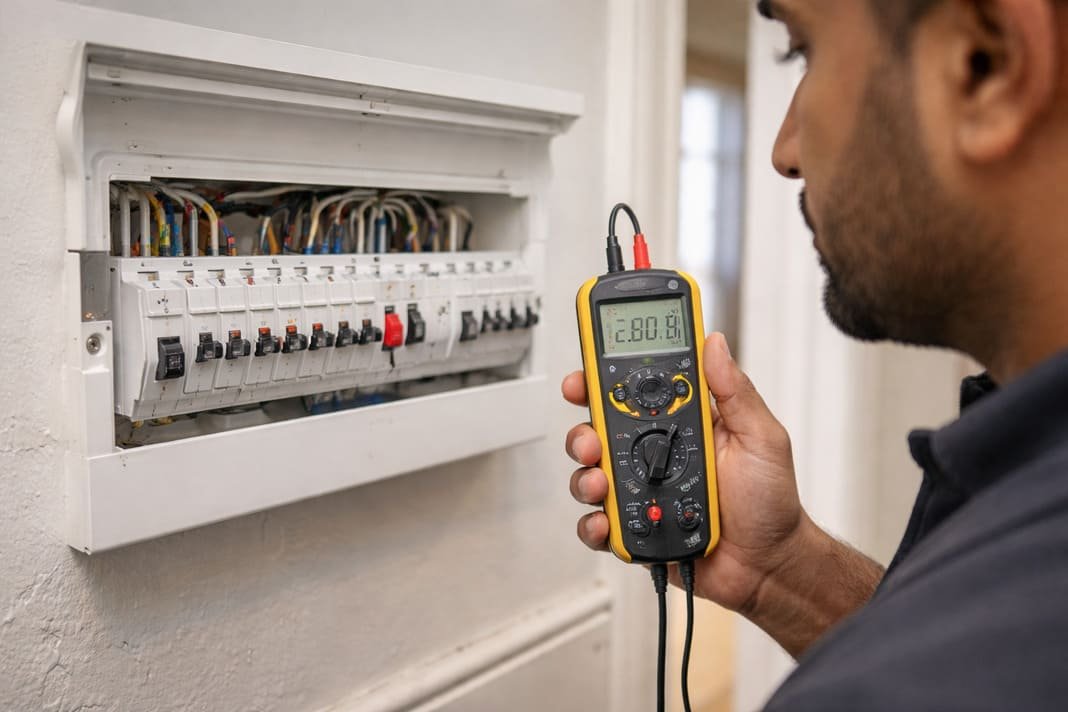
Electrician London consumer unit inspection and electrical safety testing service for EICR compliance and certification – Illustr
Minimising risk: Best practices for EICR continuity
Avoiding a gap is usually a matter of process, not luck. London landlords who manage renewals well tend to treat the EICR as a timed compliance task that needs booking well before expiry, particularly where access to occupied flats can take time.
A simple workflow can keep the dates under control:
- Record the expiry date from the current EICR as soon as the report is issued.
- Set reminders at least three months before that date, with a second reminder one month later.
- Check whether the report recommends a shorter reinspection interval than five years.
- Arrange the inspection early enough to allow for tenant access problems or follow-up electrical works.
- Store the new report, previous report, and any remedial certificates in one digital file.
- Keep evidence of booking attempts if tenants delay access.
- Use accredited electrical inspectors, including NICEIC-registered contractors where appropriate.
Digital certificate platforms can make a real difference here, especially for agents and portfolio landlords with multiple addresses. A single record showing inspection dates, report outcomes, and remedial work is much easier to rely on than a chain of mixed documents across several inboxes.
Some providers, including Landlord Building Certificates, also combine visits for compliance tasks such as EICR, gas safety record, and other inspection-led certificates. That arrangement can reduce admin and site access delays, which is particularly useful in London blocks where tenant availability is often the main obstacle.
TrustMark and similar accreditation frameworks matter in a quieter way. They do not remove the landlord’s duties, yet they can support confidence that the inspection has been carried out by a properly recognised professional under an accepted standard.
Common misconceptions about EICR gaps and insurance
Confusion often comes from mixing up legal duties, insurance wording, and practical risk. A few myths appear again and again in landlord discussions.
- Myth: Any EICR gap automatically voids insurance. Fact: Insurance does not usually work on an automatic switch. The policy wording, the nature of the claim, and the link between the gap and the loss all matter.
- Myth: A new EICR covers the period when the old one had already expired. Fact: A report shows the condition of the installation at the time of inspection. It does not retrospectively fill a compliance gap.
- Myth: If the property had no visible electrical issues, an expired report is harmless. Fact: The legal requirement is based on timely inspection, and insurers may still ask why the electrical certificate London landlords are expected to maintain had lapsed.
- Myth: Using an accredited inspector guarantees there will be no insurance problem. Fact: Accreditation supports competence and credibility, but it does not override missed deadlines or policy terms.
- Myth: Regulatory compliance and insurance compliance are exactly the same thing. Fact: They overlap, but they are not identical. One comes from statute, and the other comes from contract wording in the insurance policy documents.
Reading policy documents carefully is still one of the simplest ways to reduce misunderstanding. If a term refers to reasonable maintenance, legal obligations, or electrical safety records, the landlord should know how that wording applies before a claim ever arises.
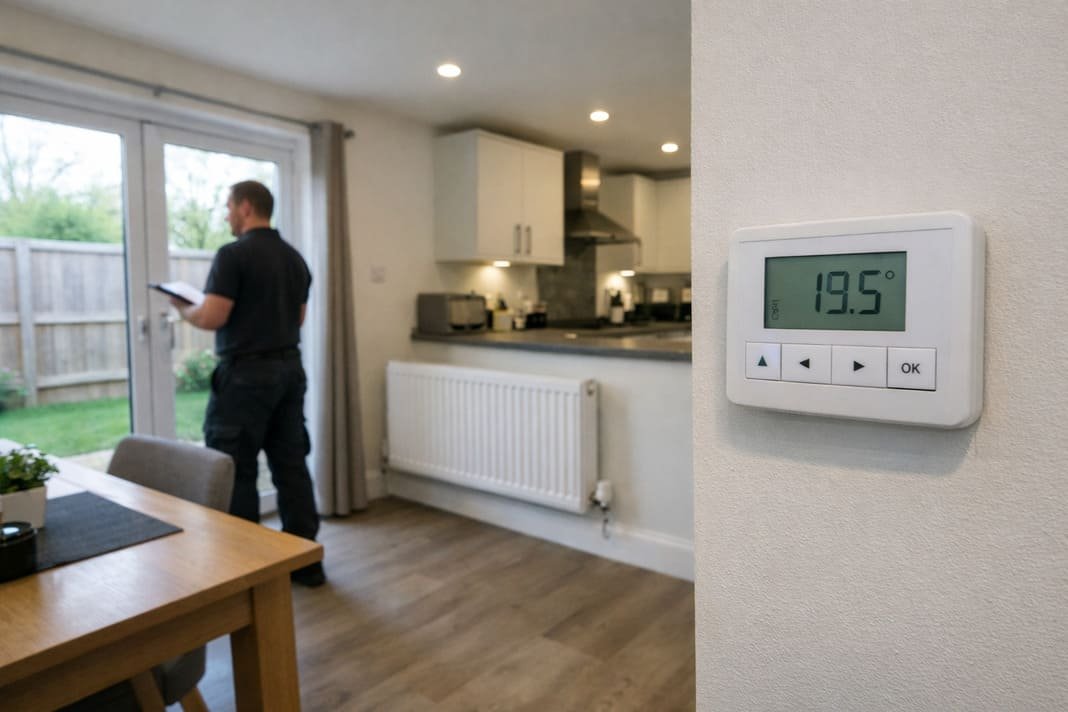
EPC Certificate London rental home energy performance inspection service for landlord compliance and property efficiency – Illust
Looking ahead: Building confidence in landlord compliance
A lapse between EICRs can create avoidable uncertainty, but it does not need to become a recurring problem. Most difficulties come from late booking, scattered records, or confusion about dates rather than from the inspection itself.
The main points are clear:
- An EICR gap can raise questions with insurers, though it does not automatically void cover.
- An expired report can place the landlord in breach of the 2020 electrical safety regulations.
- A fresh certificate cannot backdate compliance for the period that has already passed.
- Good record-keeping, early booking, and accredited inspectors reduce the chance of trouble.
For London landlords, the most sensible approach is to treat EICR planning as part of a routine compliance calendar, alongside gas, fire, and energy requirements. Once that routine is in place, rental property risk management becomes far more predictable, and insurance concerns tend to look like something to manage properly rather than something to fear.