
What should a London letting agent check before appointing a safety certificate provider?
A London letting agent should check whether the provider can issue the right statutory certificates, uses properly accredited inspectors, covers the full range of landlord safety checks, offers dependable booking and reporting, and works with clear pricing and strong local coverage. The best choice is usually a provider that makes compliance routine, documented, and easy to track across multiple properties.
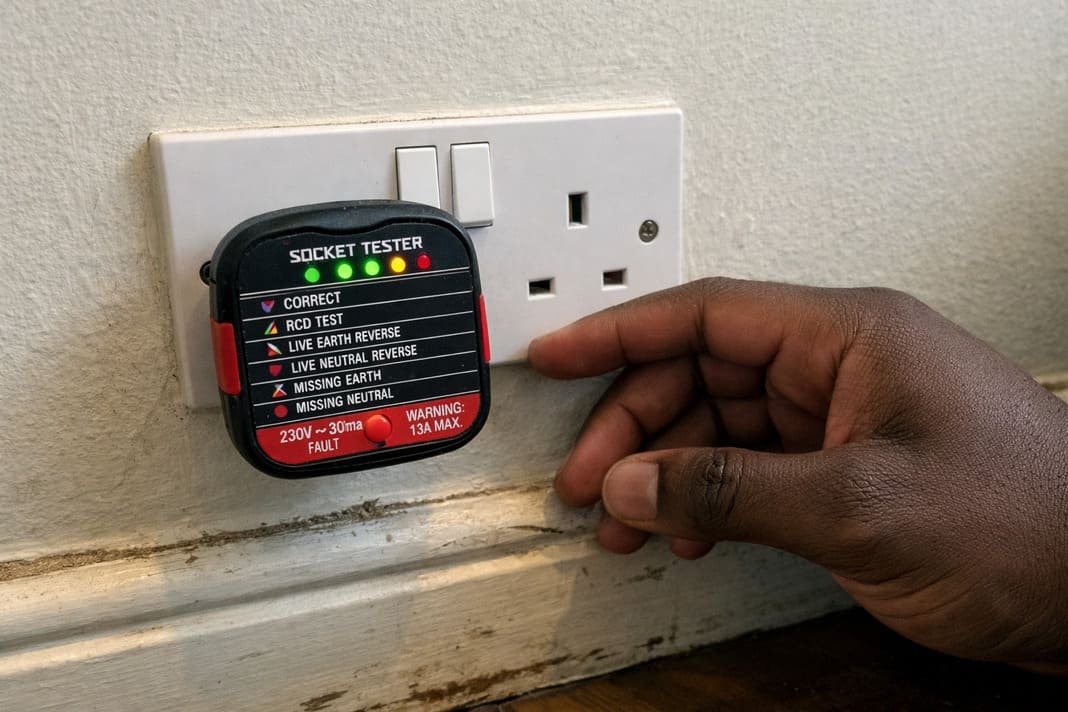
Electrical Safety Check London residential socket and appliance inspection service for compliance testing and certification in fl
Here's What We Have Covered In This Article
Understanding the legal baseline
Letting agents deal with property compliance as part of everyday management, but the legal framework behind each certificate can easily become blurred when renewals, tenant access, and landlord instructions all compete for attention. Choosing a provider therefore starts with a simple point: the certificates involved are legal evidence of compliance, not paperwork for its own sake.
Several regulations shape the main obligations for rental property safety in England. In practice, agents usually need a provider that can support these core requirements:
- Electrical Safety Standards in the Private Rented Sector (England) Regulations 2020, which require an Electrical Installation Condition Report (EICR) for most private rented homes in England
- Gas Safety (Installation and Use) Regulations 1998, which require an annual Gas Safety Certificate (CP12), often referred to as the landlord gas safety record
- Energy Efficiency (Private Rented Property) (England and Wales) Regulations 2015, which affect whether a property can be lawfully let based on its Energy Performance Certificate (EPC) rating
Beyond those statutory certificates, many agents also deal with fire alarm testing, emergency lighting checks, and Portable Appliance Testing (PAT), particularly in certain managed properties or where licensing, insurer requirements, or risk management policies call for them.
Confusion often arises where legal duty, best practice, and building type overlap. A certificate may be mandatory in one property, strongly expected in another, and mainly insurer-driven in a third. Local authorities, licensing schemes, and insurers can all shape the documentation an agent needs to hold, which means that a provider should be able to explain what they inspect and what document follows from that inspection.
Missed renewal cycles can turn a routine admin task into enforcement action, delayed move-ins, or awkward conversations with landlords about liability. A provider that treats documentation seriously, keeps records clear, and understands rental property regulations can make that pressure far easier to manage.
Why accreditation matters in practice
Accreditation is not a decorative extra. It sits at the centre of whether a certificate is accepted as valid and whether the inspection behind it is likely to meet recognised professional standards.
A suitable provider should be able to show relevant credentials for the services offered. That often includes Gas Safe Register for gas work, NICEIC approval for electrical inspection activity, Approved Energy Assessor status for EPCs, and TrustMark as part of a recognised quality framework. Those designations matter because they connect the inspection to established competence, oversight, and regulatory approval.
An unaccredited or poorly verified provider can create a chain of problems. A document may be challenged, an insurer may raise concerns after a claim, or a landlord may end up paying again for a fresh inspection from a properly recognised contractor. That is an avoidable expense, especially for agents managing renewals at scale.
A practical comparison helps:
- Accredited provider: recognised registration, traceable engineer status, certificates linked to accepted inspection standards
- Non-accredited provider: unclear qualifications, uncertain document validity, weaker compliance assurance if records are reviewed later
Verification should be straightforward. An agent can check registration numbers, confirm the provider uses qualified inspectors for each certificate type, and look for a clear match between the service advertised and the approval held. Landlord Building Certificates is one example of a compliance-led provider operating in this space, with inspection and certification services structured around recognised standards rather than general maintenance work.

EPC Certificate London rental home energy performance inspection service for landlord compliance and property efficiency – Illust
Service scope matters more than many agents expect
Imagine a managed flat that needs a gas cert before renewal, an EICR within the same quarter, and an updated EPC after improvement works. If three separate contractors are booked, three access arrangements may be needed, three reporting formats may arrive, and three different renewal dates may then sit in three different systems.
That fragmented approach can work, but it often creates admin drift. Certificates go missing, dates are harder to track, and a simple landlord safety check becomes a string of small coordination jobs.
A full-service safety certificate provider can reduce that friction by covering the main compliance documents under one operational setup. The most useful scope usually includes:
- Electrical Installation Condition Report (EICR)
- Gas Safety Certificate (CP12)
- Energy Performance Certificate (EPC)
- Fire Alarm Certificate
- Emergency Lighting Certificate
- Portable Appliance Testing (PAT)
Combined inspections are especially useful for busy London portfolios. One visit can reduce tenant disruption, shorten inspection scheduling, and improve compliance management across a block or group of properties. For an agent, that means fewer diary gaps and fewer chances for a renewal to slip between contractors.
Scope also matters where one inspection leads to another need. An electrical safety check may identify remedial work before certification. An EPC visit may sit alongside other renewal tasks. Providers with broad certificate coverage are often better placed to keep that sequence organised, instead of leaving the agent to rebuild the process from scratch each time.
Booking and delivery should feel organised from the start
Fast certificate turnaround matters, but speed on its own is not enough. A provider also needs booking systems and delivery processes that fit the way letting agents actually work.
Most agencies need a clear path from instruction to completed documentation. In simple terms, the process should look like this:
- Booking is arranged with realistic appointment slots and clear access requirements.
- The inspection takes place with the right engineer or assessor for the certificate needed.
- Findings, any limitations, and any follow-up work are reported clearly.
- The digital safety certificate is issued in a format that can be stored, forwarded, and retrieved easily.
Digital reporting is especially useful where multiple negotiators or property managers need access to the same record. If the certificate arrives quickly but sits in an awkward format or lacks clear property details, the admin burden returns immediately. Good providers tend to keep document naming, reporting language, and certificate delivery consistent, so that office teams can process renewals without extra chasing.
Urgent cases also reveal a lot about operational quality. A provider does not need to promise impossible turnaround times to be useful. What matters is whether they can communicate availability honestly, manage urgent renewals sensibly, and keep the agent informed if access or remedial work affects delivery.
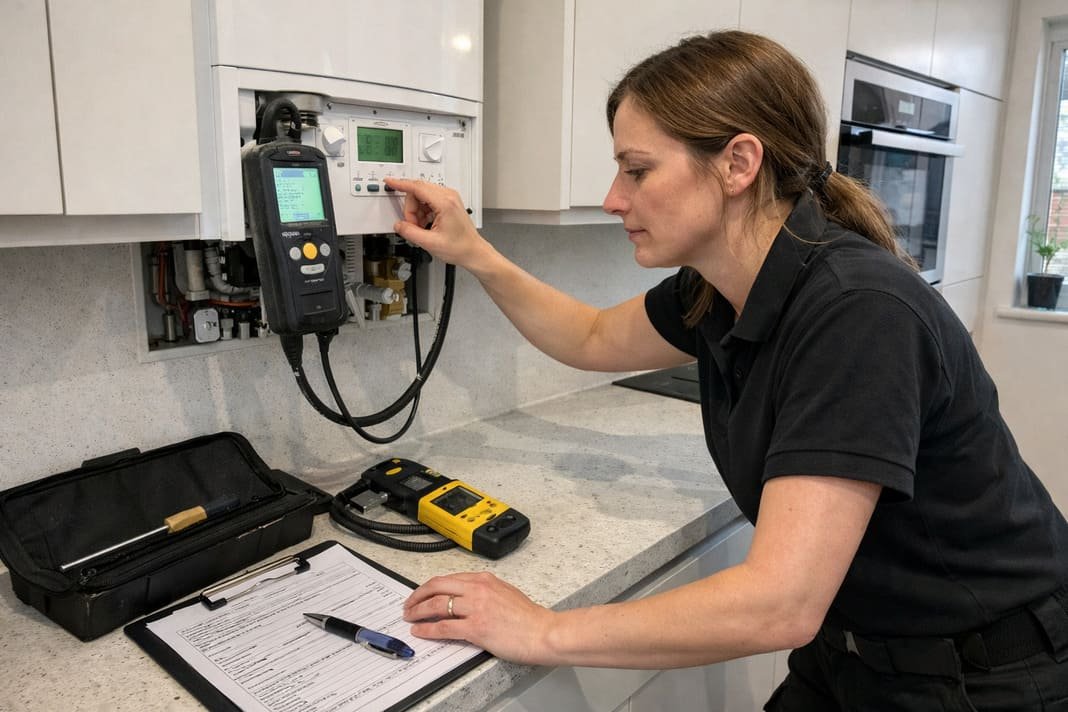
Gas Certificate London boiler inspection and gas safety compliance service for landlords homeowners and rental properties – Illustrative
Pricing should support control, not confusion
A low headline price can look attractive until the invoice arrives with added call-out charges, separate certificate fees, or unclear costs for follow-up visits. Letting agents usually need transparent certificate pricing because they are budgeting on behalf of landlords and often justifying those costs line by line.
Fixed starting rates are helpful because they give a baseline for instruction. Clear bundled service offers can be even more useful where a property needs more than one check at the same visit. Cost control usually improves when a provider explains what is included, what may create extra cost, and how multi-property booking affects pricing.
Three pricing models often appear in the market:
- Transparent pricing model: clear scope, stated starting rates, visible extras if they apply
- Variable pricing model: price depends heavily on later assessment, with less certainty at booking stage
- Artificially cheap pricing: low entry figure, but extra charges appear through administration, repeat visits, or incomplete scope
For portfolio landlords and agents, efficiency often matters more than the cheapest single certificate. One organised visit across several properties can reduce travel time, missed access costs, and office administration. LBC operates with that kind of cost-aware compliance model in mind, where consolidated inspections and straightforward pricing can make routine renewals easier to plan across London portfolios.
A useful invoice should tell the story clearly. Property address, certificate type, visit date, and any separate remedial element should all be easy to identify without a follow-up phone call.
Local coverage is a real operational advantage in London
London looks compact on a map, but day-to-day logistics tell a different story. Access windows can be tight, parking can be awkward, tenants may need evening coordination, and crossing boroughs can turn a short job into a delayed one.
A provider with solid local area coverage is often easier to work with because travel and scheduling are grounded in the realities of London property management. That can make a difference when an inspection is needed quickly in North West London after a failed access attempt in West London the previous day, or when several managed units across nearby postcodes need coordinated visits in one week.
National providers can still be suitable, but local presence often improves responsiveness. Teams that regularly work across London boroughs tend to understand building layouts, permit issues, tenant access patterns, and the simple fact that a narrow appointment window may matter more than a broad all-day booking.
Coverage should also be practical rather than vague. An agent should be able to tell whether the provider genuinely serves the relevant part of London, how quickly appointments are usually arranged, and whether the business can support both isolated jobs and recurring compliance work across a managed portfolio. In a city where timing and travel shape almost every instruction, that detail matters.
Common assumptions that lead to poor choices
Many provider selection errors come from assumptions that sound reasonable on the surface. Once examined, they often fall apart.
One common myth is that all certificates are essentially the same if a PDF arrives at the end. In reality, the value of the document depends on who issued it, what standard was followed, and whether the inspection itself was appropriate for the property.
Another frequent mistake is treating renewal dates as secondary admin. Document validity sits at the centre of statutory certificate frameworks. A gas safety record that expires before a tenancy event, or an electrical certificate that cannot be located during a compliance check, creates immediate pressure that software reminders could have prevented.
Digital record-keeping is also easy to underrate. A provider that sends certificates promptly, labels them clearly, and supports organised compliance records saves time long after the inspection date. By contrast, scattered attachments and inconsistent reports often create repeat work for office teams months later.
A further misconception is that a general maintenance contractor can automatically handle compliance inspections. Some can, if they hold the right approvals for the exact certificate involved. Many do not. Inspection and maintenance are linked, but they are not interchangeable services, and that distinction becomes important when legal evidence is needed for a landlord file.
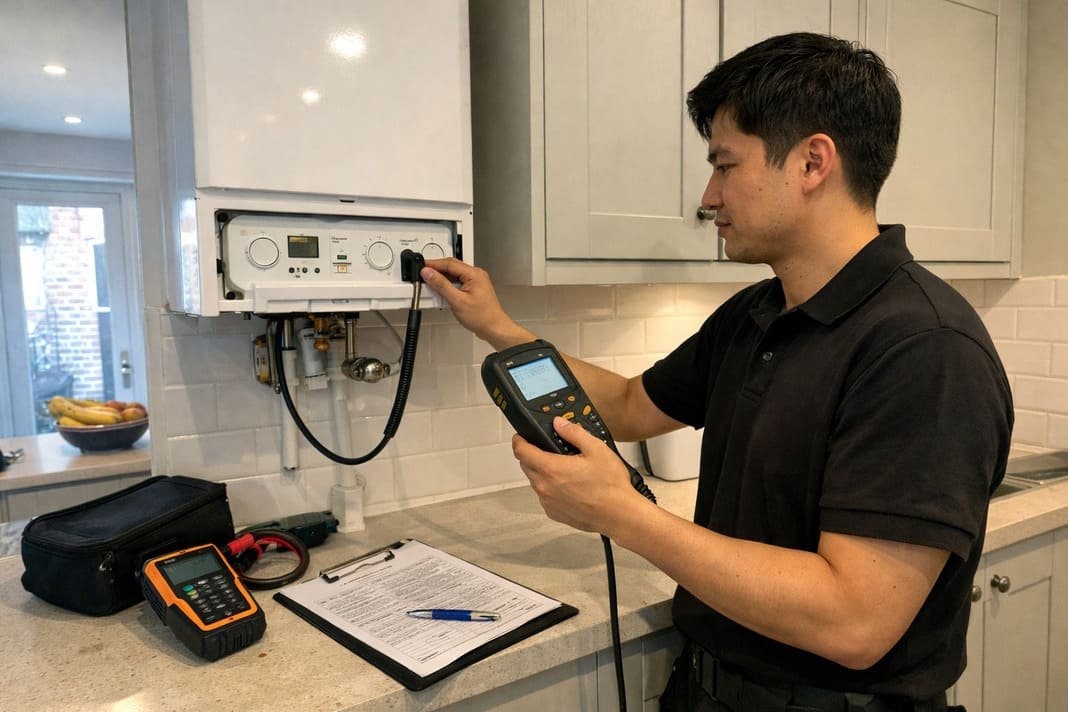
Gas Certificate London boiler system inspection and gas safety compliance service for residential properties – Illustrative Image
Building a more sustainable compliance routine
The most effective agencies treat ongoing safety certification as a managed system rather than a series of emergencies. That shift usually starts with better structure, not heavier administration.
A practical routine often includes three habits. Renewal dates are logged in a shared calendar or property management system. Certificates are stored in a consistent digital format. Related inspections are grouped where possible so that access, reporting, and follow-up work move in one direction instead of several.
Once that framework is in place, provider choice becomes easier to judge. A suitable provider supports proactive landlord management by fitting into that rhythm with reliable scheduling, clear records, and realistic turnaround.
Over time, sustainable property compliance looks less like firefighting and more like ordinary operational discipline. For a London letting agent, that is usually the clearest sign that the right provider has been chosen.