What is the minimum EPC rating required to legally rent out a commercial property in the UK?
To legally let a commercial property in England or Wales, the building must hold a valid Energy Performance Certificate (EPC) with a rating of E or above. This requirement is enforced under the Minimum Energy Efficiency Standards (MEES), which apply to lease agreements for properties classified as non-domestic. Properties below this standard cannot be let unless a valid exemption has been registered.

An illustrative image of a street view with commercial units showing letting signs
Here's What We Have Covered In This Article
Understanding EPC Ratings for Commercial Properties
An Energy Performance Certificate is a document that rates a building’s energy efficiency on a scale from A to G, with A being the most efficient. For commercial properties, the EPC reflects the carbon emissions and energy use involved in operating the building under typical conditions. It is issued after a formal EPC assessment carried out by an Approved Energy Assessor.
The rating is based on several factors:
- Heating and cooling systems: Efficiency and control levels
- Lighting: Use of energy-saving technologies and zoning
- Building fabric: Insulation, thermal bridging, and glazing
- Air conditioning and ventilation systems: Energy performance and controls
Unlike domestic EPCs, commercial assessments can vary in challenge depending on the size and type of premises. Warehouses, offices, shops, and mixed-use buildings may each have different influencing factors.
It is important to note that an EPC is required irrespective of whether the property is occupied. Even empty buildings offered for lease must comply, unless they qualify under specific exemptions.
Pro Tip: EPC ratings can often improve significantly with LED lighting upgrades and basic insulation, so check assessor recommendations before planning major works.
The Legal Minimum EPC Rating Required to Let a Commercial Property
The current legal minimum for letting commercial buildings is an EPC rating of E. This regulation is enforced under the Energy Efficiency (Private Rented Property) Regulations, themselves part of the broader Energy Act 2011.
Letting a property with an F or G rating without a registered exemption is a breach of these regulations.
Penalties for non-compliance include:
- Fines: Up to £5,000 per breach for smaller properties, or up to £150,000 depending on rateable value
- Enforcement notices: Issued by local authorities and Trading Standards
- Restrictions on leasing: Void lease agreements or difficulties in re-letting
Exemptions may apply in the following cases:
- Listed buildings: Where improvements would unacceptably alter character or appearance
- Short-term leases: Less than six months, with conditions
- Cost-effectiveness: If all improvements up to a 7-year payback threshold have been made and the rating is still below E
To rely on an exemption, landlords must submit evidence through the official Exemption Register. Simply claiming exemption without registration is not a defence.
Which Commercial Properties Are Affected by EPC Rules?
The EPC requirement applies to most commercial premises offered for new leases or lease renewals. This includes:
Covered property types:
- Offices, including serviced premises
- Retail units and high street shops
- Industrial units and warehouses
- Hospitality sites such as restaurants and pubs
- Medical and educational premises used commercially
Typically exempt properties include:
- Places of worship and temporary structures
- Standalone buildings under 50m²
- Buildings due to be demolished
- Commercial units let on very short leases (under six months) or exceptionally long leases (over 99 years)
- Listed buildings where compliance would compromise their appearance
Buildings used for mixed purposes, such as a shop with residential units above, are assessed case by case. If the commercial portion is substantial and independently serviced, it will likely require its own EPC.

An illustrative image of two contractors upgrading insulation in the attic space
Bundle Your Compliance Services
Simplify paperwork and reduce disruption by booking EPCs, EICRs, and Fire Safety checks in one visit.
EPC Validity, Renewal, and Reassessment Timelines
Once issued, an EPC for a commercial property is valid for ten years. However, the certificate must be current at key points in the letting lifecycle to remain compliant.
A new EPC or reassessment may be needed in the following situations:
- Lease renewal or entering a new lease
- Major changes: Refurbishment, extension, or alterations to heating, lighting, or insulation
- Expired certificate: Marketing a property with an out-of-date EPC breaches regulations
- Planned upgrades: To secure better ratings ahead of tenancy turnover or planned leasing events
to align EPC renewal with other statutory inspections to reduce disruption and ensure full compliance at all stages of occupancy.
Pro Tip: Align EPC renewal with tenancy turnovers and other statutory checks to minimise access issues and avoid legal oversights.
How to Improve a Commercial EPC Rating if Below Minimum Standard
If a building receives a rating below E, landlords must undertake energy efficiency improvements before marketing or letting. The EPC assessor provides a recommendation report, which identifies cost-effective measures based on the building layout and services.
Common upgrades include:
- Installing or improving insulation in walls, roofs, and floors
- Replacing outdated lighting with LED systems and controls
- Upgrading heating systems to energy-efficient models
- Installing or improving building management systems
- Sealing draught points and improving glazing
Not all improvements are disruptive or high cost. Many buildings fall just below the E threshold and can be brought up to standard using minor interventions. Working with a qualified assessor allows landlords to prioritise measures with the highest compliance impact.
Planning improvements around tenancy voids, planned refurbishments, or seasonal downtime helps to avoid rent loss or tenant inconvenience.
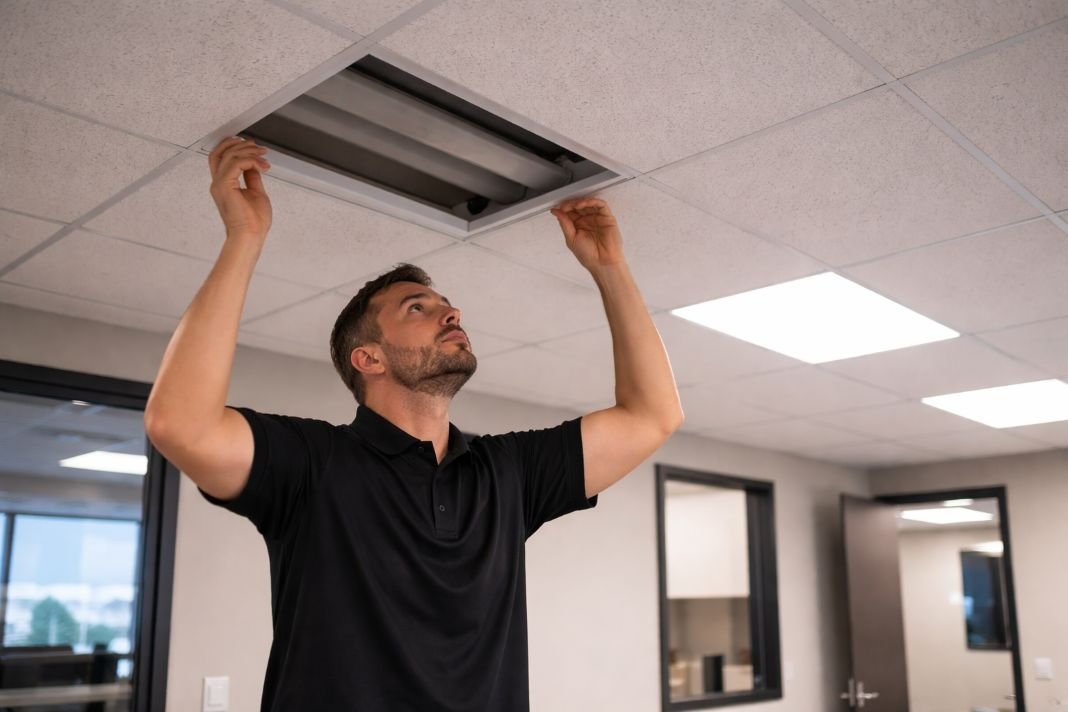
An illustrative image of a maintenance worker inspecting ceiling lighting inside a commercial office suite
Coordinating EPCs with Other Commercial Property Compliance Requirements
Energy certification forms just one part of the wider legal framework governing rental premises. Landlords responsible for commercial property must also comply with electrical, gas, and fire safety regulations.
Coordinating inspections can deliver measurable operational advantages:
- Fewer site visits: Combining EPC, EICR, and Gas Safety checks into a single appointment
- Lower cumulative costs: Multi-service pricing typically reduces the cost per certificate
- Minimal disruption: Especially important for occupied units with ongoing business operations
- Aligned renewal cycles: Easier to plan and manage future compliance intervals
Working with a single provider such as Landlord Building Certificates allows for bundled services across EPCs, EICRs, Fire Alarm Certification, and more. This simplifies administration while ensuring legal alignment across all compliance areas.
Book a Commercial EPC Assessment
Ensure your property meets the legal EPC requirements with a certified inspection from our qualified assessors.
What Happens If You Let a Commercial Property Without a Valid EPC?
Letting a commercial property without a compliant and valid EPC carries legal and financial risks. Failure to meet MEES obligations can result in enforcement by local authorities and Trading Standards.
Potential consequences include:
- Civil penalties: Ranging from £5,000 to £150,000 depending on circumstances
- Enforcement notices: Requiring rental activities to cease until compliance is achieved
- Contractual issues: Leases entered during non-compliant periods may be challenged
- Insurance complications: Policies may be invalidated due to regulatory breach
- Reputational impact: Especially for landlords managing larger portfolios
The good news is that non-compliance is often fixable. Prompt assessment and clear planning allow remedial improvements to be made quickly. For landlords in breach, registering a temporary exemption or prioritising the recommended upgrades can help bring the property back into legal scope with minimal delay.