How can letting agents organise landlord certificates quickly and efficiently?
Letting agents can speed up certification by using a consolidated compliance provider, scheduling inspections in advance, coordinating multiple properties in one visit, storing certificates digitally, and choosing services with fast turnaround and fixed pricing.
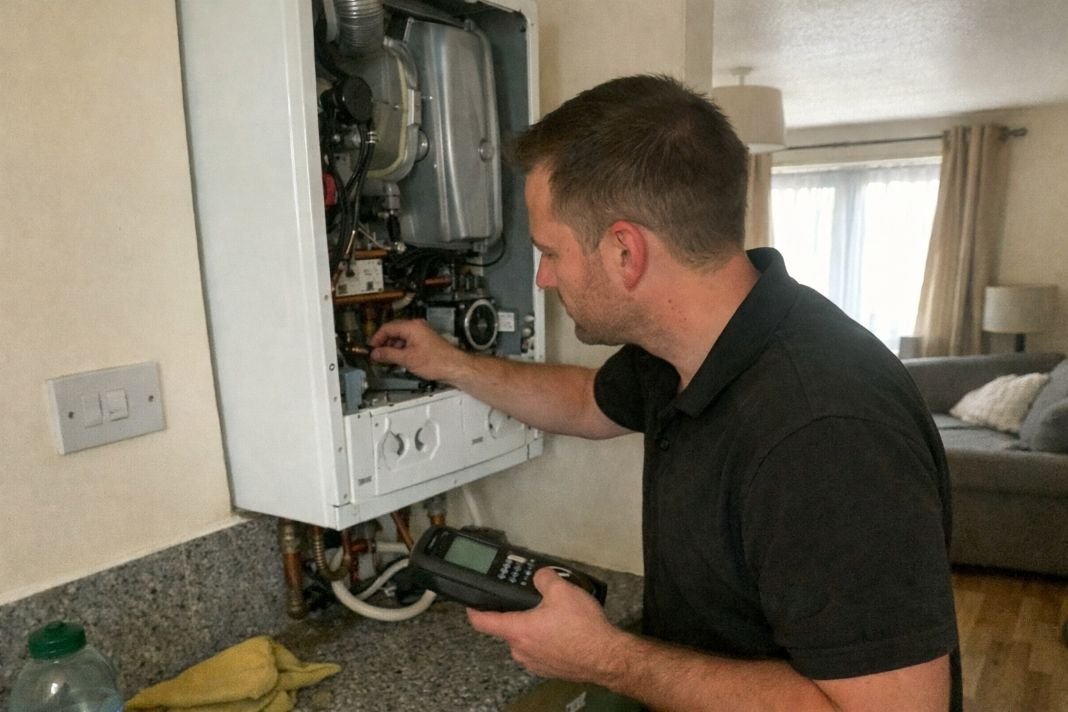
An illustrative image of a gas engineer wearing a black polo t shirt with no hat inspecting a boiler inside a rental flat
Here's What We Have Covered In This Article
Know What Certificates Are Required and When
Missing or expired certificates can delay tenancies, invalidate insurance, or trigger enforcement notices. Letting agents managing several properties need to be clear about which documents must be renewed and when, to avoid service disruptions and legal exposure.
The core certificates required under UK law include:
- Gas Safety Certificate (CP12) : must be renewed every 12 months
- Electrical Installation Condition Report (EICR) : required every 5 years unless specified otherwise
- Energy Performance Certificate (EPC) : valid for 10 years, but must be available at the point of advertising
- Fire Alarm Certificate : typically annual for systems serving rental flats or HMOs
- Emergency Lighting Certificate : annual renewal required
- Portable Appliance Testing (PAT) : frequency varies based on appliance type and usage but often annual in rental settings
Letting agents have a duty to coordinate certification on behalf of landlords and must ensure all documents are in place before tenancy start dates. Gaps in documentation can delay tenant move-ins, raise compliance flags under the Housing Act 2004, and put insurers in a position to reject liability.
Pro Tip: Use a single consolidated provider to receive combined reports, speed inspections, and minimise tenant disruption.
Use a Consolidated Certification Provider
Coordinating multiple contractors across different compliance areas often leads to scheduling clashes, repeated visits, and unnecessary tenant disruption. A consolidated provider eliminates this issue by delivering legally required checks in a single visit, with one point of contact and one report cycle.
Without consolidation, letting agents may face:
- Multiple visits for gas, electric, and EPC checks
- Repeated key handovers and access requests
- Fragmented inspection deadlines across the year
With a consolidated provider such as Landlord Building Certificates:
- All required checks can be booked together
- Tenants experience minimal disruption
- Agents receive bundled reports in digital format
- Consolidated scheduling streamlines admin across the portfolio
The reduction in overhead is measurable. Fewer calls and emails, quicker issue resolution, and a faster turnaround all contribute to operational ease.
Book Certificates in Advance of Tenancy Deadlines
Timing plays a major role in smooth tenancy management. Relying on last-minute bookings opens the door to void periods, missed inspections, or legal risk. Letting agents benefit by systematising when and how certificate renewals are triggered.
Here is a checklist to align certification with tenancy cycles:
- Book inspections at least 2 weeks before tenancy renewals or start dates
- Create a rolling calendar of certificate expiry dates across properties
- Allow buffer time to address any remedial work following inspection
- Use tenancy anniversaries as reminders for relevant renewals
- Avoid leaving compliance timing to landlord discretion without oversight
Lead times for commonly required certificates can range from 2 to 5 days depending on provider capacity. Booking early ensures compliance readiness without last-minute stress.

An illustrative image of multiple tenants inside a communal hallway as an electrician performs system checks
Book Your Compliance Inspection
Schedule your landlord certificate inspections in one step using our all-in-one service built for letting agents.
Coordinate Multiple Properties in a Single Booking
Letting agents handling multiple units, whether across a single landlord’s portfolio or several, can gain significant efficiency by grouping inspections into block bookings. This is particularly effective when properties are geographically close or share tenancy renewal periods.
For example:
- Three flats in the same block can be serviced in a single afternoon
- A cluster of HMOs renewing in the same week can be inspected in sequence
- Portfolio landlords with staggered expiry dates can consolidate based on proximity
Grouping inspections provides the following benefits:
- Lower per-property inspection costs
- Simplified tenant communications
- Reduced key handling and access management
- Centrally logged reports with uniform issue tracking
This coordination reduces repetition and brings predictability to the letting workflow.
Pro Tip: Group inspections for properties within the same area or renewal period to lower costs and reduce admin time.
Use Digital Certificate Storage and Tracking
Keeping up with paper records or dispersed email trails creates risk. Certificates can be lost, overlooked at renewal, or misunderstood in terms of expiry timelines. A digital approach avoids these pitfalls.
Benefits of storing certificates and renewal data digitally include:
- Instant access when auditors request proof of compliance
- Automated reminders before certificates expire
- Central recordkeeping across all properties
- Easy sharing with landlords, local authorities, or tenants
- Preparedness if insurance or legal disputes arise
Digital records help letting agents keep compliance visible and manageable instead of reactive and scattered.

An illustrative photo of a property manager marking inspection dates on a wall calendar
Choose Providers with Fast Turnaround and Fixed Pricing
Speed and transparency matter. Tenancy applications often move quickly, and delays in accessing compliance documents can derail the process. Similarly, unclear costing can turn a routine inspection into a budgeting problem.
Here is what to look for:
- Providers offering fixed rates per certificate or bundle
- Services capable of next-day or even same-day delivery for urgent requirements
- Clear reporting formats with no hidden add-ons for access or remedials
- Reliability in hitting promised timeframes
Also, steer clear of providers who:
- Only quote once on site
- Charge separately for each visit due to fragmented inspections
- Lack accreditation from bodies such as Gas Safe, NIC EIC, or TrustMark
Landlord Building Certificates operates with fixed starting rates and known lead times, which supports dependable planning across a letting portfolio.
Get a Compliance Portfolio Review
Let our team assess your current certification process and provide streamlined solutions for multiple properties.
Establish a Repeatable Compliance Process
The fastest way to stay compliant is to stop treating it as a one-off requirement. By building a routine around certificate scheduling, letting agents reduce legal risk and avoid unnecessary effort each time a property changes hands or renews a tenancy.
A repeatable compliance process should include:
- Maintain a central calendar marking certificate expiry dates
- Use provider reminders or internal software alerts
- Assign responsibility within the team for specific properties
- Book inspections 30 to 60 days before due dates
- Keep a digital checklist for each property covering required certificates
This approach builds consistency. When property teams treat compliance as a monthly workflow, rather than a reactive task, efficiency follows, and risk shrinks. With systems in place, letting agents can fulfil obligations confidently and focus more time on tenant engagement and day-to-day operations.