What happens to safety certificates when a fixed-term tenancy rolls into a periodic tenancy?
A tenancy becoming periodic does not usually reset your safety paperwork or give you a fresh compliance window. Your certificates stay valid only until their own expiry dates or renewal points, which means that a tenancy rollover changes the tenancy structure, not the inspection timetable.

An illustrative image of a landlord holding a clipboard and checking an electrical fuse box in a rental property
Here's What We Have Covered In This Article
What Is a Periodic Tenancy and How Does It Affect Legal Responsibilities?
A common scenario plays out like this: the fixed term ends, the tenant stays put, rent keeps being paid, and the tenancy continues on a rolling basis. In many cases, that means the Assured Shorthold Tenancy (AST) has moved from a fixed-term tenancy into a periodic tenancy.
The key change is about timing and possession arrangements, not a reset of the landlord’s wider duties under UK landlord regulations. A periodic tenancy can run from month to month or week to week, depending on how rent is paid and how the agreement operates. The legal status changes, but ongoing compliance does not pause.
A simple way to view the difference is this:
- A fixed-term tenancy has a defined end date.
- A periodic tenancy continues without a new fixed end date.
- Both forms still require the landlord to meet the same safety obligations during occupation.
Confusion often arises because a tenancy rollover feels like a new phase. In practice, many legal duties continue smoothly from one stage to the next. If a landlord was responsible for keeping the property safe during the fixed term, that duty remains in place after the tenancy becomes periodic, including record keeping and renewal cycles that were already running before the fixed term expired.
Pro Tip: Always synchronise your calendar reminders with the actual certificate issue or expiry date, not the tenancy contract terms.
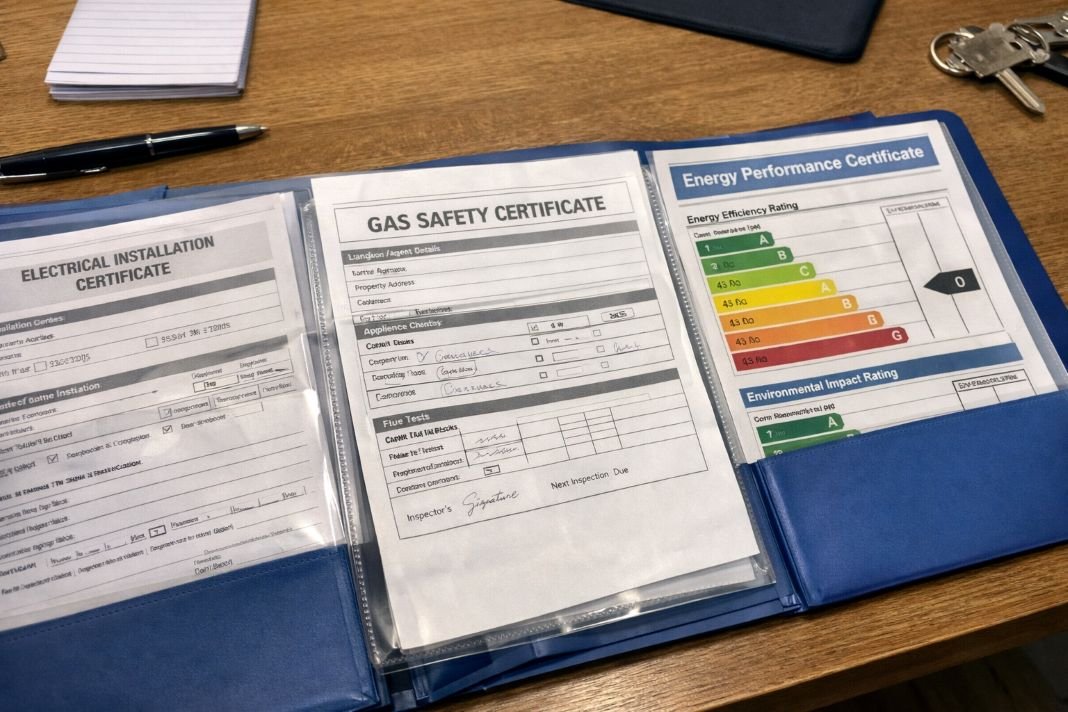
An illustrative image of landlord safety certificates including electrical, gas, and energy performance documents
Do Safety Certificates Remain Valid When a Tenancy Becomes Periodic?
Yes, in principle they do, but only for as long as each certificate remains valid under its own rules. A periodic tenancy does not refresh an Electrical Installation Condition Report (EICR), a Gas Safety Certificate (CP12), an Energy Performance Certificate (EPC), or any other safety document by itself.
What matters is the certificate’s legal lifespan, the date of the last inspection, and whether any new event has triggered a further check. The tenancy type is usually secondary to those points.
How this works by certificate type
An Electrical Installation Condition Report (EICR), often called an electrical certificate or electrical safety check, follows its own inspection cycle. Under the Electrical Safety Standards in the Private Rented Sector (England) Regulations 2020, private rented properties in England generally need a valid report at least every five years, unless the report itself requires an earlier inspection. If the tenancy becomes periodic in year three, the existing EICR does not restart for another five years from that date. The original inspection date still governs the renewal point.
A Gas Safety Certificate (CP12), also known as a gas cert or landlord gas safety record, works on an annual cycle. The Gas Safety (Installation and Use) Regulations 1998 require checks on gas appliances and flues every 12 months. If the fixed term ends halfway through that year, the certificate still expires on its usual date. The periodic tenancy does not extend it.
An Energy Performance Certificate (EPC), often called an energy certificate or energy rating document, usually remains valid for up to ten years. For rental purposes, the wider point is whether the property meets the minimum energy efficiency rules that apply at the time. A tenancy moving to periodic status does not usually trigger a fresh EPC by itself, but an expired EPC cannot be treated as current simply because the tenant never moved out.
Fire Alarm Certificates, Emergency Lighting Certificates, and Portable Appliance Testing (PAT) records sit in a slightly different category because the exact need for them depends on the property type, layout, and use. A fire cert or emergency lighting test certificate may be particularly relevant in certain Houses in Multiple Occupation, mixed-use buildings, or common parts. PAT testing certificates are commonly used where landlords supply portable electrical appliances, even though the law focuses on safety rather than a single universal PAT renewal rule for every rental property. In each case, the timing depends on the inspection standard, the risk level, and the setting, not on whether the tenancy is fixed-term or periodic.
The general rule is straightforward: certificates do not “carry over” because the tenancy changed, and they do not expire because the tenancy changed either. They continue on their own timetable, with the original inspection and expiry dates doing the real work.
Key Safety Certificates and Their Renewal Requirements
Landlords often get the clearest picture by separating tenancy admin from certificate admin. One concerns the occupation of the property. The other concerns statutory inspections, legal evidence, and the dates that sit on each report.
Here is a practical reference point for the main documents.
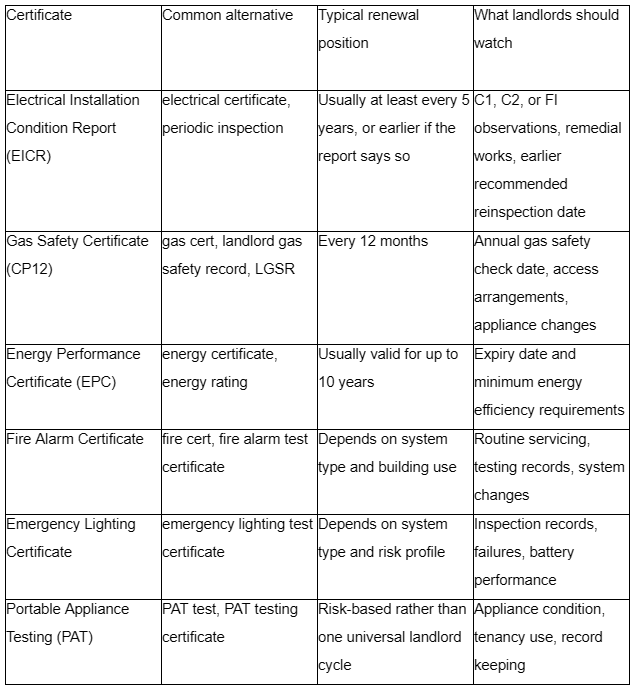
Missed renewals can create several problems at once. A landlord may face enforcement action from a local authority, struggle with insurance conditions, or find that important paperwork is missing when a tenant, agent, or lender asks for it. If an EICR expires during a periodic tenancy, the fact that the tenant has remained in occupation does not soften the gap in compliance.
Professional accreditation matters here because inspection quality and reporting standards are part of the picture. NICEIC approval for electrical work, Gas Safe registration for gas safety checks, and approved energy assessor status for EPCs each relate to competence in the relevant area. The date on the certificate matters, but so does the legitimacy of the person issuing it. That point becomes especially important if a report is later scrutinised during a claim, dispute, or local authority enquiry.
Book a Compliance Check
Arrange a full property safety review with accredited engineers to ensure all your landlord certificates are valid and up to date.
Common Pitfalls and Misconceptions About Certificate Coverage
Many landlords assume the tenancy itself acts like a protective wrapper around existing documents. That is one of the most common mistakes.
Another frequent misunderstanding is the idea that a periodic tenancy counts as a brand-new letting for every compliance purpose. That can lead to the wrong action in both directions. Some landlords order unnecessary repeat documents immediately, while others delay required renewals because they believe the tenancy rollover has bought more time.
A few errors come up again and again:
- Treating the tenancy renewal date as the same thing as the certificate renewal date
- Filing certificates away after move-in and never checking the expiry calendar again
- Assuming a long-valid EPC means every other safety document must still be current as well
- Forgetting that remedial works or changed circumstances can trigger further action before a standard renewal date
Insurance is an area where assumptions can become expensive. Insurers may look closely at whether statutory checks were kept current and whether known defects were addressed. A void period, rejected claim, or dispute over policy terms may turn on paperwork that looked fine at first glance but had already expired.
Enforcement bodies and local authorities also tend to focus on the actual compliance record rather than the landlord’s intention. A landlord who believed a gas safety record remained effective because the tenancy went periodic may still face the consequences of an overdue annual check. TrustMark and similar industry accreditations can support confidence in service standards, but accreditation alone does not rescue an expired certificate.
The most reliable habit is simple: read the document date, read any recommendation on the report, and treat those timings as separate from the tenancy agreement sitting beside them.
Pro Tip: Review the scope and applicability of certificate requirements each time you alter your property or its use, regardless of tenancy type.
Practical Steps for Landlords Managing Certificate Compliance in Periodic Tenancies
Periodic tenancies often reduce one type of admin because there is no fresh fixed-term agreement to process. They can increase another type because there is no natural renewal milestone prompting a review of safety documents. A simple system is usually enough to keep that from becoming a problem.
- Build a certificate calendar Record the issue date, expiry date, and any earlier reinspection date for every property. Include the EICR, gas safety record, EPC, and any fire alarm, emergency lighting, or PAT records that apply to the building.
- Set reminders before the deadline A reminder one month ahead gives time to arrange access, especially where tenants need notice or more than one visit may be required. Gas checks in occupied properties can become awkward if booking is left to the final week.
- Keep digital copies in one place Store certificates, remedial reports, invoices, and engineer notes together. Digital certificate platforms can make this easier, particularly for landlords managing several addresses or different renewal months.
- Review property changes, not just dates A new appliance, electrical alteration, conversion, or change in building use may affect what needs checking. Date-based reminders are useful, but they should sit alongside a quick review whenever the property itself changes.
- Group inspections where it makes sense Bundled visits can reduce disruption and admin if several documents are due around the same time. Providers such as Landlord Building Certificates operate on that practical model, with inspection-led services that can help landlords keep multiple compliance strands aligned.
Accredited engineers and clear reporting make a real difference when records need to be produced quickly. That matters most on ordinary working days, such as a renewal audit, a licensing application, or a last-minute request from an agent.

An illustrative image of the front door of a typical UK rented property with a For Rent sign partially visible
Looking Ahead: Why Certificate Management Matters Beyond Legal Minimums
Good certificate management is often treated as a box-ticking exercise. In day-to-day property ownership, it does much more than that.
Regular inspections create a useful maintenance rhythm. An electrical safety check may highlight deterioration before it develops into a larger repair issue. A gas inspection can bring attention to appliance condition, ventilation, or flue concerns that might otherwise go unnoticed in a settled tenancy. Those findings have value even before anyone starts talking about enforcement.
Tenant confidence is part of the picture as well. Occupiers rarely read regulations for pleasure, but they do notice whether a landlord keeps safety checks current, communicates clearly about access, and produces valid documents without delay. That standard of organisation supports a calmer tenancy, especially once an arrangement has rolled into a periodic pattern with fewer formal milestones.
Record keeping also strengthens the landlord’s position if a dispute appears later. Clear documentation shows what was inspected, when it was inspected, who carried out the work, and whether any follow-up action was completed. Professional standards and recognised accreditations matter here because they support the reliability of the paperwork itself.
Rules can change over time, and property standards rarely move in a looser direction. Landlords who already track dates, store documents properly, and review inspection findings are in a much stronger position if future regulations tighten or licensing demands increase.
A periodic tenancy may feel less structured than a fixed term, yet the safest approach is the opposite of casual. Keep the tenancy rolling if that suits both sides, but keep every certificate on its own firm schedule.