Do London landlords need a smoke alarm certificate for a rental property?
Usually, no. In most London rental properties, the law requires landlords to install smoke alarms in the right places and make sure they are working at the start of a new tenancy, but it does not usually require a separate smoke alarm certificate. A certificate may still be requested in some situations, including property licensing, insurer checks, or where a wider fire alarm system needs formal testing and documentation.

An illustrative image of tenants discussing their tenancy agreement
Here's What We Have Covered In This Article
Understanding Smoke Alarm Requirements in London Rental Properties
Smoke alarm rules cause more confusion than they should. Many landlords hear that alarms are mandatory and assume a certificate must be mandatory too, yet the two points are not the same.
For most homes in the private rented sector, the starting point is simple. The Smoke and Carbon Monoxide Alarm (Amendment) Regulations 2022 require at least one smoke alarm on every storey of a property where there is a room used as living accommodation. Landlords must also repair or replace alarms once informed that they are faulty.
London landlord obligations can become more detailed where local licensing applies. Some London borough councils attach extra fire safety conditions to selective licensing, additional licensing, or HMO licensing under the Housing Act 2004. Those conditions may affect alarm type, positioning, testing records, and supporting documents.
Property type matters as well:
- A standard single let often has the basic legal duty to install and check smoke alarms at the start of a tenancy.
- A house in multiple occupation may face extra fire safety measures through HMO rules and licence conditions.
- A larger or more complex property may need a full fire alarm system with formal inspection and servicing records, depending on layout and use.
Local authority enforcement sits behind these rules. If alarms are missing, not working, or plainly unsuitable, councils can issue enforcement notices and may take further action if the landlord does not comply. That practical reality matters more than the label attached to a document.
Pro Tip: Keep dated photographs and installer invoices in secure digital storage for easy access during inspections.
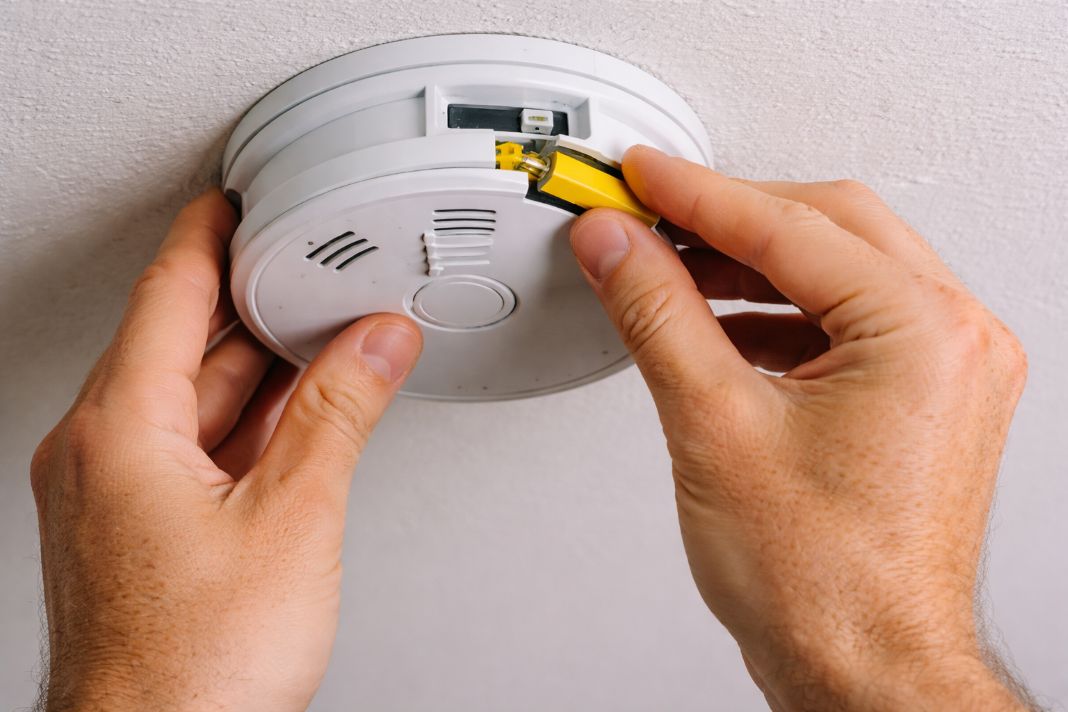
An illustrative image of a battery-powered smoke detector being installed
What Is a Smoke Alarm Certificate and When Is It Needed?
A smoke alarm certificate is generally a document showing that smoke alarms have been installed, inspected, or tested by a competent person. In practice, the term is used loosely. One landlord may mean an installer sign-off for standalone detectors, while another may mean a Fire Alarm Certificate for a communal or panel-based system.
That loose language explains much of the confusion. A basic battery or mains-powered smoke detector in a small rental flat does not usually come with a legal requirement for a standalone certificate. By contrast, a more complex fire alarm arrangement in an HMO or mixed-use building may need formal testing records and certification.
Several real-world situations can lead to a request for paperwork. A local authority licensing scheme may ask for evidence that alarms were installed properly. An insurance provider may want records showing that fire safety measures are in place. A tenant dispute about safety can also make written proof far more useful than a verbal assurance.
Documentation can take different forms. It may be an invoice from an electrician, an installation record, a fire alarm test certificate, dated photographs, or a check-in inventory noting that the alarm was present and working when the tenancy began. The key point is that evidence and certification are related, but they are not always the same thing.
Legal Framework: What the Law Says About Smoke Alarm Certification
The law focuses first on installation and working order, not on a universal certificate. For most landlords, that is the point worth keeping in mind.
Under The Smoke and Carbon Monoxide Alarm (Amendment) Regulations 2022, landlords in England must:
- install at least one smoke alarm on every storey used as living accommodation
- ensure each alarm is in proper working order at the start of a new tenancy
- repair or replace alarms once notified that they are faulty
Those regulations do not generally say that every rental property must have a separate smoke alarm certificate.
The Housing Act 2004 also matters, especially for HMOs and licensed properties. Councils can inspect rental homes, set licence conditions, and require specific fire precautions where they consider them necessary. In London, local council licensing can therefore create a practical need for stronger documentation, even where the national rule does not demand one named certificate.
Enforcement can include remedial notices and financial penalties. Where licensing conditions are involved, failing to meet them may affect the licence itself or lead to further action linked to broader rental property compliance. A landlord who has alarms installed correctly but keeps no usable records may still face avoidable difficulty if an inspector asks for proof on a tight deadline.
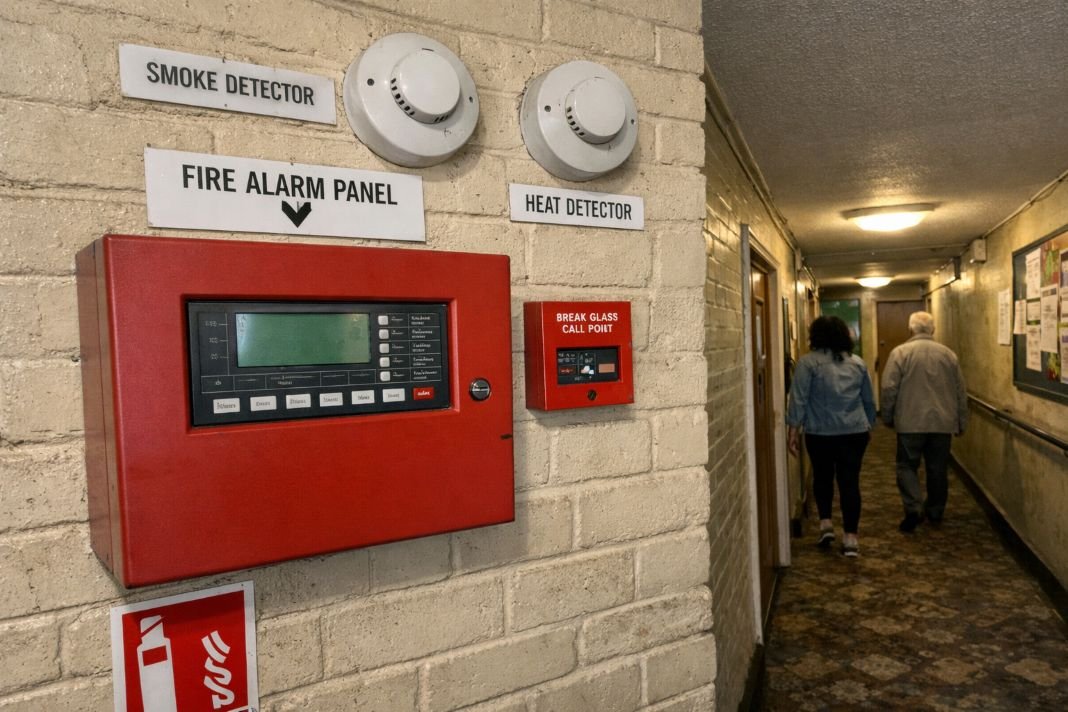
An illustrative image of a red fire alarm panel and several clearly labelled detectors
How Smoke Alarm Compliance Is Inspected and Documented
Inspections usually focus on straightforward points. An officer, engineer, or inventory clerk will want to see whether alarms are present, sensibly located, and working.
During a licensing visit or a pre-tenancy check, the process often looks like this:
- Confirm the number of storeys and identify the rooms used as living accommodation.
- Check that smoke alarms are fitted where the rules or licence conditions require them.
- Test the alarms to confirm they operate properly.
- Review any supporting records, including installation notes, dated photographs, inventories, or related certificates.
- Record the result in inspection notes or digital compliance records.
Accepted evidence varies by context. For a standard rental property, dated photographs, an inventory entry, and an installer receipt may be enough to support the position that alarms were in place and functioning. For an HMO or a property with a more advanced system, inspectors may expect servicing records or a Fire Alarm Certificate from a competent engineer.
Combined visits can make record-keeping easier. A landlord arranging an Electrical Installation Condition Report (EICR), a gas safety check, or other safety work at the same property can often deal with alarm checks during the same appointment. Providers such as Landlord Building Certificates often organise compliance in that practical, inspection-led way, which means that fewer separate visits need to be tracked across the year.
Problems usually arise through gaps in paperwork, not through complex legal points. An alarm was fitted but never photographed. A tenant reported a fault but no follow-up record was kept. An installer attended, yet the invoice did not state what was tested or replaced. Small omissions like these can become awkward during a licensing renewal.
Book a Compliance Review
Ensure your rental property meets all current fire safety and licensing rules in London.
Common Misconceptions About Smoke Alarm Certificates
A lot of smoke alarm certificate confusion comes from terms being used loosely across lettings, licensing, and fire safety work.
Myth 1: Every rental property must have a smoke alarm certificate
That is not generally correct. Landlords usually need compliant installation and a working alarm at the start of a tenancy. A separate certificate is not automatically required for every property.
Myth 2: A smoke alarm certificate and a Fire Alarm Certificate are the same thing
They are often different. A Fire Alarm Certificate usually relates to a more formal fire alarm system, with testing, servicing, or commissioning carried out to a recognised standard. A simple standalone detector in a small let does not fall into the same category.
Myth 3: If the installer said it was fine, no paperwork matters
Verbal reassurance has limited value once a council, insurer, or tenant asks for evidence. Even a basic record, including an invoice, installation note, or dated photo, is better than relying on memory months later.
Myth 4: Smoke alarms only need attention when a new tenant moves in
The start of a tenancy is a key legal checkpoint, but it is not the only moment that matters. Once a tenant reports a fault, the landlord must repair or replace the alarm. Licensed properties may also have ongoing testing or maintenance expectations.
Myth 5: Renewal works like a gas cert or an EICR
Smoke alarm obligations do not usually run on one universal renewal cycle in the same way as a Gas Safety Certificate (CP12) or an EICR. The timing depends on the type of alarm, the property, any servicing guidance, and any licence conditions attached to the building.
Most mistakes happen when landlords treat every fire safety document as interchangeable. They are not.
Pro Tip: Check local council licensing conditions annually to stay aware of any new fire safety documentation requirements for your rental.
Integrating Smoke Alarm Checks with Broader Landlord Compliance
Smoke alarm checks sit alongside other recurring duties, including electrical safety, gas safety, energy rating requirements, and, where relevant, PAT testing or formal fire alarm testing. Handling them together often reduces missed dates and duplicated visits.
Separate appointments can create an untidy paper trail. One contractor installs alarms, another carries out the EICR, and someone else tests a communal system weeks later. A combined approach usually produces clearer records and fewer loose ends, especially across multiple tenancies.
A practical compliance bundle may include:
- an EICR alongside a visual alarm check
- a Gas Safety Certificate (CP12) visit scheduled close to other safety checks
- a Fire Alarm Certificate where the property has a system that needs formal testing
Digital records make a noticeable difference here. When certificates, invoices, photos, and inspection notes are stored in one place, it becomes easier to answer a licensing query or tenancy issue without searching through old emails. For agents and portfolio landlords, that kind of admin discipline is often what keeps smoke alarm compliance from becoming a recurring nuisance.

An illustrative image of a HMO property with visible smoke alarms on the ceiling
Looking Ahead: Staying Informed and Avoiding Compliance Pitfalls
Fire safety rules do not stand still, and London borough councils do not all take the same administrative approach. A landlord who follows the national baseline but ignores local licensing conditions can still run into trouble.
Regular self-audits are usually enough to keep things manageable. Check where alarms are installed, note the date they were tested or replaced, keep copies of any installer records, and review licence conditions before a renewal window opens. Landlord associations and official council guidance can also help with updates that affect specific property types.
Good habits matter more than complicated systems. If the alarms are suitable, working, and properly documented, most of the uncertainty around smoke detector law falls away.
The practical lesson is simple: treat smoke alarm compliance as an ongoing record-keeping task, not a one-off purchase. That approach keeps rental property fire safety clear, defensible, and easier to manage as rules and inspections continue to develop.